
About Argentina
About
Work and Business
Living
Fun and Leisure
Residency and Citizenship
Investing
Services
Overview | Climate and Geography | Demographics | Culture and Heritage | Language and Communication
Overview
Brief History
Formation and early history
Argentina was originally settled by many different tribes of people. The first major empire arrived when Inca Empire invaded in 1480. Some of present day Argentina became part of the Incan Empire and some resisted.
In 1516, the Spanish arrived in the person of explorer and navigator Juan Diaz de Solis. Spain would later establish the first colony in Buenos Aires. As Buenos Aires grew in importance as a port city, the Spanish continued to integrate it into their empire. In 1776, they formed the Royalty of Rio de la Plata. It wasn't long, though, before Argentina wanted its independence. Led by Jose de San Martin, they declared their independence on July 9, 1816.
Although they defeated the Spanish, there was still civil war in Argentina for many years. They finally established a constitution in 1853 and a formal national government in 1861. In the early 1900s, Argentina flourished, becoming one of the world's wealthiest nations. Later, however, there would be unrest as the lower class workers felt they were being unfairly treated and did not have a say in the government. Juan Domingo Peron came into power creating a populist movement called Peronism. In 1946 Peron was elected president. His famous wife Eva Peron was very involved in his rise to power and also helped women to get the right to vote in the country.
Recent history (20th and 21st century)
Argentina's recent history in the 20th and 21st centuries has been marked by political, economic, and social changes. In the 20th century, the country experienced economic prosperity, the Per�n era, a military dictatorship, and a return to democracy in 1983. The 21st century saw an economic crisis in 2001, the Kirchner presidencies focused on social programs, the Macri administration's economic reforms, and the return of Peronism in 2019 with Alberto Fern�ndez as president. Ongoing challenges include economic issues, political dynamics, and the impact of the COVID-19 pandemic.
Political Structure
Current government and political climate
Argentina has a federal presidential representative democratic republic. The executive branch is led by the President, who is both head of state and government. The legislative branch consists of the National Congress with two houses: the Chamber of Deputies and the Senate. The judiciary, led by the Supreme Court, is independent. Argentina is a federal nation with 23 provinces and an autonomous city, each with its own government. The political landscape includes various parties, with Peronism being a dominant force. Elections are held regularly at different levels of government. For the latest information, it's advisable to refer to recent sources or official government statements.
Relationship with the European Union
Argentina and the European Union (EU) maintain diplomatic, economic, and political relations, collaborating on trade, development, and cultural exchanges. They engage in international cooperation, coordinate positions on global issues, and negotiate trade agreements. While challenges may arise, both express interest in strengthening ties. For the latest details, refer to recent sources or official statements.
Economy
Argentina's economy is diverse, with significant sectors including agriculture (leading in soybeans and beef), manufacturing, services, energy, and mining (notably lithium).
The country faces economic challenges like high inflation and fiscal deficits. The services sector, particularly finance and technology, is crucial, and Buenos Aires is a major financial hub.
Argentina engages in international trade, negotiating agreements with various partners. Economic policies aim to address challenges and promote sustainability. The situation is dynamic, and for the latest information, consult recent economic reports or news sources.
Education and Healthcare
Overview of the education system
Argentina's education system spans early childhood, primary, secondary, and higher education. Primary and secondary education is mandatory, with diverse subject offerings. Technical and vocational education is prioritized, and higher education includes tuition-free programs in public universities.
Healthcare system and facilities
Argentina's healthcare system has a public sector funded by taxes, known as the National Health System, and a private sector. Public facilities are nationwide, while the private sector offers personalized care. Access to public healthcare is through social security, and private health insurance is common. Argentina has skilled healthcare professionals and is a medical tourism destination. Government initiatives target improved access, preventive care, and maternal/child health.
Climate and Geography
Geography
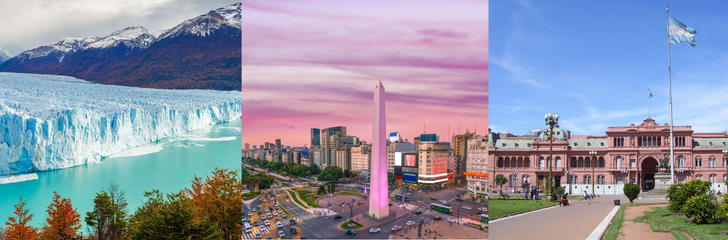
Argentina's diverse geography encompasses several distinct regions. The Andean Region in the west features the Andes mountains, while the Northwest exhibits varied landscapes and climates. The Gran Chaco, located in the north-central area, is a vast plain with a hot subtropical climate. Northeastern Mesopotamia is characterized by lowlands and rainforests. Central Pampas, a fertile plain, is known for agriculture and ranching. Cuyo in the central-west has semi-arid conditions, and Patagonia in the south offers diverse landscapes and climates. These regions contribute to Argentina's overall diversity in terms of economy, culture, and ecosystems.
Table 1: Argentina Main Islands and Their Features
| Island | Location | Features |
| Tierra del Fuego | Southern tip of South America | Archipelago with rugged terrain, shared with Chile. Main island is Isla Grande de Tierra del Fuego. |
| Isla de los Estados | East of Tierra del Fuego | Rugged and inhospitable terrain. |
| Isla Martín García | Rio de la Plata | Historical significance served as a military and political prison. |
| Isla Grande (Chaco) | Paraná River | Part of the Greater Delta of the Paraná, located in the province of Entre Rios. |
| Isla Victoria | Nahuel Huapi Lake in northern Patagonia | Located in the Andes, known for its scenic beauty. |
| Malvinas (Falkland) Islands | South Atlantic Ocean | Disputed sovereignty between Argentina and the United Kingdom. Rich in wildlife and natural beauty. |
Climate
Climate variations by region
Continental Argentina extends between 20° and 60° latitude in the Southern Hemisphere, and the country has regions of sub-tropical climates and mid-latitudes, as well as extreme thermal conditions, which vary from hot in the north to very cold in the extreme south and at the heights of the Sierras and the Andes Mountains.
Table: Argentina's Average Weather Data
| Region | Temperature (°C) | Precipitation (mm) | Sunshine Hours |
| Buenos Aires | 20 (average) | 1000 (annually) | 2200 (annually) |
| Mendoza | 25 (average) | 200 (annually) | 2800 (annually) |
| Salta | 23 (average) | 700 (annually) | 2400 (annually) |
| Iguazu Falls | 24 (average) | 1700 (annually) | 2000 (annually) |
| Bariloche | 10 (average) | 1000 (annually) | 1900 (annually) |
| Ushuaia (Tierra del Fuego) | 5 (average) | 500 (annually) | 1300 (annually) |
Best times to visit
Argentina springtime (October to mid-December) and autumn (April to mid-June) to be the best times to visit Argentina
Demographics of Argentina
Population
Population size and density
Argentina's population is estimated to be around 45 million people, and the country has a land area of approximately 2.78 million square kilometers. This yields an approximate population density of 16.2 people per square kilometer.
| | |
| Age distribution | |
| 0-14 years | 23.51% (male 5,645,070/female 5,316,156) |
| 15-64 years | 63.83% (male 14,929,084/female 14,827,733) |
| 65 and over | 12.66% (male 2,511,984/female 3,391,820) (2023 est.) |
Ethnic Composition
Predominant ethnic groups
European (mostly Spanish and Italian descent) and Mestizo (mixed European and Amerindian ancestry) 97.2%, Amerindian 2.4%, African descent 0.4% (2010 est.)
Minority communities
Thirty-six Indigenous and dozens of other ethnic groups derived from African, Asian, and European settlers.
Table: Ethnic Composition of Argentina
| Ethnic Group | Approximate Percentage |
| European (Italian, Spanish, etc.) | 75% |
| Mestizo (Mixed European and Indigenous) | 20% |
| Indigenous | 2% |
| Afro-Argentinian | 1% |
| Middle Eastern and Arab | 1% |
| Jewish | 1% |
| Asian (Chinese, Japanese, Korean) | 1% |
| Other (Roma, etc.) | 1% |
Religion
Predominant religions and their influence on culture
Christianity: Shaped Western culture in morals, art, literature, and law. Influenced holidays and literature.
Religious freedom and tolerance
The constitution provides for the right to profess, teach, and practice one's faith freely.
Table 4: Argentina Population Growth (Recent Years)
| Year | Population (millions) | Growth Rate (%) |
| 2017 | 44.5 | 1.2 |
| 2018 | 45.2 | 1.6 |
| 2019 | 45.9 | 1.5 |
| 2020 | 46.5 | 1.3 |
| 2021 | 47.2 | 1.8 |

Culture and Heritage
Traditional Customs
Argentina, located in South America, boasts a rich cultural heritage influenced by a mix of indigenous, European, and other immigrant traditions. Here's a glimpse into Argentina's culture and heritage, focusing on festivals and holidays, as well as traditional clothing and cuisine:
Festivals and Holidays:
- Carnival:
- Celebrated in February or March, depending on the lunar calendar.
- Colorful parades, music, dancing, and elaborate costumes are integral parts of the celebration.
- The city of Gualeguaychú is famous for its Carnival celebrations.
- National Flag Day (Dia de la Bandera):
- Celebrated on June 20th in honor of the death of Manuel Belgrano, the creator of the Argentine flag.
- Parades, ceremonies, and patriotic events are held across the country.
- Independence Day (Dia de la Independencia):
- Celebrated on July 9th to mark Argentina's declaration of independence from Spanish rule in 1816.
- Festivities include patriotic events, parades, and traditional foods.
- Tango Festival and World Championship:
- Takes place in Buenos Aires in August.
- Celebrates Argentina's most famous dance form, the tango, with performances, competitions, and dance events.
- Day of the Dead (Dia de los Muertos):
- Celebrated on November 2nd.
- Families visit cemeteries to honor and remember their deceased loved ones.
- Christmas and New Year:
- Celebrated with festive decorations, family gatherings, and traditional foods.
- Many Argentinians celebrate Christmas Eve with a big family dinner.
Traditional Clothing:
- Gaucho Clothing:
- The gaucho, or Argentine cowboy, traditionally wears loose-fitting pants (bombachas), a wide-brimmed hat (sombrero), and a poncho.
- Leather boots and a knife called a facón are common accessories.
- Traditional Dresses:
- Women often wear dresses with vibrant colors and floral patterns, especially during folkloric dance performances.
- The style varies across regions, reflecting the influence of indigenous cultures.
Traditional Cuisine:
- Asado:
- A traditional Argentine barbecue, typically featuring beef ribs, sausages, and other cuts of meat.
- Asado is a social event, bringing people together for a leisurely meal.
- Empanadas:
- Pastry turnovers filled with a variety of ingredients such as meat, cheese, or vegetables.
- Empanadas are popular snacks and are often served during festivals and gatherings.
- Mate:
- A traditional Argentine tea made from the leaves of the yerba mate plant.
- Drinking mate is a social activity, with friends and family passing around a shared mate gourd.
- Milanesa:
- Breaded and fried meat cutlets, usually made with beef or chicken.
- Often served with mashed potatoes or in a sandwich (milanesa a la napolitana).
- Dulce de Leche:
- A sweet caramel-like spread made from milk and sugar.
- Used in various desserts, such as alfajores (cookie sandwiches) and pastries.
Argentina's cultural richness is deeply intertwined with its history and diverse population, creating a vibrant tapestry that is celebrated throughout the year.
Art and Architecture
Argentina's cultural mosaic is painted by influential artists like Benito Quinquela Martin, Xul Solar, and dynamic movements such as Arte Concreto Invencion. Architectural luminaries like Cesar Pelli and Clorindo Testa have left a modernist imprint on the landscape, embodying the nation's blend of tradition and innovation. Argentina's artistic and architectural legacy is a captivating fusion of influences and creative expression.
Influential Figures:
- Artists:
- Benito Quinquela Martin: Depicted life in La Boca.
- Xul Solar: Surreal and symbolic works.
- Antonio Berni: Addressed social issues.
- Graffiti Artists: Martin Ron, Jaz, known for vibrant street art.
- Art Movements:
- Arte Concreto Invencion: Geometric abstraction (1940s).
- Neo-Concretism: Beyond concrete art (1950s).
Architects:
- Key Figures:
- Cesar Pelli: Modern designs, e.g., Petronas Towers.
- Clorindo Testa: Modernist, National Library of Argentina.
- Amancio Williams: Modernist, Bridge of the Woman.
- Architectural Styles:
- Colonial: Spanish influence.
- Belle �poque: Ornate facades, European elegance.
- Modernist and Brutalist: Mid-20th century.
- Contemporary: Innovative designs in Buenos Aires.
Argentina's art and architecture blend traditional, modern, and contemporary influences, creating a diverse cultural tapestry.
Music and Dance
Argentina's music and dance seamlessly blend tradition with innovation, offering a rich cultural tapestry.
Traditional Forms:
- Tango:
- Passionate dance and music originating in Buenos Aires.
- Zamba:
- Folk dance telling love stories with symbolic movements.
- Folk Music:
- Diverse regional styles with instruments like charango and bombo.
Contemporary Scene:
- Rock Nacional:
- Influential rock scene with bands like Soda Stereo.
- Electronic Music:
- Thriving electronic scene, highlighted by events like Creamfields.
- Cumbia Villera:
- Urban cumbia genre reflecting working-class experiences.
- Indie and Alternative:
- Growing scene with bands like El Mati a un Policia Motorizado.
- Folk Fusion:
- Modern artists blending traditional folk with contemporary styles.

Language and Communication
Argentina, a nation of diverse cultural influences, boasts a complex linguistic landscape shaped by historical factors and regional variations.
Official Language:
- Spanish: As the official language, Spanish is the primary means of communication, reflecting the country's colonial past and European heritage. The Spanish spoken in Argentina is distinct, marked by its unique accent and vocabulary.
Regional Languages:
In various regions across Argentina, regional languages and dialects persist, adding layers of cultural richness:
- Northern Argentina:
- Quechua and Aymara: Indigenous languages spoken, emphasizing the strong influence of indigenous cultures in this region.
- Northeastern Argentina:
- Guarani: A significant indigenous language in this area, spoken by communities in the provinces of Misiones and Formosa.
- Patagonia:
- Welsh: In some communities in Patagonia, particularly in Chubut province, Welsh is spoken. This traces back to Welsh immigrants who settled in the region in the late 19th century.
Argentina's linguistic diversity not only reflects its indigenous roots but also the impact of waves of immigration from various parts of the world. This linguistic tapestry contributes to the cultural richness and unique identity of Argentina.
Economy Overview | Remote Work Conditions | Local Business Environment | Legal and Regulatory Environment | Transport and Infrastructure
Economy Overview of Argentina
Argentina's economy is diverse, with agriculture serving as a historical cornerstone. The country is a leading global exporter of soybeans, corn, and beef, contributing significantly to its GDP. The industrial sector encompasses manufacturing, particularly in automotive and machinery production. Additionally, a growing services sector, including finance, tourism, and information technology, has become integral to the economy.
However, economic challenges, such as high inflation and periodic recessions, have posed hurdles for businesses and investors. Currency fluctuations and a complex tax system add layers of complexity to the economic landscape.
Economic Landscape
- Agriculture: Argentina is a major player in global agricultural markets, leveraging its fertile lands. The sector, however, faces challenges such as weather-related issues and fluctuations in global commodity prices.
- Industry: The industrial sector, especially manufacturing, plays a crucial role. The automotive industry, in particular, has been a significant contributor to exports. Challenges include competition, technological advancements, and the need for sustainable practices.
- Services: The services sector, including finance and technology, has been expanding. Buenos Aires, the capital, is a hub for financial services and technology startups. The country's appeal as a tourist destination also fuels the growth of the hospitality and entertainment industries.
Job Market
- Key Sectors: Employment opportunities are diverse, spanning agriculture, manufacturing, services, and technology. Agriculture offers jobs in farming, agribusiness, and research. Manufacturing provides opportunities in automotive, machinery, and food processing. The services sector encompasses finance, tourism, and information technology.
- Language Requirements: Proficiency in Spanish is often a prerequisite for many jobs. However, multinational companies and technology startups may require proficiency in English, opening up opportunities for bilingual professionals.
- Competitive Environment: The job market can be competitive, and networking is crucial. Building connections through professional organizations and online platforms can enhance job prospects.
Investment Climate
- FDI Opportunities: Argentina has attracted foreign direct investment (FDI), particularly in sectors like energy, mining, and technology. The country's natural resources and a growing consumer market present attractive prospects for investors.
- Risk Factors: However, potential investors should be mindful of economic and political uncertainties. Changes in government policies, fluctuations in the regulatory environment, and currency volatility can impact business operations.
- Navigating Regulations: Understanding and navigating the legal and regulatory landscape is crucial. Adherence to local business practices, compliance with tax regulations, and awareness of potential risks contribute to successful business operations.

Remote Work Conditions
Argentina's embrace of remote work reflects a dynamic response to global shifts in the nature of work. Propelled by advancements in technology and a reevaluation of traditional workplace structures, Argentina has witnessed a notable transition towards flexible work arrangements. Below, we delve into the intricate details of remote work conditions in the country.
Remote Work Culture
- Hybrid Work Models: Many Argentine companies have adopted hybrid work models, recognizing the value of a flexible approach. This allows employees to choose when and where they work, striking a balance between the benefits of in-person collaboration and the autonomy of remote settings.
- Communication Tools: Virtual communication tools have become essential components of remote work culture. Platforms such as Slack facilitate real-time communication, while video conferencing tools like Zoom enable face-to-face interactions, fostering team cohesion and ensuring efficient collaboration.
- Inclusive Practices: The shift towards remote work in Argentina has promoted inclusivity. Companies actively work towards ensuring that remote employees feel connected and engaged, implementing practices to prevent feelings of isolation and to maintain a cohesive company culture.
Work-Life Balance
- Flexibility in Schedules: Remote work in Argentina prioritizes flexibility in scheduling. Employees are empowered to structure their work hours according to their individual needs, enabling them to balance professional responsibilities with personal commitments.
- Wellness Initiatives: Employers place a significant emphasis on employee well-being. Initiatives promoting mental health, stress management, and a healthy work-life balance are integrated into remote work policies, aiming to create a supportive and sustainable work environment.
- Boundary Setting: Acknowledging the potential challenges of remote work, companies actively encourage employees to set clear boundaries between work and personal life. This proactive approach helps mitigate the risk of burnout and enhances overall job satisfaction.
Internet and Technology
- Connectivity Challenges: While major cities in Argentina generally boast reliable internet infrastructure, some remote or rural areas may face connectivity challenges. To address this, companies often provide resources or financial support to ensure all employees have access to high-speed internet.
- Technology Investment: The adoption of cloud-based tools and secure virtual private networks (VPNs) is widespread. This not only ensures efficient collaboration but also addresses security concerns associated with remote work. Companies invest in robust technological solutions to facilitate seamless remote operations.
In essence, Argentina's approach to remote work is characterized by a thoughtful integration of technology, a commitment to employee well-being, and a recognition of the importance of maintaining a cohesive company culture in a dispersed work environment. Staying abreast of specific organizational policies is crucial for individuals navigating the nuanced landscape of remote work in Argentina.

Local Business Environment
Understanding and respecting the local business environment in Argentina, including its cultural nuances and networking practices, is essential for success in establishing and growing a business in the country.
Starting a Business
- Legal Requirements: Registering a business in Argentina involves compliance with local regulations. Entrepreneurs need to choose a legal structure, obtain a tax ID, and register with the relevant authorities.
- Bureaucracy: Navigating bureaucratic processes can be time-consuming. Patience and understanding of local procedures are crucial.
- Language: While Spanish is the official language, some business-related documents may require translation. English proficiency varies, so having a local contact who is fluent in both languages can be beneficial.
- Local Partnerships: Establishing connections with local partners or consultants can help navigate regulatory complexities.
Business Culture
- Relationship-Oriented: Business relationships in Argentina are often built on trust and personal connections. Building rapport through social interactions is valued.
- Formality: Initial meetings may involve formalities, such as handshakes and exchanging business cards. Building a personal connection before discussing business matters is common.
- Hierarchy: Respect for hierarchy is important. Decision-making may involve consultation with higher-ups, so patience is key.
- Work-Life Balance: Business meetings may extend beyond official hours, and lunch breaks are considered an important time for networking and relationship-building.
Networking Opportunities
- Business Associations: Argentina has various industry-specific business associations and chambers of commerce that offer networking events and resources for entrepreneurs.
- Social Events: Networking often occurs in social settings. Attending events like dinners, cultural gatherings, and sports events can provide opportunities to connect with business professionals.
- Online Platforms: Utilizing online platforms and social media for professional networking is becoming more common. LinkedIn is widely used for business connections.
- Word of Mouth: Recommendations and referrals carry weight in the Argentine business culture. Establishing a positive reputation is crucial for networking success.

Legal and Regulatory Environment
Navigating Argentina's legal and regulatory environment requires a thorough understanding of business laws, employment regulations, and taxation. Adhering to these frameworks is essential for the successful establishment and operation of businesses in the country.
Business Laws and Regulations
- Corporate Structure: Choosing a legal structure is critical, with options including Sociedad An�nima (SA) and Sociedad de Responsabilidad Limitada (SRL). Each structure has specific requirements and implications.
- Commercial Code: Argentina follows a Civil Law system, and its Commercial Code regulates business transactions, contracts, and corporate governance.
- Intellectual Property: Strict enforcement of intellectual property rights is crucial. Registration and protection of trademarks, patents, and copyrights are governed by specific laws.
Employment Laws
- Labor Contracts: Employment contracts must comply with the Labor Contract Law. Specifics such as working hours, leave, and termination conditions are regulated.
- Collective Bargaining: Union activity is significant, and collective bargaining agreements may impact employment terms. Employers need to be aware of industry-specific regulations and agreements.
- Employee Benefits: Mandatory benefits include social security contributions, health insurance, and severance pay. Compliance with these regulations is essential to avoid legal issues.
Taxation
- Corporate Tax: Corporate income tax is levied on worldwide income. The standard rate is applicable, but certain provinces may impose additional taxes.
- Value Added Tax (VAT): VAT is levied on goods and services. Understanding the applicable rates and compliance requirements is crucial for businesses.
- Personal Income Tax: Residents are subject to progressive tax rates on their worldwide income. Non-residents are taxed only on Argentine-sourced income.
- Withholding Taxes: Various payments, such as dividends and royalties, are subject to withholding taxes. Compliance with these regulations is necessary for legal operations.
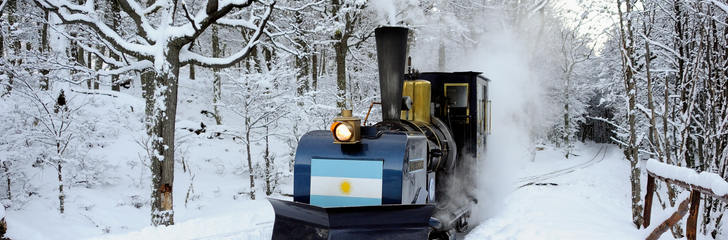
Transport and Infrastructure in Argentina
Public Transportation
Overview of Public Transport Availability and Reliability
Argentina's public transportation system features buses, subways (Subte), suburban and long-distance trains, taxis, and ride-sharing. Air travel and ferries are used for long-distance and water transport. Biking and walking are promoted in urban areas. Local variations exist, so check for the latest information.
Costs Associated with Using Public Transportation
Public transportation costs in Argentina vary by mode and location. Bus and subway fares are affordable, often paid with smart cards. Train, taxi, and ride-sharing costs depend on factors like distance. Domestic flights and ferry prices vary. Biking and walking generally have minimal expenses. Check with local authorities for the latest fare information.
Airports and International Travel
Major International Airports and Airlines Operating in Argentina
| Name | City | Airlines |
| Ministro Pistarini International Airport | Buenos Aires | 28 |
| Jorge Newbery Airpark | Buenos Aires | 7 |
| Ingeniero Ambrosio Taravella Airport | Cordoba | 5 |
| Islas Malvinas Airport | Rosario | 4 |
| Martin Miguel De Guemes International Airport | Salta | 3 |
Connectivity with Other Countries and Frequency of Flights
Argentina has strong international air connectivity through airports like Ezeiza in Buenos Aires. Flights are available to various destinations in North America, Europe, Asia, and South America, with frequencies subject to change.
Road and Rail Infrastructure
Quality of Roads and Availability of Rail Networks
Argentina boasts a diverse transportation infrastructure with well-maintained roads connecting major cities. The road quality can vary, and there's a historic rail network primarily used for freight. Some cities have suburban trains, but long-distance passenger trains are less common.
Travelers should check with local authorities for the latest information on road conditions and rail services.
Accessibility and Connectivity Between Different Regions
Argentina maintains a well-connected transportation network between different regions. The extensive road system, including major highways, facilitates efficient travel by car or bus. Domestic flights operate regularly, connecting major cities through key airports. While the historic rail network is primarily used for freight, buses play a crucial role in connecting various regions. Ferries contribute to connectivity in areas with water bodies.
Travelers can choose between road travel, flights, or buses based on their preferences and destinations. Checking with local authorities for the latest information is recommended.
Cost of Living | Healthcare and Facilities | Education System | Safety and Security | Utilities and Services | Social Integration and Communities

Cost of Living in Argentina
Argentina generally has a lower cost of living compared to many developed countries. Housing costs vary by location, groceries are reasonable, and eating out can be affordable. Actual expenses depend on individual lifestyle and spending habits. For the latest information, it's recommended to check current economic conditions.
Living Expenses
Grocery Shopping and Eating Out
Argentina is foodie heaven. You'll probably have the best steak of your life here, and a strong Italian immigrant presence means that pizzas, pastas, and calzones are everywhere. Lunch can be a real bargain: a baked empanada (small meat pie) costs less than a dollar, a cappuccino can be had for less than $2 and a large restaurant pizza comes in at around ten bucks.
Phone, Utilities, and Internet Connection Prices
Argentina's two main cell phone operators are Claro and Movistar, with 2G, 3G, and 4G plans available. Nextel or Personal are the other carriers. Just grab a pre-paid SIM card (chip) with a local number for a few dollars and you're good to go. You can top up your credit at kiosks, supermarkets, pharmacies and other recharge (recarga) outlets easily.
Renting Property
Argentina's super-affordable rental costs are one of the country�s most appealing attractions, with prices in some areas being half or even a third of the cost for similar-sized abodes in the U.S.
Income and Salaries
Argentina has a workforce of nearly 20 million, most of whom are employed in commerce, tourism, social services, and manufacturing industries.
However, the salary and perks offered by an employer differ across various industries. For instance, an accountant can earn 33,200 ARS per month, whereas a dietician can make up to 93,700 ARS per month.
Here are some other aspects of the Argentine salaries:
Salary range
The country's average salary ranges from 11,400 ARS per month (actual minimum salary) to 202,000 ARS per month (actual maximum salary).
The highest salary in the country is higher than the highest average salary.
Median salary
The median salary in Argentina is 38,500 ARS/month.
It indicates that 50% of the working population in Argentina earn less than 38,500 ARS and the remaining 50% earn more than 38,500 ARS.
Salary percentile
The salary percentile includes the 10th, 25th, 50th (median salary), 75th, and 90th percentiles, indicating how much the wages vary for an occupation.
Based on the salary surveys in 2023 by Salary Explorer, 25% of the Argentine working population earn less than 27,800 ARS, and the remaining 75% make more than 27,800 ARS.
The report also shows that 75% of the workforce earn less than 58,400 ARS, and the remaining 25% make more than 58,400 ARS.
Average annual salary increment
Typically, employees in Argentina receive a 9% salary increment every 17 months, higher than the world average of 3% every 16 months.
However, the annual salary increment rate may differ depending on the employee�s experience and industry:
Experience
Employees in senior management positions are more likely to earn a higher increment rate as they'e tougher to recruit and retain.
| Experience Level | Average Annual Salary Increment Rate |
| Top Management | 15%-20% |
| Senior Level | 10%-15% |
| Mid-Career | 6%-9% |
| Junior Level | 3%-5% |

Healthcare and Facilities in Argentina
Healthcare System
Public and Private Healthcare: Around 35% of the population relies on public hospitals. The rest have some form of healthcare coverage, either from social security/union-run (60% of the population) or the private healthcare system (13%). Almost 10% of the population have more than one coverage system.
Health Insurance: Argentina is one of the few countries in the world where healthcare remains free for everyone regardless of nationality, as it is dispensed in all its public hospitals. However, given the quality disparity of the health system from one region to another, private healthcare offers have increased, being covered by local health insurance plans or international health insurance taken out by expatriates.
Medical Facilities: There are more than 5,000 hospitals in Argentina and about 70% are private. Some of the more popular hospitals for foreigners in Buenos Aires include the British Hospital, the Italian Hospital, and Hospital Aleman. The city's Swiss Medical Centers also offer a high standard of care and are priced accordingly
Education System
Schooling
Structure of the Education System
Education in Argentina has four levels and two different systems:
Initial level (kindergarten, educacion inicial),
Primary level (educacion primaria),
Secondary level (educacion secundaria)
Tertiary level (educacion superior).
Availability and Quality of Schools
Public Education:
Argentina provides free and compulsory education at the primary and secondary levels.
Public schools are widely available, especially in urban areas, and they offer education from kindergarten through high school.
Private Education:
Private schools also exist and are available at various levels. These schools may offer different educational philosophies, language immersion programs, or specialized curricula.
International Schools:
In major cities like Buenos Aires, there are international schools that cater to expatriate and globally mobile families. These schools often follow international curricula and may offer education in multiple languages.
Higher Education
Overview of Universities and Colleges
Argentina's higher education system is diverse, with public and private institutions offering various academic programs. Public universities, such as the National University of Argentina, provide accessible education. The sector is active in research and innovation, and while Spanish is the primary language of instruction, some institutions offer courses in other languages. Argentina participates in global collaborations, but challenges include funding constraints and educational disparities. For the latest information, refer to university websites and contact admission offices.
Costs Associated with Higher Education
In public universities, the students do not pay tuition costs. In private universities, international students can expect to spend $5,000 to $15,000 per academic year on tuition. Likewise, living costs are also considerably lower. Accommodation, for instance, is inexpensive and can cost less than $350 per month.

Safety and Security in Argentina
Crime Rate
Crime rates in Argentina can vary between regions and cities. Here's a general overview:
- Buenos Aires:
- Buenos Aires, the capital and largest city, experiences a higher level of petty crime compared to other regions. Common issues include pickpocketing and street theft, particularly in crowded areas.
- Other Urban Areas:
- Major urban areas may have higher crime rates, but the type and frequency of crimes can differ. It's essential for residents and visitors to remain vigilant, especially in busy locations.
- Rural Areas:
- Rural areas generally experience lower crime rates compared to urban centers. However, challenges may include limited access to services and communication.
- Tourist Areas:
- Tourist destinations often have a visible police presence to ensure the safety of visitors. Nevertheless, tourists should exercise caution and be aware of their surroundings.
- Crime Types:
- Common crimes include pickpocketing, bag snatching, and petty theft. Violent crime rates are comparatively lower, but it's still crucial to take precautions.
Emergency Services
Availability and Reliability of Emergency Services
Emergency services in Argentina, including medical, police, and firefighting, are generally available and reliable. Response times in urban areas are prompt, and there are established hotlines for emergency assistance.
Contact Information and Procedures
If you find yourself in an emergency situation in Argentina
| Emergency Service | Hotline Number |
| Medical Emergency (Ambulance) | 107 |
| Police Assistance | 911 |
| Fire Department | 100 |

Utilities and Services
Water Supply: Potable water is accessible in urban areas, and water quality is generally good. Rural areas may rely on well water, and water availability can vary based on local conditions.
Electricity: Electricity is widely available in both urban and rural areas. Power outages may occur occasionally, especially during extreme weather conditions, but service restoration is usually prompt.
Gas Supply: Gas services are common in households, and natural gas is widely used for heating, cooking, and hot water. The supply is generally reliable, with occasional maintenance-related interruptions.
Internet and Telecommunications
- Internet Connectivity: Argentina has a well-developed internet infrastructure, especially in urban areas. Broadband internet is widely available, and various providers offer a range of plans with different speeds.
- Mobile Networks: Mobile network coverage is extensive, with multiple providers offering 4G and 5G services in urban and rural areas.
- Telecommunications Providers: Major telecommunications providers include companies such as Telecom Argentina, Claro, and Movistar.
Major Telecommunications Providers
| Service | Telecom Argentina | Claro | Movistar |
| Mobile Services | Cellular plans, data | Mobile plans, data | Mobile plans, data |
| Fixed-line Services | Landline, broadband | Fixed-line, broadband | Landline, broadband |
| Business Solutions | Corporate communication, data solutions | Business plans, connectivity | Business communication, data solutions |
| Internet Services | Broadband, fiber-optic | Broadband, fiber-optic | Broadband, fiber-optic |
Postal and Courier Services
Correo Argentino is the national postal service provider in Argentina. The company provides a wide range of postal services, including standard mail, express mail, and international mail.
Courier service: Private courier companies operate in Argentina, offering both domestic and international courier services. Major international courier companies, such as DHL, FedEx, and UPS, have a presence in Argentina and provide express shipping options.
International Courier Services in Argentina
| International Courier | Services Offered |
| DHL | Express parcel and document delivery worldwide |
| FedEx | International shipping, courier, and logistics |
| UPS | Global shipping, courier, and logistics services |
Social Integration and Communities
Argentina boasts a culturally diverse society with strong community bonds. Urban and rural areas celebrate festivals and events that promote shared identity.
Social Integration
- Societal Norms: In Argentina, people always greet each other with a kiss which is sometimes also extended into a hug depending on how well you know the person. It is also proper to introduce yourself to a group of people rather than waiting for the host to do it; and yes, most likely everyone should receive a kiss.
- Cultural Integration: Argentine culture is a blend of European customs and Latin American and indigenous traditions. Argentines are quite proud of their nation and its blended heritage as well as their ability to rise above adversity.
Major Argentina Festivals Celebrating Cultural Diversity
| Festival | Description |
| Carnaval | Colorful nationwide carnival celebrations, featuring parades, music, and dance. |
| Fiesta Nacional de la Vendimia | Grape harvest festival in Mendoza, showcasing local wine culture and traditions. |
| Fiesta Nacional del Sol | Annual sun-themed festival in San Juan, celebrating local culture with parades and events. |
| Festival Internacional de Jazz de Buenos Aires | International jazz festival in Buenos Aires, promoting diverse musical genres. |
| Oktoberfest Argentina | German beer festival celebrated in Villa General Belgrano, highlighting cultural exchange and traditions. |
| Fiesta Nacional de la Guitarra | Guitar festival in Dolores, Buenos Aires, showcasing musical talent and celebrating the guitar's cultural significance. |
| Fiesta Nacional de la Pachamama | Pachamama festival in Amaicha del Valle, paying homage to the Earth Goddess with rituals, music, and dance. |
Expatriate Communities
- Expatriate Networks: Argentina's expatriate networks like Internations, BA Expats, and Meetup provide support and social connections. Local associations, language exchanges, and online platforms enhance community integration for expatriates in the country.
- International Schools: Argentina's international schools, including Lincoln, Northlands, Cordoba, Mendoza, and St. George's, provide expatriates with English or bilingual education from pre-kindergarten to high school, ensuring a smooth transition.
International Schools in Argentina
| International School | Location | Curriculum Offered |
| Lincoln International Academy | Buenos Aires | American Curriculum |
| Northlands School | Buenos Aires | International Baccalaureate (IB) |
| Cordoba International School | Cordoba | International Curriculum in English |
| Mendoza International School | Mendoza | International Baccalaureate (IB) |
| St. George's College | Rosario | Bilingual Education (English/Spanish) |
Language and Communication
- Importance of Spanish: Spanish is of paramount importance in Argentina, serving as the official language and being widely spoken across the nation. Its significance extends beyond daily communication to cultural expression, literature, media, and societal connections.
- Language Learning Resources: Argentina provides abundant language learning resources, including schools, online platforms, immersion programs, universities, tutors, apps, and cultural centers. Learners can opt for structured courses or informal exchanges, tailoring their approach to personal preferences and goals.
Top Places to Visit | Activities and Festivals | Seasonal Highlights | Sports | Culinary Experience | Shopping and Souvenirs
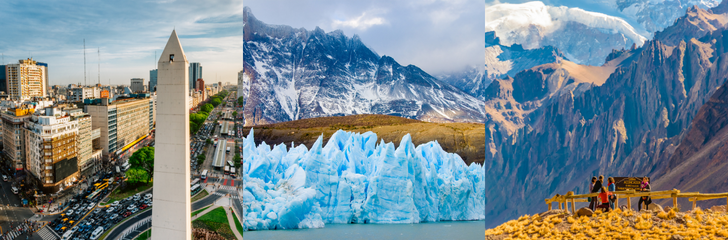
Top Places to Visit in Argentina
Historical Landmarks:
Iguazu Falls: Straddling the border with Brazil, these iconic waterfalls are a UNESCO World Heritage site.
Perito Moreno Glacier: Located in Los Glaciares National Park, this glacier is renowned for its stunning ice formations
Natural Attractions:
Bariloche: Nestled in the Andes, this Patagonian town offers breathtaking lakes and mountain scenery.
Valle de la Luna (Valley of the Moon): In the northwest, this lunar-like landscape is famous for its unique geological formations.
Museums and Cultural Centers:
Museo Nacional de Bellas Artes (National Museum of Fine Arts): Situated in Buenos Aires, it houses an impressive collection of Argentine art.
Teatro Colon: This historic opera house in Buenos Aires is renowned for its architectural beauty and cultural significance.
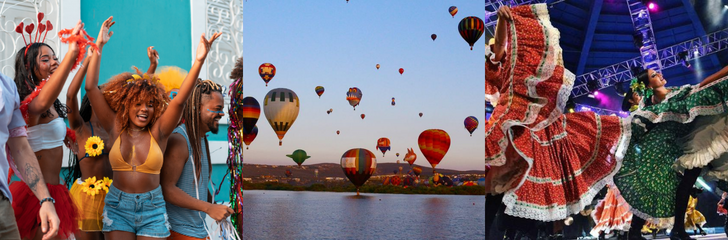
Activities and Festivals
Traditional Festivals
These festivals reflect Argentina's diverse cultural influences, offering a lively blend of traditions, music, and community celebrations.
- Carnaval: A vibrant nationwide celebration featuring lively parades, music, dance, and colorful costumes. Carnaval is an essential cultural event in Argentina, uniting communities in festive revelry.
- Fiesta Nacional de la Vendimia: Held in Mendoza, this grape harvest festival showcases Argentina's wine culture with parades, music, and the crowning of the "Vendimia Queen."
- Oktoberfest Argentina: In Villa General Belgrano, this German beer festival highlights cultural exchange with traditional music, dance, and, of course, a wide array of beers.
- Fiesta Nacional del Sol: Taking place in San Juan, this sun-themed festival celebrates local culture through parades, music, and events, emphasizing the region's connection to the sun.
- Festival Internacional de Jazz de Buenos Aires: A gathering of jazz enthusiasts in Buenos Aires, featuring international and local artists, contributing to the city's rich cultural tapestry.
- Fiesta Nacional de la Guitarra: Hosted in Dolores, Buenos Aires, this guitar festival celebrates the instrument's cultural significance, bringing together musicians and enthusiasts.
- Fiesta Nacional de la Pachamama: A festival in Amaicha del Valle, paying homage to the Earth Goddess (Pachamama) through rituals, music, dance, and cultural expressions.
Recreational Activities:
These recreational activities cater to a wide range of interests, making Argentina a versatile destination for leisure and adventure.
| Activity | Location | Best Time |
| Hiking and Trekking | Andes, Patagonia | Spring to Fall (October to April) |
| Skiing and Snowboarding | Cerro Catedral, Bariloche | Winter (June to September) |
| Wine Tasting | Mendoza, Salta | Year-round, with harvest season in March-April |
| Tango Dancing | Buenos Aires | Year-round, with festivals and events |
| Wildlife Watching | Peninsula Vald�s, Iber� Wetlands | Year-round, with specific seasons for wildlife migrations |
| Golfing | Buenos Aires, Bariloche | Year-round, with milder temperatures in spring and fall |
| Fishing | Various rivers and lakes | Year-round, varies by location and target species |
| Beach Activities | Mar del Plata, Pinamar | Summer (December to February) |
Recommendations for Outdoor Activities, Adventure Sports, and Relaxation
- Hiking in Patagonia: Explore the stunning landscapes of Patagonia, including the Fitz Roy trek in El Chalt�n and the W Trek in Torres del Paine National Park.
- Skiing in the Andes: Hit the slopes in winter at Cerro Catedral or Cerro Chapelco for exhilarating skiing and snowboarding experiences.
- Wine Tasting in Mendoza: Indulge in a leisurely wine tour, savoring the flavors of Argentina's world-famous Malbec wines.
Overview of Nightlife Options, Including Clubs, Bars, and Live Music Venues
Argentina's nightlife is dynamic and diverse, offering options for every taste, from energetic club scenes to laid-back bars and cultural live music venues.
Buenos Aires:
- Clubs: Experience the vibrant nightlife of Buenos Aires by exploring its world-renowned clubs like Pacha, Crobar, and Niceto Club. Enjoy eclectic music, energetic crowds, and lively dance floors.
- Bars in Palermo: The Palermo neighborhood is a hotspot for trendy bars. Explore places like Frank's Bar, a hidden speakeasy, or La Calle Bar for a diverse drink menu and stylish ambiance.
- Live Music at La Trastienda: La Trastienda is a renowned venue for live music, hosting performances across genres. Enjoy intimate concerts in this iconic space.
Cordoba:
- Paseo de las Artes: This artsy district comes alive at night with bars and cafes. El Vecindario is a popular spot for cocktails and live music.
- Club Paraguay: Experience the lively atmosphere of Club Paraguay, known for its diverse music selection and energetic dance floor.
Rosario:
- Pichincha District: Explore the Pichincha district for a mix of bars and clubs. El Cairo and Caf� de la Flor are historic spots for drinks and live music.
- Plataforma Lavard�n: This cultural center hosts live music events, including jazz and tango performances.
Mendoza:
- Aristides Villanueva Street: Known for its array of bars and pubs, this street offers a lively atmosphere. Visit Antares for craft beer or Palenque for live music.
- Club Tapiz: Enjoy a sophisticated evening at Club Tapiz, a winery that often hosts live music events.
Mar del Plata:
- Alem Street: Alem Street is lined with bars and clubs overlooking the beach. La Caseta and Gap are popular choices for nightlife.
- Teatriz Club: This historic venue combines a club atmosphere with live music and DJ performances.
Information on Entertainment Options Like Theaters, Cinemas, and Performance Arts
Theaters:
- Teatro Colon, Buenos Aires: Renowned worldwide, Teatro Colon is a historic opera house offering classical performances, ballets, and operas.
Cinemas:
- Hoyts and Village Cinemas, Nationwide: Major cinema chains present in various cities, offering the latest international and Argentine films.
Performance Arts:
- Tango Shows, Buenos Aires: Immerse yourself in the passion of tango with live performances in venues like Esquina Carlos Gardel or Caf� de los Angelitos.
Cultural Centers:
- Centro Cultural Kirchner, Buenos Aires: A hub for cultural activities, offering exhibitions, concerts, and performances in a grand setting.
| Entertainment Option | Location | Notable Performances/Features |
| Teatro Colon | Buenos Aires | Classical performances, ballets, operas |
| Cervantes Theatre | Buenos Aires | Promotes Argentine theater, variety of plays |
| Independencia Theatre | Mendoza | Showcases local and national theater productions |
| Hoyts and Village Cinemas | Nationwide | Latest international and Argentine films |
| El Gaumont | Buenos Aires | Screens independent and alternative films |
| Cineclub Municipal Hugo del Carril | Cordoba | Cultural center with diverse film selections |
| Tango Shows | Buenos Aires | Esquina Carlos Gardel, Caf� de los Angelitos |
| Circus and Street Performances | Rosario | City-wide street performances and circus events |
| Experimental Theatre | Cordoba | Teatro La Cochera - Explore avant-garde performances |
| Centro Cultural Kirchner | Buenos Aires | Hub for cultural activities, concerts, exhibitions |
| Espacio Cultural Julio Le Parc | Mendoza | Visual arts exhibitions, concerts, theatrical events |
| Centro Cultural España Córdoba | Cordoba | Promotes Spanish and Argentine cultural exchange |

Seasonal Highlights
Seasonal Events and Celebrations
These seasonal events and celebrations showcase the diverse cultural, religious, and traditional practices observed throughout the year in Argentina.
Summer:
- Carnaval (February - March): Immerse yourself in the vibrant colors and rhythms of Carnaval, experiencing lively parades and festive costumes during the peak of summer.
- Fiesta Nacional de la Vendimia (March): Celebrate the grape harvest in Mendoza with this summer festival, featuring parades, wine tastings, and cultural events.
Autumn:
- Independence Day (July 9): Even in winter, Independence Day is celebrated with patriotic events, parades, and ceremonies, marking a crucial moment in Argentine history.
- Fiesta de la Tradici�n (November): In San Antonio de Areco, embrace the gaucho culture during this autumn festival, featuring rodeos, folk music, and traditional activities.
Winter:
- Christmas (December 25): Experience the warmth of summer during Christmas in Argentina, where festive decorations and family gatherings are accompanied by the unique tradition of midnight fireworks.
- New Year's Eve (December 31): Welcome the New Year in the summer breeze, with lively parties, fireworks, and family gatherings adding joy to the festive atmosphere.
- Semana Santa (Holy Week): Even in the autumn of the Southern Hemisphere, Semana Santa is observed with processions, religious ceremonies, and cultural events.
Weather and Climate in Argentina
Argentina experiences diverse climates across its regions due to its vast geographical expanse.
Overview of the Climate in Different Regions and its Impact on Activities
| Region | Winter Avg. Temp (°C) | Summer Avg. Temp (°C) | Best Known For |
| Northwest (NOA) | Mild | Warm | Scenic landscapes, cultural richness |
| Northeast (NEA) | Mild | Hot | Iguazu Falls, lush wetlands |
| Central Argentina (Pampas) | Cool | Warm | Buenos Aires, wine regions, cultural vibrancy |
| Patagonia | Cold | Mild | Stunning landscapes, winter sports |

Sports in Argentina
Popular Sports and Events
Overview of Popular Sports in Argentina and Notable Sporting Events
| Sport | Major Event | Location |
| Football (Soccer) | Argentine Primera Divisi�n, Supercl�sico | Various stadiums nationwide, including La Bombonera and El Monumental in Buenos Aires. |
| Polo | Campeonato Argentino Abierto de Polo (Argentine Open) | Palermo Polo Grounds, Buenos Aires. |
| Tennis | Argentina Open (ATP Tour) | Buenos Aires Lawn Tennis Club. |
| Rugby | The Rugby Championship matches featuring Argentina's national team (Los Pumas). | Various stadiums across Argentina. |
| Auto Racing | Argentine Grand Prix (historical; currently not part of the Formula One calendar). | Autodromo Juan y Oscar Galvez, Buenos Aires. |
| Horse Racing | Gran Premio Nacional (National Grand Prize) | Hipodromo de San Isidro, Buenos Aires. |
| Marathons and Cycling | Various marathons and cycling events | Held in cities across Argentina. |
| Boxing | Various professional boxing events | Nationally and internationally, venues vary. |
| Golf | Various golf tournaments and championships | Renowned courses nationwide. |
| Field Hockey | FIH Hockey Pro League matches, international tournaments | Various stadiums and locations in Argentina. |

Culinary Experience
Cuisine
Overview of Traditional Argentina Cuisine, Including Regional Specialties
Argentine cuisine is a flavorful fusion of influences, primarily shaped by Spanish and Italian immigrants. Known for its beef-centric dishes, the cuisine also features diverse regional specialties reflecting the country's vast landscapes.
Asado:
- Asado is Argentina's iconic barbecue, where beef cuts like ribs, flank, and chorizo sausages are grilled over an open flame or charcoal. It's a social culinary experience deeply ingrained in Argentine culture.
Empanadas:
- These savory pastries come in various fillings, including meat, cheese, and vegetables. Empanadas are popular throughout Argentina, with regional variations in their preparation.
Matambre a la Pizza:
- Matambre, a flavorful cut of beef, is grilled and topped with a pizza-style mixture of tomatoes, cheese, and herbs. It's a unique Argentine twist on pizza.
Milanesa:
- Similar to Wiener Schnitzel, Milanesa is a breaded and fried meat cutlet, often made with beef or chicken. It's a widely enjoyed dish with variations across regions.
Provoleta:
- A classic appetizer, Provoleta involves grilling provolone cheese until it's melted and bubbly, often flavored with herbs and spices. It's a popular choice at asados.
Locro:
- This hearty stew features corn, beans, meat, and vegetables, creating a warming dish ideal for colder weather. Locro is especially popular during national holidays.
Humita en Chala:
- Humita is a traditional dish made with grated corn, saut�ed onions, cheese, and spices, wrapped in corn husks and steamed. It's a favorite during the corn season.
Dulce de Leche:
- A sweet, caramel-like spread made from condensed milk, Dulce de Leche is a quintessential Argentine treat used in desserts, pastries, and as a topping.
Yerba Mate:
- While not a dish, Yerba Mate is a cultural beverage in Argentina. It's a traditional herbal tea shared among friends, fostering social connections.
Recommendations for Restaurants, Eateries, and Food Experiences
| Restaurant/Experience | Specialties | Location |
| La Cabrera (Parilla) | Classic Argentine barbecue ("asado") with various beef cuts. | Buenos Aires |
| El Preferido de Palermo (Bodeg�n) | Cozy eatery with generous portions of traditional Argentine dishes. | Buenos Aires |
| El Sanjuanino (Empanader�a) | Variety of tasty empanadas with different fillings. | Buenos Aires |
| Tegui (Fine Dining) | Upscale dining with modern twists on traditional Argentine cuisine. | Buenos Aires |
| Caf� Tortoni (Caf�) | Coffee and pastries, embodying the charm of Argentine caf� culture. | Buenos Aires |
| Persicco (Helader�a) | High-quality artisanal ice cream, including classic dulce de leche. | Buenos Aires |
| Bodega Catena Zapata (Wine Tasting) | Wine tastings and pairings in a picturesque winery setting. | Mendoza |
| Parrilla al Paso (Street Grill) | Quick, authentic street-style grilled meat experience. | Various locations across Argentina |
Wine and Beverages
Insight into Wine and Beverage Culture
Argentina boasts a vibrant and diverse beverage culture, with a strong emphasis on wine, traditional mate tea, and unique local beverages.
Wine Culture:
- Malbec Dominance: Argentina is renowned for its Malbec wines, celebrated for their rich, fruity flavors. Explore the country's various wine regions, such as Mendoza, for a diverse wine-tasting experience.
- Wine and Asado Pairing: Wine is a staple at Argentine asados (barbecues). Red wines, especially Malbec, complement the flavors of grilled meats, creating a quintessential culinary experience.
Mate Tea Tradition:
- Social Ritual: Mate is a traditional herbal tea shared among friends and family. The communal act of passing the mate gourd creates a social and bonding ritual.
- Everyday Beverage: Mate is consumed throughout the day, reflecting its significance in Argentine daily life. The distinct flavor and ritualistic preparation contribute to its popularity.
Artisanal Beer Scene:
- Craft Beer Boom: Argentina has seen a surge in craft breweries, offering a diverse range of artisanal beers. Explore local brews that showcase creativity and innovation in the beer scene.
Fernet and Coke Tradition:
- Iconic Cocktail: Fernet, an aromatic bitter spirit, is often mixed with cola, creating a popular Argentine cocktail. This beverage has become a cultural symbol and is widely enjoyed in social settings.
Traditional Non-Alcoholic Drinks:
- Clarity and Terer�: These non-alcoholic herbal infusions are enjoyed cold. Clarity features mint and lemon, while terer� incorporates cold mate with herbs. Both provide refreshing alternatives.
Recommendations for Wine Tours, Tastings, and Local Beverages to Try
Mendoza Wine Tour:
- Description: Explore the renowned wine region of Mendoza, home to some of Argentina's best wineries. Take guided tours to vineyards like Bodega Catena Zapata, Achaval-Ferrer, and Trapiche for exceptional Malbec tastings.
- Location: Mendoza.
Cafayate Vineyard Experience:
- Description: Venture to Cafayate in the Calchaqu� Valleys, known for its high-altitude vineyards. Enjoy wine tastings at wineries like Piattelli and El Esteco, savoring unique Torront�s and red wine varieties.
- Location: Cafayate, Salta.
Buenos Aires Wine Tasting:
- Description: While in the capital, visit wine bars and cellars offering curated tastings of Argentine wines. Explore Vinoteca La Bodega del Fin del Mundo or Pain et Vin for a diverse selection.
- Location: Buenos Aires.
Local Beverages to Try:
Mate Experience:
- Description: Immerse yourself in the Argentine tradition of mate. Join locals in parks or gatherings for a mate circle, and taste the bitter-sweet herbal infusion from a shared mate gourd.
- Location: Nationwide.
Craft Beer Exploration:
- Description: Delve into Argentina's burgeoning craft beer scene. Visit microbreweries like Antares and Br�eders, especially in Buenos Aires and other urban centers, to sample unique and creative brews.
- Location: Various cities, including Buenos Aires.
Fernet and Coke Sampling:
- Description: Embrace the local cocktail culture by trying Fernet and Coke. Visit bars and pubs, particularly in Buenos Aires, to savor this iconic and popular Argentine drink.
- Location: Nationwide, with a notable presence in Buenos Aires.
Clarity and Terer� Refreshment:
- Description: Experience traditional non-alcoholic beverages like Clarity (mint and lemon infusion) and Terer� (cold mate with herbs). Seek out local markets or caf�s for a refreshing taste.
- Location: Nationwide.
Shopping and Souvenirs
Shopping Destinations
| Shopping Destination | Highlights | Location |
| Florida Street (Calle Florida) | Bustling pedestrian street with a mix of international brands, local boutiques, and street performers. | Buenos Aires |
| San Telmo Market | Known for antique shops, crafts, and unique finds, ideal for vintage items and quirky souvenirs. | Buenos Aires |
| Palermo Soho | Trendy neighborhood with chic boutiques and designer stores, perfect for fashion and unique gifts. | Buenos Aires |
| Alto Palermo Shopping | Prominent shopping mall offering a wide range of national and international brands. | Buenos Aires |
| Galer�as Pac�fico | Elegant shopping mall with luxury brands and stunning Beaux-Arts architecture. | Buenos Aires |
| Cordoba Shopping District | Shopping district known for high-end stores, local boutiques, and traditional markets. | Cordoba |
| La Recova | Historic marketplace offering traditional crafts, textiles, and regional products. | Salta |
| Galería Güemes | Iconic shopping gallery with a blend of shops, cafes, and offices, known for its historic charm. | Buenos Aires |
Local Markets, Boutiques, and Malls Recommendations in Argentina:
| Market/Boutique | Offerings | Location |
| San Telmo Market | Antique shops, crafts, and unique finds. | Buenos Aires |
| La Recova | Historic marketplace with traditional crafts and regional products. | Salta |
| Palermo Soho | Trendy neighborhood with chic boutiques and designer stores. | Buenos Aires |
| Cordoba Shopping District | High-end stores, local boutiques, and traditional markets. | Cordoba |
| Alto Palermo Shopping | Prominent shopping mall with a wide range of national and international brands. | Buenos Aires |
| Galerias Pacifico | Elegant shopping mall with luxury brands and stunning Beaux-Arts architecture. | Buenos Aires |
| Florida Street (Calle Florida) | Bustling pedestrian street with a mix of international brands, local boutiques, and street performers. | Buenos Aires |
| Galeria Guemes | Iconic shopping gallery with a blend of shops, cafes, and offices, known for its historic charm. | Buenos Aires |
Local Crafts and Souvenirs
Local Crafts, Artisan Products, and Unique Souvenirs in Argentina:
Mate Accessories:
- Handcrafted mate cups (mate gourds) and bombillas (metal straws) showcase traditional Argentine craftsmanship. Look for unique designs and intricate details.
Leather Goods:
- Argentina is renowned for its high-quality leather products. Explore artisan leather goods such as wallets, belts, and handbags, often made from locally sourced materials.
Woolen Textiles:
- Alpaca and llama wool are commonly used to create beautiful textiles, including blankets, scarves, and ponchos. Each piece reflects the rich textile heritage of the region.
Silver Jewelry:
- Handcrafted silver jewelry, often featuring intricate designs inspired by indigenous patterns and symbols, makes for elegant and meaningful souvenirs.
Traditional Pottery:
- Pottery with vibrant colors and indigenous motifs is a common sight in Argentina. Look for unique pieces like decorative plates, bowls, and clay figurines.
Quirky Mate-themed Items:
- Beyond traditional mate accessories, find quirky and creative items like mate-shaped magnets, keychains, and ornaments that add a playful touch to souvenirs.
Alfajores:
- These delicious treats consist of two cookies sandwiching a layer of dulce de leche, often coated in chocolate. Bringing back a box of alfajores makes for a sweet and authentic gift.
Tango-inspired Art:
- Tango is an integral part of Argentine culture, and you can find artwork and prints depicting tango scenes. Consider bringing home a piece that captures the passion of this dance.
Malbec Wines:
- While not a traditional craft, Malbec wines from the region make for an excellent and flavorful souvenir. Visit local wineries for unique bottles and vintages.
Recommendations on Where to Buy Authentic and Quality Products
San Telmo Market, Buenos Aires:
- Antique shops, crafts, and unique finds.
- Authentic and diverse products reflecting the local culture.
Feria Artesanal de El Bolsón:
- Handcrafted goods, textiles, and regional art.
- A vibrant artisan fair with a focus on quality craftsmanship.
Paseo de las Artes, Cordoba:
- Artisan crafts, pottery, and local artwork.
- A lively market with a range of authentic products.
Palermo Soho, Buenos Aires:
- Chic boutiques and designer stores.
- Quality fashion items and unique, curated selections.
Mercado de San Pedro, Salta:
- Regional products, spices, and traditional crafts.
- An authentic market providing a taste of local flavors.
Alto Palermo Shopping, Buenos Aires:
- National and international brands.
- A prominent shopping mall known for quality products.
Galerias Pacifico, Buenos Aires:
- Luxury brands and elegant products.
- Quality shopping experience in a stunning setting.
Pueblo Gaucho, San Antonio de Areco:
- Traditional gaucho attire, leather goods, and crafts.
- Authentic Argentine products in a rural setting.
Galeria Guemes, Buenos Aires:
- A mix of shops, cafes, and offices.
- Iconic shopping gallery with unique and quality items.
Bodegas in Mendoza:
- Malbec wines and regional products.
- Purchase directly from wineries for authentic Argentine wines.
Residency | Citizenship | Legal Representation | Financial and Tax Considerations
Residency
Types of Residency
Description of Various Types of Residency Permits and Visas Available
| Residency Type | Purpose | Duration |
| Temporary Residency Visa | Work temporarily. | Variable (employment-based) |
| Permanent Residency Visa | Stable job for at least two years. | Permanent |
| Investor Visa | Significant investments. | Variable |
| Retiree Visa (Rentista) | Retirees with a steady income. | Variable (renewable) |
| Family Reunification Visa | Reuniting family members. | Variable |
| Student Visa | Foreign students in recognized institutions. | Duration of academic program |
| Artist and Athlete Visa | Artistic or athletic activities. | Variable |
| Scientific Researcher Visa | Conducting research projects. | Variable |
| Mercosur Visa | Simplified residency for Mercosur citizens. | Variable |
| Refugee Status | Seeking refuge due to persecution or violence. | Variable |
| Humanitarian Visa | Urgent humanitarian cases. | Variable |
Eligibility Criteria and Requirements for Each Type of Residency
Temporary Residency Visa:
- Job offer from an Argentine employer.
- Employment contract proof.
- Valid passport and supporting docs.
Permanent Residency Visa:
- Stable job in Argentina for 2+ years.
- Compliance with legal requirements.
- Passport and relevant docs.
Investor Visa:
- Significant investment in Argentina.
- Investment plan submission.
- Proof of financial capacity.
Retiree Visa (Rentista):
- Steady income or pension.
- Income source proof.
- Health insurance.
- Financial stability docs.
Family Reunification Visa:
- Relationship with an Argentine.
- Proof of family ties.
- Legal documentation.
Student Visa:
- Acceptance into a recognized institution.
- Enrollment proof.
- Financial capacity.
Artist and Athlete Visa:
- Engagement proof.
- Project documentation.
- Valid passport.
Scientific Researcher Visa:
- Participation in a research project.
- Approval from Argentine authorities.
- Supporting project docs.
- Valid passport.
Mercosur Visa:
- Mercosur citizenship.
- Compliance with agreements.
- Valid passport.
Refugee Status:
- Well-founded fear of persecution.
- Refugee status application.
- Legal documentation.
Humanitarian Visa:
- Urgent humanitarian need.
- Humanitarian visa application.
- Supporting docs.
- Valid passport.
Step-by-Step Guide on the Application Process for Obtaining Residency
Following these steps will guide you through the process of obtaining residency in Argentina. It's crucial to stay informed about specific requirements for your chosen residency type and comply with immigration regulations.
Choose Residency Type:
- Decide on the type of residency that suits your purpose (work, retirement, family, etc.).
Gather Documents:
- Collect necessary documents like passport, contracts, financial statements, etc.
Check Eligibility:
- Ensure you meet the eligibility criteria for your chosen residency type.
Legal Assistance (Optional):
- Consider seeking legal advice or assistance.
Submit Application:
- Apply with required forms and documents to Argentine immigration authorities.
Pay Fees:
- Pay applicable processing fees during submission.
Wait for Processing:
- Patiently wait for the authorities to process your application.
Background Checks:
- Expect background checks as part of the process.
Interview (If Required):
- Attend an interview if it's part of the process.
Receive Approval Notification:
- Get notified once your application is approved.
Travel to Argentina:
- If outside Argentina, travel to the country within the specified timeframe.
Finalize Residency:
- Complete any remaining procedures, such as providing biometrics.
Get Residency Card:
- Obtain your official residency card from the immigration office.
Comply with Conditions:
- Adhere to residency conditions like maintaining employment.
Renewal (If Needed):
- Stay informed about renewal requirements and submit applications on time.
Rights and Obligations
Overview of the Rights and Obligations Associated with Having Residency
Rights of residents
| Right | Description | Further Reading |
| Freedom of Movement | Residents have the right to move freely within Argentina. | Migration Law - Argentina |
| Access to Education and Healthcare | Residents can access education and healthcare services. | Healthcare in Argentina |
| Employment Opportunities | Residents are entitled to work and engage in employment activities. | Employment Regulations - Argentina |
| Social Security Benefits | Residents may be eligible for social security benefits. | Social Security System - Argentina |
| Legal Protection | Residents are protected by Argentine laws and have access to legal remedies. | Legal Resources in Argentina |
| Family Reunification | Residents can sponsor family members for reunification. | Family Reunification - Argentina |
| Cultural and Religious Freedom | Residents have the right to practice their culture and religion. | Cultural Rights - Argentina |
| Property Ownership | Residents can own and acquire property within Argentina. | Property Rights in Argentina |
| Political Participation | Depending on the type of residency, residents may have the right to participate in local elections. | Voting Rights - Argentina |
Obligations of residents.
| Obligation | Description | Further Reading |
| Compliance with Laws | Residents must adhere to Argentine laws and regulations. | Legal Obligations - Argentina |
| Tax Compliance | Residents are obligated to comply with tax regulations and fulfill their tax responsibilities. | Taxation in Argentina |
| Respect for Public Order | Residents must contribute to maintaining public order and safety. | Public Order Regulations - Argentina |
| Residency Renewal | Residents are responsible for renewing their residency within the specified timeframe. | Residency Renewal Process - Argentina |
| Notification of Changes | Residents are obligated to inform authorities of any changes in personal circumstances. | Change of Circumstances - Argentina |
| Social Responsibilities | Residents are encouraged to actively participate in community and social responsibilities. | Community Engagement in Argentina |
| Civic Engagement | Depending on the type of residency, residents may be encouraged to engage in civic activities. | Civic Participation - Argentina |
Information on Restrictions, Limitations, and Responsibilities of Residents
Even with residency, there are certain limitations that individuals must be aware of:
- Employment Restrictions:
- Specific visa types may impose restrictions on the type of employment or the number of working hours allowed.
- Duration of Stay Outside Argentina:
- Prolonged stays outside Argentina might impact residency status, particularly with continuous long absences.
- Property Ownership Regulations:
- Some regions in Argentina may have regulations concerning property ownership for non-nationals.
- Voting Limitations:
- Non-citizens typically cannot vote in national elections, though they may be eligible for participation in certain local or EU-level ballots.
- Public Office Eligibility:
- Residency does not automatically grant the right to hold public office, as certain positions may be reserved for citizens.
| Limitation/Restriction | Description | Further Reading |
| Employment Restrictions | Limits on job type or working hours for some permits. | Work Regulations - Argentina |
| Duration of Stay Outside Argentina | Prolonged absences affect residency. | Residency Rules - Argentina |
| Property Ownership Regulations | Rules on property ownership for non-nationals. | Property Ownership Guidelines - Argentina |
| Voting Limitations | Non-citizens usually can't vote in national elections. | Voting Rights for Residents - Argentina |
| Public Office Eligibility | Residency doesn't guarantee public office eligibility. | Public Office Regulations - Argentina |

Citizenship
Eligibility Criteria
Overview of Eligibility Criteria for Applying for Citizenship
General Eligibility Criteria
Residency Requirement:
- Applicants typically must have maintained legal residency in Argentina for a specified period.
- Continuous Residency:
- Continuous legal residency during the stipulated period is often a key requirement.
- Language Proficiency:
- Depending on the region, proficiency in the Spanish language may be necessary.
- Clean Criminal Record:
- Applicants are generally required to provide a clean criminal record and background check.
- Financial Stability:
- Financial stability and means may be assessed as part of the eligibility criteria.
- Renunciation of Previous Citizenship:
- In some cases, applicants may need to renounce their previous citizenship.
- Knowledge Assessment:
- Applicants might be assessed on their knowledge of Argentine culture, history, and civic responsibilities.
- Approval by Authorities:
- The final step involves the approval of the citizenship application by relevant immigration authorities.
| Criteria | Description | Further Reading |
| Residency Requirement | Maintain legal residency in Argentina for a specified period. | Residency Requirements |
| Continuous Residency | Continuous legal residency during the specified period. | Residency Continuity |
| Language Proficiency | Proficiency in Spanish may be required. | Language Requirements |
| Clean Criminal Record | Provide a clean criminal record and background check. | Criminal Record Check |
| Financial Stability | Assessment of financial stability and means. | Financial Assessment |
| Renunciation of Previous Citizenship | Possibly required to renounce previous citizenship. | Renunciation Requirements |
| Knowledge Assessment | Evaluation of knowledge of Argentine culture and history. | Cultural Knowledge Evaluation |
| Approval by Authorities | Final approval by immigration authorities. | Citizenship Application Process |
Specific Requirements Regarding Residency Duration, Language Proficiency, and Integration
- Residency Duration:
- Maintain legal residency in Argentina for a specific continuous period.
- Language Proficiency:
- Demonstrate proficiency in the Spanish language.
- Integration and Cultural Knowledge:
- Show integration into Argentine society and understanding of its culture, history, and civic responsibilities.
| Requirement | Description | Further Reading |
| Residency Duration | Maintain legal residency in Argentina for a specific period. | Refer to immigration authorities for details. |
| Language Proficiency | Demonstrate proficiency in Spanish. | Check language requirements with immigration authorities. |
| Integration & Cultural Knowledge | Show understanding of Argentine culture and civic responsibilities. | Explore cultural knowledge evaluation details with immigration authorities. |
Application Process for Citizenship
Step-by-step Guide on the Citizenship Application Process
| Step | Description | Further Reading |
| 1. Ensure Eligibility | Confirm eligibility based on residency, language, and integration. | Check with Argentine Immigration Authorities for details. |
| 2. Gather Required Documents | Collect necessary documents, including residency and language proof. | Refer to immigration guidelines for document requirements. |
| 3. Submit Application | Complete and submit the citizenship application form with documents. | Follow application submission guidelines from authorities. |
| 4. Language Proficiency Test | If needed, take a language test to demonstrate Spanish proficiency. | Review language proficiency testing details with authorities. |
| 5. Cultural Knowledge Evaluation | Participate in an evaluation demonstrating understanding of Argentine culture. | Check evaluation details provided by immigration authorities. |
| 6. Interview (if necessary) | Attend an interview if part of the process. | Prepare for an interview if requested by immigration authorities. |
| 7. Background Check | Undergo a background check for a clean record. | Follow guidelines for background checks provided by authorities. |
| 8. Application Review | Authorities review your application and documents. | Await notification from immigration authorities. |
| 9. Approval | If approved, receive notification and follow instructions. | Follow instructions provided upon approval. |
| 10. Citizenship Ceremony | Attend a ceremony to receive your citizenship certificate. | Get ceremony details from immigration authorities. |
| 11. Obtain National ID (DNI) | Apply for and get your National Identification Document (DNI). | Follow DNI application guidelines provided by authorities. |
| 12. Enjoy Citizenship Rights | Start enjoying rights and responsibilities of Argentine citizenship. | Learn about citizenship rights and responsibilities from immigration authorities. |
Required Documents, Fees, and Processing Times for Citizenship Applications
Documents: The exact documents required may vary based on the individual's specific situation, but generally include:
- Proof of Legal Residency:
- Residence permit or any document proving legal residency.
- Language Proficiency Certificates:
- Certificates demonstrating proficiency in the Spanish language.
- Identification Documents:
- Valid passport and any other identification documents.
- Cultural Knowledge Evaluation Results:
- Results of the cultural knowledge evaluation, showcasing understanding of Argentine culture, history, and civic responsibilities.
- Additional Documents:
- Any other documents specified by immigration authorities based on the applicant's situation.
Fees: Fees associated with Argentine citizenship applications can vary and are subject to change. It's essential to check the Official Fee Schedule provided by Argentine Immigration Authorities for the most accurate and up-to-date information on the costs associated with the application process.
Processing Times: The processing times for Argentine citizenship applications can vary based on several factors, including the complexity of the case and the workload of immigration authorities.
| Category | Details | Further Reading |
| Required Documents | List of required papers | Refer to Document Requirements - Argentina for the complete list. |
| Fees | Fees associated with the application process. | Check the Official Fee Schedule provided by immigration authorities. |
| Processing Times | The time taken by authorities to review and approve citizenship applications. | Explore Processing Time Estimates provided by immigration authorities. |
Rights and Obligations
Overview of the Rights and Obligations of Austrian Citizens
Rights:
- Right to Vote: Participate in national and local elections.
- Social Security: Access social security benefits.
- Freedom of Speech: Express opinions freely.
- Education: Access free and compulsory education.
- Healthcare: Access public healthcare services.
- Legal Protections: Enjoy legal protections and due process.
| Right | Description | Further Reading |
| Right to Vote | The right to participate in national and local elections, contributing to the democratic process. | Explore the Argentine Electoral System for voting details. |
| Social Security | Access to social security benefits, providing financial support during retirement, illness, or disability. | Learn about Social Security in Argentina for program details. |
| Freedom of Speech | The right to express opinions freely without censorship, a fundamental aspect of democratic societies. | Refer to the Argentine Constitution for legal provisions on free speech. |
| Education | Access to free and compulsory education, ensuring all citizens have the opportunity for learning. | Explore Argentina's Education System for information on educational rights. |
| Healthcare | Access to public healthcare services, promoting the well-being and health of all citizens. | Learn about Healthcare in Argentina for details on public health services. |
| Legal Protections | Enjoy legal protections and due process under the law, safeguarding individual rights and liberties. | Refer to the Argentine Legal System for information on legal protections. |
Obligations:
- Military Service: Males aged 18-24 may be subject to military service.
- Taxes: Fulfill tax obligations as per the law.
- Civic Duties: Participate in civic and community activities.
- Respect Laws: Abide by and respect the laws of Argentina.
| Obligation | Description | Further Reading |
| Military Service | Males aged 18-24 may be subject to military service as per legal requirements. | Refer to Argentine Military Service for details. |
| Taxes | Fulfill tax obligations as per the law, contributing to public funds for societal well-being. | Explore Argentina's Tax System for information on tax obligations. |
| Civic Duties | Participate in civic and community activities, contributing to the well-being of society. | Learn about Community Engagement for civic involvement. |
| Respect Laws | Abide by and respect the laws of Argentina, contributing to the maintenance of social order. | Refer to Legal Frameworks for details on legal obligations. |
Information on Dual Citizenship, Renunciation, and Other Relevant Aspects
Dual Citizenship:
- Argentina generally allows dual citizenship.
- Check other countries' policies regarding dual citizenship.
Renunciation of Citizenship:
- Some countries may require renunciation before acquiring Argentine citizenship.
Loss of Citizenship:
- Actions like acquiring foreign citizenship without authorization may lead to loss of Argentine citizenship.
Rights of Dual Citizens:
- Dual citizens enjoy the same rights and obligations as other citizens.
| Aspect | Description | Further Reading |
| Dual Citizenship | Argentina allows dual citizenship. Check policies of the other country for variations. | Argentine Immigration Authorities |
| Renunciation | Some countries may need renunciation before acquiring Argentine citizenship. | Check with the embassy for specific requirements. |
| Loss of Citizenship | Actions like acquiring foreign citizenship without authorization may lead to loss. | Legal Frameworks |
| Rights of Dual Citizens | Dual citizens enjoy the same rights as other citizens, including voting and public services. | Argentine Constitution |
Legal Representation
Legal Assistance
Having legal representation is crucial for a smooth and successful residency/citizenship process in Argentina. Always consult with experienced professionals and official government sources for accurate guidance.
Advantages:
- Expertise:
- Legal representatives possess in-depth knowledge of immigration laws, ensuring accurate and compliant applications.
- Documentation:
- Professionals guide applicants in preparing and submitting the required documents correctly, minimizing errors.
- Process Efficiency:
- Legal experts streamline the application process, navigating complexities and expediting the overall procedure.
- Compliance Assurance:
- Legal representation ensures adherence to legal requirements, reducing the risk of complications or rejections.
| Reason | Description | Further Reading |
| Expertise | Legal reps know immigration laws, ensuring accurate applications. | Argentine Immigration Authorities |
| Documentation | Pros guide in document prep, reducing errors. | Document Requirements |
| Process Efficiency | Legal experts expedite the process, navigating complexities. | Processing Time Estimates |
| Compliance Assurance | Legal reps ensure adherence, minimizing complications. | Legal Frameworks |
Recommendations for Finding and Choosing Immigration Lawyers or Consultants
Finding the Right Legal Assistance:
Referrals: Seek recommendations from individuals who have undergone similar processes in Argentina for valuable firsthand insights.
Bar Association: Check the directory of the Argentine Bar Association for lawyers specializing in immigration and nationality law.
Online Directories: Utilize online platforms that list attorneys in Argentina, along with reviews and ratings based on specialization.
Consultations: Take advantage of lawyers in Argentina who offer initial consultations. This helps assess their expertise and communication style.
Criteria for Selection:
| Tip | Description | Further Reading |
| Referrals | Seek personal recommendations from those who have undergone similar legal processes in Argentina. | Learn from the experiences of individuals who navigated the Argentine legal system. |
| Experience | Consider the number of years the attorney has practiced immigration law in Argentina. | Longer experience often indicates a deeper understanding of local regulations. |
| Reputation | Assess the lawyer's track record and reviews in the Argentine context. | Explore online platforms or local sources for insights into reputation. |
| Fees | Understand the cost structure of legal assistance in Argentina. | Familiarize yourself with various legal fee structures applicable in the Argentine legal context. |
Legal Fees
Overview of Legal Fees and Other Associated Costs in the Application Process
Legal fees can vary significantly based on the complexity of the case, the reputation of the attorney, and the services required.
| Type | Estimated Cost | Note |
| Consultation Fees | ARS500 to ARS3000 or more | Costs vary; inquire with individual attorneys. |
| Application Fees | Varies; check official sources | Refer to Argentine Immigration Authorities for specific fees. |
| Representation Fees | Depends on case complexity and attorney's fee structure | Discuss representation fees directly with your attorney. |
| Miscellaneous Fees | Varies; inquire with your attorney | Ask your attorney about potential miscellaneous charges. |
Information on Affordable Legal Services and Consultations in Argentina:
For those on a tight budget or seeking more affordable options:
- Pro Bono Services:
- Explore whether attorneys in Argentina offer free services for certain cases or individuals with limited financial means.
- Legal Aid:
- Check if the Argentine government provides legal aid for individuals who cannot afford representation. Eligibility is typically based on financial circumstances.
- Law School Clinics:
- Investigate whether universities in Argentina have legal clinics where law students, supervised by professors, offer consultations and services at reduced rates or free of charge.
- Negotiation:
- Don't hesitate to discuss fees with your attorney in Argentina. They might be open to offering payment plans or reduced rates based on your financial circumstances.
| Option | Description | Further Reading |
| Pro Bono Services | Some attorneys offer free services for specific cases or individuals with limited financial means. | Inquire with attorneys about pro bono offerings. |
| Legal Aid | Check if the Argentine government provides financial-based legal aid. Explore Legal Aid in Argentina. | Government support for those unable to afford legal representation. |
| Law School Clinics | Universities may offer reduced-rate or free legal consultations through supervised law student clinics. | Contact local universities for information on clinics. |
| Negotiation | Discuss fees directly with your attorney; they may offer payment plans or reduced rates based on your financial circumstances. | Initiate a conversation about fee flexibility. |

Financial and Tax Considerations
Financial Planning
Overview of Financial Planning Considerations for New Residents/Citizens
Understanding financial dynamics is essential for new residents and citizens in Argentina.
Key considerations include:
- Banking:
- Opening a local bank account is straightforward, with many banks offering English services.
- Utilize online and mobile banking facilities for convenient transactions.
- Investments:
- Argentina's stable economy attracts investors.
- Explore opportunities in stocks, bonds, and real estate for potential financial growth.
- Insurance:
- Secure comprehensive insurance coverage, including health and property.
- Be aware of mandatory insurance requirements.
- Retirement Planning:
- Familiarize yourself with Argentina's pension system.
- Understand any bilateral agreements regarding retirement benefits with your home country.
- Cost of Living Analysis:
- Research and analyze the cost of living in different regions.
- Create a budget considering housing, transportation, and daily expenses.
- Tax Implications:
- Stay informed about local tax regulations and obligations.
- Seek professional advice to optimize your tax situation.
- Legal and Estate Planning:
- Review and update legal documents, including wills and power of attorney.
- Understand inheritance laws for effective estate planning.
- Social Security and Benefits:
- Determine eligibility for local social security benefits.
- Explore available social assistance programs.
- Education Planning:
- Plan for education expenses if applicable.
- Understand local education systems and available financial aid.
- Emergency Fund:
- Establish an emergency fund for unforeseen circumstances.
- Ensure liquidity and accessibility of funds.
| Aspect | Description | Further Reading |
| Banking | Opening a local bank account is easy in Argentina, with many offering English services. Utilize online banking for convenience. | Inquire with local banks for specific details. |
| Investments | Explore stocks, bonds, and real estate in Argentina's stable economy for potential growth. | Stay updated on economic trends and investment options. |
| Insurance | Secure health and property insurance; be aware of mandatory requirements in Argentina. | Refer to Argentine Insurance Authorities for regulations. |
| Retirement Planning | Familiarize with Argentina's pension system; understand bilateral agreements for retirement benefits. | Explore Argentine Social Security for planning information. |
| Cost of Living Analysis | Research and analyze living costs in different regions; create a budget for housing, transportation, and daily expenses. | Check online resources and local guides for insights. |
| Tax Implications | Stay informed about local tax regulations; seek professional advice for optimization. | Consult with tax experts or visit Argentine Tax Authority for details. |
| Legal and Estate Planning | Review legal documents, including wills and power of attorney; understand inheritance laws. | Seek legal advice and refer to local resources. |
| Social Security and Benefits | Determine eligibility for local benefits; explore social assistance programs in Argentina. | Visit Argentine Social Security for details. |
| Education Planning | Plan for education expenses; understand local systems and available financial aid in Argentina. | Contact local educational institutions for guidance. |
| Emergency Fund | Establish an emergency fund for unforeseen circumstances in Argentina; ensure accessible funds. | Consider financial advice on emergency fund management. |
Opening Bank Accounts and Managing Financial Services in Argentina:
When opening a bank account in Argentina, new residents typically encounter the following requirements:
- Proof of Identity:
- Provide a valid passport or national ID as a primary form of identification.
- Proof of Address:
- Furnish a utility bill or rental agreement to verify your residential address.
- Employment Details:
- Some banks may request employment contracts or recent pay slips for additional verification.
Financial Services and Asset Management:
- Loans and Credit:
- Explore personal loans, mortgages, and credit card options offered by many Argentine banks.
- Digital Banking:
- Utilize robust online platforms and mobile apps provided by major banks for convenient financial management.
- Asset Management:
- Consider engaging a financial advisor for expert guidance, especially if you have significant assets or investments.
| Service | Description | Further Reading |
| Opening Accounts | Essential requirements for opening a bank account in Argentina. | Banking in Argentina |
| Digital Banking | Accessing financial services through online and mobile platforms. | Top Digital Banks in Argentina |
| Asset Management | Guidance on managing wealth and investments. | Argentine Financial Advisors |
| Taxable bracket | Tax Rate % |
| ARS 0 to 25,754 | 5% |
| ARS 25,754 to 51,508 | 9% |
| ARS 51,508 to 77,262 | 12% |
| ARS 77,262 to 103,016 | 15% |
| ARS 103,016 to 154,524 | 19% |
| ARS 154,524 to 206,032 | 23% |
| ARS 206,032 to 309,048 | 27% |
| ARS 309,048 to 412,064 | 31% |
| ARS 412,064 and above | 35% |
Income Tax, Wealth Tax, and Other Relevant Taxes in Argentina:
- Income Tax:
- Argentina imposes income tax on residents' worldwide income and non-residents' Argentine-sourced income.
- Progressive tax rates are applied, with various brackets and increasing percentages.
- Wealth Tax:
- Argentina enforces a wealth tax on residents, targeting individuals with significant assets.
- The tax is calculated based on the total value of declared assets.
- Property Tax (Impuesto Inmobiliario):
- Property tax is levied on real estate, and rates can vary between provinces and municipalities.
- The tax is assessed on the fiscal or assessed value of the property.
- Value Added Tax (VAT - Impuesto al Valor Agregado):
- VAT is applied to the sale of goods and services in Argentina.
- The standard rate is 21%, but certain essential goods and services may have reduced rates.
- Stamp Tax (Impuesto de Sellos):
- Stamp tax is levied on legal and financial transactions, such as contracts and loans.
- Rates and applicability can vary among provinces.
- Corporate Income Tax:
- Companies operating in Argentina are subject to corporate income tax on their profits.
- Rates may vary, and there are specific regulations for domestic and foreign companies.
- Social Security Contributions:
- Both employees and employers contribute to social security funds.
- The funds support various social programs, including pensions and healthcare.
| Tax Type | Rate/Description | Further Reading |
| Income Tax | Progressive rates based on income brackets. | Argentine Tax Authority (AFIP) |
| Wealth Tax | Applied to residents with substantial assets. | Argentine Tax Authority (AFIP) |
| Property Tax | Rates vary and are assessed on the fiscal or assessed value of real estate. | Check with local tax authorities for specific rates. |
| Value Added Tax (VAT) | Standard rate is 21%, with reduced rates for certain goods and services. | Argentine Tax Authority (AFIP) |
| Stamp Tax | Levied on legal and financial transactions; rates vary among provinces. | Check with local tax authorities for specific rates. |
| Corporate Income Tax | Applied to companies operating in Argentina; rates may vary. | Argentine Tax Authority (AFIP) |
| Social Security Contributions | Contributions from both employees and employers to social security funds. | Argentine Tax Authority (AFIP) |
Investment Outlook | Investment Risks | Real Estate Market Oulook | Property Ownership and Regulations | Taxation and Financial Regulations

Investment Outlook
Economic Overview
Overview of the current economic climate in Argentina
Argentina faced economic challenges characterized by high inflation, a significant fiscal deficit, and complex external debt negotiations. The country grappled with currency fluctuations and political uncertainty, while the COVID-19 pandemic further impacted its economy. For the most current information, it is advised to consult recent reports from reliable sources like the Central Bank of Argentina, the International Monetary Fund (IMF), and other financial institutions.
Market Trends
Analysis of prevailing market trends and investment opportunities:
Argentina's economic landscape has been characterized by various challenges, including high inflation, fiscal deficits, and external debt negotiations. However, amidst these challenges, there are potential investment opportunities. Sectors such as renewable energy, agriculture, and technology present promising areas for investors. Argentina's rich natural resources, commitment to sustainability, and emerging tech scene contribute to an evolving investment landscape. Nevertheless, it's essential for investors to closely monitor economic policies, regulatory changes, and global economic conditions that may impact investment dynamics in Argentina.
Foreign Direct Investment (FDI)
Overview of foreign direct investment (FDI) in Argentina:
Argentina has historically attracted foreign direct investment (FDI) in various sectors, including energy, agriculture, and technology. However, FDI inflows have been influenced by economic uncertainties, including inflation, fiscal challenges, and periodic shifts in government policies. The country has sought to attract foreign capital through reforms, infrastructure projects, and initiatives promoting investment in renewable energy. Investors considering Argentina should closely monitor economic conditions, regulatory changes, and government policies that impact the FDI climate in the country.

Investment Risks
Economic Risks
Argentina faces several economic risks that impact its financial stability and investment climate. High inflation rates, fiscal deficits, and a complex external debt situation contribute to a challenging economic environment. The country has experienced periods of economic volatility, leading to fluctuations in currency exchange rates and uncertainties for businesses and investors. Political factors, including changes in government policies and occasional periods of political instability, add to the overall economic risks in Argentina. Investors and businesses operating in or considering involvement with Argentina should carefully assess these risks and stay informed about the evolving economic and political landscape
Analysis of economic stability, inflation rate, and currency exchange rate risks:
| Category | Risks | Current Status | Predicted Trend |
| Economic Stability | - High public debt - Fiscal deficits - Political and policy uncertainties - History of economic crises | Struggling to maintain stability. Negotiations with the IMF for debt restructuring and economic reforms. | Dependent on successful implementation of reforms, debt restructuring, and sustained policy measures. Political stability and consistency in reforms are critical. |
| Inflation Rate | - Persistent high inflation rates - Erosion of purchasing power - Challenges in implementing effective measures to control inflation | High inflation remains a significant concern. Government measures and negotiations with the IMF in progress. | Continued efforts to control inflation through monetary and fiscal measures. Success depends on the effectiveness of policies and structural reforms. |
| Currency Exchange Rate | - Historical currency devaluation - Exchange rate volatility - Government interventions to stabilize the Peso | Ongoing volatility in the Argentine Peso. Government interventions in the foreign exchange market. | Dependent on successful economic reforms, debt restructuring, and external economic factors. Stability in the Peso requires addressing underlying economic issues and building investor confidence. |
Political Risks
Overview of the political climate and potential risks to investments:
Argentina, a federal democratic republic in South America, has a complex political and economic history marked by periods of stability and challenges. The country faces ongoing issues such as high inflation, public debt, and political uncertainties. Investors navigating the Argentine landscape need to monitor policy changes, fiscal measures, and global economic factors. Understanding the nuances of the political climate, potential risks, and ongoing economic reforms is crucial for making informed investment decisions in this dynamic environment.
Legal and Regulatory Risks
Overview of legal and regulatory considerations for investors:
Argentina, situated in South America, offers investment opportunities amid a complex legal and regulatory landscape. Investors need a nuanced understanding of the country's constitutional structure, foreign investment regulations, business entities, and contractual agreements. Navigating labor laws, taxation, environmental regulations, and intellectual property protection is essential. This introduction underscores the importance of thorough legal consideration and professional advice for investors aiming to participate in Argentina's dynamic and evolving market.

Real Estate Market Outlook
Property Market Trends
Argentina's real estate market has been influenced by a combination of economic, political, and social factors. Economic challenges, including inflation and currency fluctuations, have historically impacted property values and investor confidence. Government policies, such as regulations on foreign investments and changes in property taxes, play a crucial role in shaping the market.
The demand for residential properties is often influenced by urbanization trends, demographic shifts, and affordability considerations. Additionally, the adoption of real estate technology, sustainability practices, and the impact of global events, like the COVID-19 pandemic, contribute to the evolving landscape of the real estate market in Argentina.
Investment Opportunities
Overview of investment opportunities in residential and commercial real estate:
Residential Real Estate:
- Urban Areas: Residential properties in major urban centers, such as Buenos Aires, may offer opportunities for investment. These areas often attract demand due to employment opportunities, amenities, and cultural attractions.
- Tourism Hotspots: Coastal regions and areas with tourist attractions, like Bariloche or Mendoza, may provide opportunities for investing in vacation homes or rental properties catering to tourists.
- Student Housing: Cities with prominent universities, such as Cordoba or Rosario, may have a demand for student housing. Investing in properties near educational institutions can be a strategic move.
- Affordable Housing: There may be opportunities to invest in affordable housing projects, catering to the middle-income or lower-income segments of the population.
Commercial Real Estate:
- Office Spaces: Commercial real estate in central business districts, especially in Buenos Aires, may be attractive for office space investments. Considerations include proximity to public transport and amenities.
- Retail Spaces: Retail properties in high-traffic areas or shopping districts could present opportunities. The success of retail investments may depend on consumer behavior and economic conditions.
- Industrial and Logistics: With the growth of e-commerce, investing in industrial and logistics properties, especially near major transportation hubs, could be a strategic move.
- Hospitality Sector: Investing in hotels or short-term rental properties in tourist-heavy areas can be lucrative. This is particularly relevant in regions known for their cultural or natural attractions.
Property Financing
Overview of financing options for real estate investments:
In Argentina, a diverse range of financing options facilitates real estate investments, encompassing traditional avenues like mortgages from banks and developer financing to alternative methods such as private lenders, government programs, and innovative platforms like real estate crowdfunding. These financing channels cater to both residential and commercial properties, offering investors various ways to fund their ventures. As economic conditions and regulations evolve, understanding the nuances of each option becomes crucial for those seeking to navigate Argentina's real estate investment landscape.

Property Ownership and Regulations
Ownership Structures
Overview of property ownership structures and options:
| Ownership Type | Suitable For | Restrictions |
| Sole Ownership | Individual property buyers. | None in terms of ownership structure, but individual responsibility for financial and legal matters. |
| Joint Ownership | Multiple individuals sharing ownership. | Joint tenancy may have restrictions on transferring shares; tenancy in common allows more flexibility. |
| Corporate Ownership (SA, SRL) | Companies or groups of investors. | Compliance with corporate regulations and reporting. Limited liability for shareholders. |
| Trust (Fideicomiso) | Foreign investors, especially for residential properties. | Complex legal documentation and may involve additional fees. |
| Real Estate Investment Trusts (FFI) | Collective investment in real estate. | Strict regulatory compliance for FFI structures. |
| Usufruct and Bare Ownership | Individuals looking to separate usage and ownership rights. | Requires clear legal agreements to define rights and responsibilities. |
| Time-Sharing | Multiple individuals sharing property use during specified periods. | Legal agreements defining usage schedules and responsibilities. |
| Leasehold (Alquiler) | Individuals or businesses seeking temporary property use. | Limited ownership rights; subject to lease terms and conditions. |
Legal and Regulatory Framework
Insight into the legal and regulatory framework governing property ownership:
Argentina's legal and regulatory framework governing property ownership is grounded in constitutional protections of private property rights. The country's legal system recognizes property as a fundamental right, subject to specific regulations and safeguards. The framework involves title registration, notary publics, and considerations for foreign ownership through structures like the Fideicomiso. Land ownership restrictions, taxation, zoning regulations, and consumer protection laws contribute to the comprehensive legal landscape. Engaging legal professionals is a common practice to navigate complexities and ensure compliance with the evolving legal framework in property transactions.
Transaction Process
Step-by-step guide on the property transaction process:
Research:
- Look for properties that fit your needs.
Negotiation and Agreement:
- Negotiate terms with the seller.
- Formalize the agreement in writing, often with a preliminary contract.
Deposit:
- Pay a deposit (around 10%) when signing the preliminary contract.
Due Diligence:
- Confirm property details and legal status.
Full Payment and Escrow:
- Pay the full amount as per the agreement.
- Funds may be held in escrow until the deal is finalized.
Notarization of Deed:
- Sign the deed with the seller and a notary public.
- Register the deed to transfer ownership.
Taxes and Fees:
- Pay transfer taxes, stamp duties, notary, and registration fees.
Possession and Handover:
- Take possession of the property.
- Transfer utility services to your name.
Post-Transaction:
- Update title records to reflect the new ownership.
- Notify relevant authorities about the change.
Legal Assistance:
- Seek legal advice to review contracts and guide you through the process.

Taxation and Financial Regulations
Taxation on Investments
Overview of taxes applicable to investments in Argentina
| Type of Tax | Rate | Notes |
| Income Tax (Individuals) | Progressive rates | Applies to worldwide income. |
| Capital Gains Tax | Progressive rates (individuals) | Applicable on gains from asset sales. |
| Value Added Tax (VAT) | Standard rate: 21% | Applies to the sale of goods and services. |
| Stamp Duty | Varies by province and transaction type | Imposed on contracts and legal documents. |
| Personal Assets Tax | Progressive rates | Applies to the net wealth of individuals. |
| Wealth Tax | Progressive rates | Applies to individuals with significant assets. |
| Property Tax | Varies by jurisdiction | Imposed on real estate, rates vary by location. |
| Financial Transaction Tax | Varies by transaction type | Applies to certain financial transactions. |
| Corporate Income Tax | Flat rate (corporations) | Levied on corporate profits. |
| Dividend Tax | Varies depending on recipient and dividend type | Applied to distributed dividends. |
| Import and Export Duties | Varies depending on the type of goods | Applied to the import and export of goods. |
| Social Security Contributions | Varies based on income and contributions | Both employers and employees contribute to social security. |
Financial Regulations
Overview of financial regulations affecting investments:
Foreign Exchange Controls:
- Regulations on using and transferring foreign currency.
Central Bank Regulations:
- Policies from the Central Bank affecting monetary and foreign exchange matters.
Interest Rate Controls:
- Government-set controls on interest rates impacting investment returns.
Banking Regulations:
- Rules for banks on reserves, capital, and lending.
Capital Market Regulations:
- Regulations for securities trading and financial intermediaries.
Tax Regulations:
- Tax implications for different types of investments.
Anti-Money Laundering (AML) Regulations:
- Measures to prevent money laundering and terrorism financing.
Exchange Rate Policies:
- Government policies affecting the value of the local currency.
Credit and Lending Regulations:
- Rules influencing credit availability and interest rates.
Foreign Investment Regulations:
- Specific rules for foreign investors.
Insurance Regulations:
- Regulations for insurance activities.
Accounting Experts | Legal Professionals | Residency and Citizenship Advisors | Property Management | Finishing Specialists and Interior Decorators | Furnishing Experts | Relocation and Moving Services | Insurance Providers
Accounting Experts
Our accounting experts provide precise financial management and strategic tax planning, ensuring your investments in Argentina are both profitable and compliant with local regulations. Their expertise in the local market enables you to maximize returns and make informed financial decisions.
Legal Professionals
Navigating the legal landscape in Argentina can be complex. Our legal professionals specialize in real estate law, offering comprehensive support from property acquisition to contract negotiations. Their in-depth knowledge ensures your transactions are secure and legally sound.
Residency and Citizenship Advisors
For those looking to make Argentina their home, our residency and citizenship advisors offer tailored guidance through the entire process. From visa applications to permanent residency, they provide personalized assistance to help you settle smoothly and legally in this beautiful country.
| Company | Website | Company Phone | |
|---|---|---|---|
| Holistic Mobility Services | http://www.holisticrelocation.com | [email protected] | 54 9 11 4554-9515 |
| Shine Relocation | http://www.shinerelocation.com.ar | [email protected] | 5491135310422 |
| Kaplan Abogados | https://kaplanabogados.com/que-hacemos/?lang=en | [email protected] | 541152353003 |
| Cassiopeia Immigration Services | http://www.cassiopeia.com.ar/nuestros-servicios/ | [email protected] | 5491136859037 |
| Global Citizen SAS | http://www.gcitizen.com.ar | [email protected] | 5492612192222 |
| GLOBAL MOBILITY ARGENTINA Immigration services | https://globalmobility.ar/visas-residencias/ | [email protected] | 5491140733629 |
Property Management Teams
Maximize the value of your investment with our top-tier property management services. Our experts handle everything from tenant management to maintenance, ensuring your property remains in excellent condition and generates steady income without the hassle.
| Company | Website | Company Phone | |
|---|---|---|---|
| Bienes Raices Catedral | Visit Website | [email protected] | +593 99 028 2456 |
| Inmobiliaria Prohabitat | Visit Website | [email protected] | 5491166312351 |
| Bienes Raices Oglobsa | Visit Website | [email protected] | 593959729615 |
| ZEDE del Litoral | Visit Website | [email protected] | 593991134452 |
| TERRAFUTURO CONSORCIO INMOBILIARIO | Visit Website | [email protected] | 593963710809 |
| IPE INMOBILIARIA IPEINMO CIA. LTDA. | Visit Website | [email protected] | 593983264415 |
| Strategia Inmobiliaria | Visit Website | [email protected] | 26002039 |
Finishing Specialist and Interior Decorators
Transform your property into a stylish and functional space with our finishing specialists and interior decorators. They bring a keen eye for design and a deep understanding of Argentinean aesthetics, creating interiors that are both beautiful and practical.
| Company | Website | Company Phone | |
|---|---|---|---|
| PATH URBAN | https://www.pathurban.com/works/ | [email protected] | 541177145918 |
| Sebastian Babarro Real Estate #SBRE | http://www.sbre.com.ar | [email protected] | 5491165239220 |
| Claudia Faena Estudio | http://www.claudiafaena.com/design/ | [email protected] | 541140215576 |
| ANZ Construccion | https://vivelo.ar/construccion-llave-en-mano/ | [email protected] | 5491136407789 |
Furnishing Experts
Our furnishing experts provide high-quality, custom solutions to enhance your living or commercial spaces. They offer a wide range of options to suit your style and budget, ensuring your property is perfectly furnished for comfort and elegance.
Relocation and Moving Services
Relocating can be stressful, but our relocation and moving services make the transition smooth and effortless. From packing to transportation, our partners ensure your belongings arrive safely and efficiently at your new Argentinean home.
| Company | Website | Company Phone | |
|---|---|---|---|
| Holistic Mobility Services | https://www.holisticrelocation.com/destination-services | [email protected] | 54 9 11 4554-9515 |
| Shine Relocation | http://www.shinerelocation.com.ar | [email protected] | 5491135310422 |
| Movar Group | https://www.movargroup.com/mudanzas-internacionales.html | [email protected] | 5491168493598 |
| Edelweiss | https://edelweissmoving.com/servicios/ | [email protected] | 5491169745405 |
| Ebano Group | https://www.onabetravel.tur.ar/ | [email protected] | 54 9 11 2153-1246 |
| Flott | https://www.flott.com.ar/#portfolio-small | [email protected] | 5491158652979 |
| GLOBAL MOBILITY ARGENTINA Immigration services | https://globalmobility.ar/nosotros/ | [email protected] | 5491140733629 |
Insurance Providers
Protect your investment with comprehensive coverage from our trusted insurance providers. They offer tailored policies to safeguard your property against risks, giving you peace of mind and financial security in your real estate endeavors.
| Company | Website | Company Phone | |
|---|---|---|---|
| San Cristobal Seguros | Visit Website | [email protected] | 3414202000 |
| Federacion Patronal Seguros | Visit Website | [email protected] | 2214290200 |
| Prevencion ART | Visit Website | [email protected] | 3493661916 |
| Nacion Seguros S.A. | Visit Website | [email protected] | 1143199900 |
| The Savings and Insurance Bank | Visit Website | [email protected] | 541148577777 |
| Provincia Seguros S.A. | Visit Website | [email protected] | 8009993728 |
| Real Planning | Seguros e Inversiones | Visit Website | [email protected] | 5491156484827 |
| National Brokers | Visit Website | [email protected] | 548104445550 |
| Asociart ART | Visit Website | [email protected] | +54 9 800 888-0095 |
| Efectivo Si | Visit Website | [email protected] | 5498002220006 |
| Sancor Seguros | Visit Website | [email protected] | 5493493510404 |