About France
About
Work and Business
Living
Fun and Leisure
Residency and Citizenship
Services
Overview | Climate and Geography | Demographics | Culture and Heritage | Language and Communication
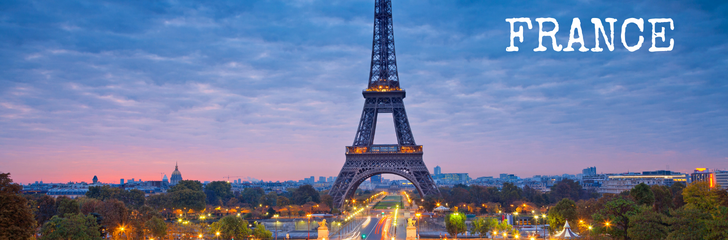
Brief History
The country of France emerged from the fragmentation of the larger Carolingian empire, when Hugh Capet became King of West Francia in 987. This kingdom consolidated power and expanded territorially, becoming known as “France.†Early wars were fought over land with English monarchs, including the Hundred Years War, then against the Habsburgs, especially after the latter inherited Spain and appeared to surround France. At one point France was closely associated with the Avignon Papacy, and experienced wars of religion after the Reformation between a twisting combination of Catholic and Protestant. French royal power reached its peak with the reign of Louis XIV (1642–1715), known as the Sun King, and French culture dominated Europe.
Royal power collapsed fairly quickly after the financial excesses of Louis XIV and within a century France experienced the French Revolution, which began in 1789, overthrew the still-lavish spending Louis XVI (1754–1793) and established a republic. France now found itself fighting wars and exporting its world-changing events across Europe.
The French Revolution was soon eclipsed by the imperial ambitions of Napoleon Bonaparte (1769–1821), and the ensuing Napoleonic Wars saw France first militarily dominate Europe, then be defeated. The monarchy was restored, but instability followed and a second republic, second empire and third republic followed in the nineteenth century. The early twentieth century was marked by two German invasions, in 1914 and 1940, and a return to a democratic republic after liberation. France is currently in its Fifth Republic, established in 1959 during upheavals in society.
People and Culture
France is home to a diverse population, including people of French descent as well as immigrants from former colonies, particularly in North and West Africa, and other parts of Europe. This diversity enriches French culture and contributes to its cosmopolitan nature.
Population Diversity: France is home to a diverse population, with roots tracing back to various ethnicities, including Celtic, Latin, Germanic, and Mediterranean influences. Additionally, France has a significant immigrant population from former colonies and other parts of the world, contributing to its multicultural fabric.
Language: The official language of France is French, which is spoken by the majority of the population. French is not only a means of communication but also a cornerstone of French identity and culture.
Arts and Literature: France has a long and illustrious history in the arts and literature. It has produced world-renowned writers like Victor Hugo, Marcel Proust, and Albert Camus, as well as influential artists like Claude Monet, Paul Cézanne, and Auguste Rodin.
Cuisine: French cuisine is celebrated globally for its sophistication, diversity, and emphasis on quality ingredients and culinary techniques. French dishes range from regional specialties like coq au vin and bouillabaisse to haute cuisine found in Michelin-starred restaurants.
Fashion: France is synonymous with fashion, with Paris being regarded as the fashion capital of the world. The city hosts prestigious fashion events such as Paris Fashion Week, where top designers showcase their latest collections.
Cinema: France has a thriving film industry with a rich cinematic tradition. French cinema has produced iconic directors like François Truffaut, Jean-Luc Godard, and Claude Chabrol, as well as timeless classics such as "The 400 Blows," "Breathless," and "Amélie."
Music and Performing Arts: France has made significant contributions to music and performing arts, encompassing classical music, opera, theater, and contemporary music genres. The country is home to renowned venues like the Opéra Garnier and the Paris Philharmonic.
Sports: Sports play a significant role in French culture, with football (soccer) being the most popular sport. France has a strong tradition of hosting major sporting events, including the Tour de France, the French Open (tennis), and the Rugby World Cup.
Cultural Festivals and Traditions: France celebrates numerous cultural festivals and traditions throughout the year, ranging from religious events like Christmas and Easter to secular festivals like Bastille Day (July 14th) and the Cannes Film Festival.
Education and Intellectualism: France has a long tradition of intellectualism and education, with prestigious universities like the Sorbonne in Paris. The French value education highly and have made significant contributions to fields such as philosophy, science, and mathematics.
Nature
France is renowned for its diverse and stunning natural landscapes, ranging from rugged coastlines and picturesque countryside to majestic mountains and lush forests. France's natural beauty and biodiversity make it a sought-after destination for outdoor enthusiasts, nature lovers, and travelers seeking to explore its diverse landscapes and ecosystems.
Economy
France’s economic freedom score is 63.6, making its economy the 57th freest in the 2023 Index. Its score has declined by 2.3 points. France is ranked 33rd out of 44 countries in the Europe region, and its overall score is higher than the world average and below the regional average.
The French economy remains diversified and relatively resilient. Such institutional strengths as strong protection of property rights and a fairly efficient regulatory framework facilitate entrepreneurial activity. Reforms to increase the economy’s competitiveness and flexibility have been adopted, but progress has been marginal. The state dominates major sectors of the economy.
Currency and Economic Stability
France uses the euro (€) as its official currency. The euro is the common currency of the Eurozone, which consists of 19 of the 27 European Union (EU) member states. The adoption of the euro in France occurred on January 1, 2002, replacing the French franc.
Regarding economic stability, France generally maintains a stable and developed economy. However, like many other countries, it faces various economic challenges and fluctuations influenced by both domestic and international factors.
Education and Healthcare
Overview of the Education System
The education system in France is highly structured and is designed to provide a comprehensive education to all citizens from early childhood through higher education. The education system in France is highly valued for its emphasis on academic rigor, critical thinking, and intellectual development. It aims to provide students with a strong foundation for future success in higher education, careers, and citizenship.
Healthcare System and Facilities
The healthcare system in France is renowned for its universal coverage, high-quality care, and comprehensive services.
France prioritizes accessibility, affordability, and quality of care for all residents. With its universal coverage and extensive network of healthcare facilities, France ranks among the top countries in the world for healthcare services.
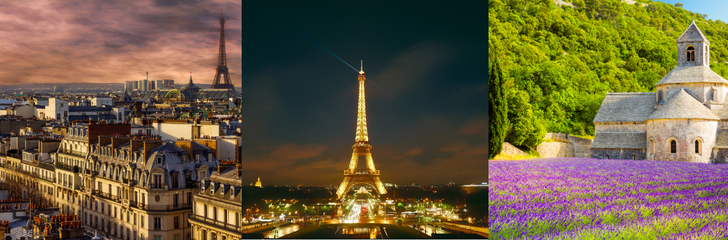
Climate and Geography
France’s climate is temperate, but divided into four distinct climatic areas. The oceanic climate of western France brings average rainfall spread over many days, and modest annual temperature variations (Brittany, Normandy, Atlantic Loire, Loire Valley).
Central and eastern France’s continental climate harbours cold winters and hot summers (the Champagne region, Burgundy, Alsace). The Mediterranean climate of south-eastern France is responsible for hot, dry summers, with rainfall from October to April (when the weather is damp but mild) and ample sunshine all year round (Provence, Côte d'Azur and Corsica). Above 600-800m altitudes, France’s mountain climate brings heavy rainfall, and snow three to six months per year.
Climate:
- Mediterranean Climate: The southern coast of France, including the French Riviera and Provence, experiences a Mediterranean climate characterized by hot, dry summers and mild, rainy winters. This region is known for its sunshine, beaches, and Mediterranean vegetation.
- Temperate Climate: The central and northern regions of France, including Paris and the Loire Valley, have a temperate climate with four distinct seasons. Summers are generally warm, while winters can be cold with occasional snowfall. Rainfall is evenly distributed throughout the year.
- Oceanic Climate: The western coast of France, including Brittany and Normandy, has an oceanic climate influenced by the Atlantic Ocean. Summers are mild, and winters are cool and damp, with frequent rainfall and maritime winds.
- Mountain Climate: The mountainous regions of the Alps and Pyrenees experience a mountain climate with colder temperatures and heavy snowfall in winter. Alpine climates vary with altitude, with high elevations experiencing subalpine and alpine conditions.
- Semi-Continental Climate: Eastern France, including Alsace and Lorraine, has a semi-continental climate with colder winters and warmer summers compared to the western regions. Temperature variations are more pronounced, and precipitation levels are lower.
Climate Variations by Region
Climate variations in France vary significantly from region to region due to the country's diverse geography and topography. Here's a brief overview of the climate characteristics of some key regions:
Northern France (including ÃŽle-de-France, Normandy, and Hauts-de-France):
- Generally, these regions experience a temperate oceanic climate influenced by the Atlantic Ocean.
- Winters are mild, and summers are relatively cool.
- Rainfall is evenly distributed throughout the year, with no extreme weather patterns.
Western France (Brittany):
- Brittany has a maritime climate with mild temperatures year-round.
- It experiences frequent rainfall, especially in the winter months.
- Summers are cooler compared to inland regions.
Eastern France (Alsace, Lorraine, and parts of Bourgogne-Franche-Comté):
- This region has a semi-continental climate with colder winters and warmer summers.
- It experiences more pronounced seasonal variations compared to western regions.
- Rainfall is generally lower compared to western France.
Central France (Auvergne, Rhône-Alpes, and parts of Bourgogne-Franche-Comté):
- The climate varies from semi-continental to mountainous, depending on the altitude.
- Summers are warm, and winters can be cold, especially in mountainous areas.
- Precipitation levels vary, with higher rainfall in mountainous regions.
Southern France (Provence-Alpes-Côte d'Azur, Occitanie, and parts of Nouvelle-Aquitaine):
- This region has a Mediterranean climate characterized by hot, dry summers and mild, wet winters.
- The coastline experiences sea breezes, while inland areas can be significantly hotter in summer.
- Rainfall is generally lower and more concentrated in the winter months.
Corsica:
- Corsica has a Mediterranean climate similar to southern France.
- Summers are hot and dry, while winters are mild and wet.
- The island experiences some regional variations in climate due to its diverse topography.
The Alps and Pyrenees:
- These regions have a mountainous climate with cold winters, heavy snowfall, and cool summers.
- Weather conditions can vary significantly depending on altitude and proximity to mountain ranges.
Geography:
- Coastal Plains: France has extensive coastal plains along the Mediterranean Sea to the south and the Atlantic Ocean to the west. These plains are characterized by fertile soil and support agriculture and urban development.
- Mountain Ranges: The French Alps in the southeast and the Pyrenees along the border with Spain are the country's major mountain ranges. The Alps are home to Mont Blanc, the highest peak in Western Europe, while the Pyrenees offer stunning landscapes and outdoor recreational opportunities.
- Central Plateaus: Central France features plateaus and rolling hills, including the Massif Central, which is known for its volcanic landscapes and rugged terrain.
- River Valleys: France is crisscrossed by several major rivers, including the Seine, Loire, Rhône, Garonne, and Rhine. These rivers and their valleys support agriculture, transportation, and urban centers.
- Islands: France includes several picturesque islands, such as Corsica in the Mediterranean and Réunion in the Indian Ocean. Corsica features rugged coastlines, mountains, and Mediterranean vegetation, while Réunion boasts volcanic peaks, tropical rainforests, and coral reefs.
Geography
Stepping back to appreciate the broader geographical canvas, France emerges as an intricate mosaic of diverse landscapes and awe-inspiring natural wonders. Covering an expansive area of 551,500km² (213,000 square miles), France stands as the third-largest country in Europe. Remarkably, France's geographical boundaries are predominantly shaped by water bodies and majestic mountains. The France climate narrative is intricately woven into the geography, contributing to the nation's unique charm and allure.
France's mainland is blessed with four distinct coastlines – the North Sea, the English Channel, the Atlantic Ocean, and the Mediterranean Sea. These coastlines span an impressive 3,427km (2,129 miles), each offering its own captivating narrative influenced by the France climate. With the exception of its northeastern boundary, where natural borders are shaped by the Rhine, Jura, Alps, and Pyrenees, the country's geography is shaped by either water or majestic mountain ranges.
France's reach extends beyond the mainland, embracing overseas territories that enrich its geographical diversity. Outside metropolitan France, the national territory extends to the ‘départements d’outre-mer’ and ‘territoires d’outre-mer’, collectively referred to as ‘DOM-TOMs’. From the vibrant Caribbean islands of Guadeloupe, Martinique, and Saint-Barthélemy to the tropical haven of French Polynesia and the African gems of Réunion and Mayotte, these territories expand France's total land area to an impressive 675,417km² (254,000 square miles). These far-flung territories offer a unique window into the broader spectrum of France's climate and geography.
Regions and Their Characteristics
ÃŽle-de-France:
- Capital Region: ÃŽle-de-France encompasses Paris, the capital city of France, and its surrounding suburbs.
- Cultural Hub: Home to iconic landmarks such as the Eiffel Tower, Louvre Museum, and Notre-Dame Cathedral.
- Economic Center: One of Europe's major economic and financial hubs, with a diverse economy including finance, technology, fashion, and tourism.
Provence-Alpes-Côte d'Azur (PACA):
- Mediterranean Coast: Encompasses the French Riviera, with famous cities like Nice, Cannes, and Saint-Tropez.
- Mediterranean Climate: Known for its warm weather, beautiful beaches, and vibrant nightlife.
- Cultural Heritage: Rich in history and culture, with Roman ruins, medieval villages, and vibrant arts scenes.
Auvergne-Rhône-Alpes:
- Alpine Landscapes: Contains the French Alps, with majestic mountains, ski resorts, and outdoor recreational opportunities.
- Cultural Diversity: Home to historic cities like Lyon and Grenoble, known for their culinary traditions, museums, and festivals.
- Industrial and Technological Centers: Has thriving industries in manufacturing, technology, and research.
Occitanie:
- Diverse Landscapes: Features Mediterranean beaches, rolling vineyards, and the Pyrenees mountains.
- Wine Country: Known for its wine regions like Languedoc-Roussillon and the vineyards of the Midi.
- Historic Sites: Abounds with historic towns, Roman ruins, and medieval fortresses.
Nouvelle-Aquitaine:
- Atlantic Coastline: Stretches along the Bay of Biscay, offering sandy beaches, surfing spots, and seaside resorts.
- Wine and Gastronomy: Famous wine regions like Bordeaux and Cognac, renowned for their vineyards and culinary delights.
- Diverse Landscapes: Encompasses lush countryside, rolling hills, and the Dordogne Valley with its prehistoric caves.
Brittany (Bretagne):
- Coastal Beauty: Known for its rugged coastline, picturesque fishing villages, and sandy beaches.
- Celtic Heritage: Rich in Celtic culture and traditions, including Breton music, dance, and folklore.
- Seafood Cuisine: Famous for its fresh seafood dishes like crêpes, galettes, and oysters.
Hauts-de-France:
- Historical Significance: Contains historic cities like Lille, Amiens, and Arras, with well-preserved medieval architecture.
- Industrial Heritage: Once a major coal and industrial region, now transitioning to service industries and innovation.
- Cultural Diversity: Influenced by both French and Flemish cultures, with bilingualism and diverse traditions.
Grand Est:
- Border Region: Borders Germany, Luxembourg, and Belgium, with a mix of French and Germanic influences.
- Scenic Landscapes: Offers picturesque countryside, vineyards, and the Vosges mountains.
- Historic Cities: Includes Strasbourg, known for its Gothic cathedral and European institutions, and Reims, renowned for its Champagne production.
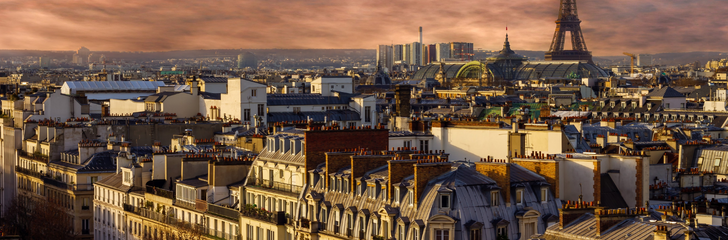
Demographics
Population
Population Size and Density
As of the most recent census, boasts a population of approximately 64.8 million people live in France. making it the 23rd most populous country globally.
In terms of population density, France has an average population density of around 119 people per square kilometer. However, population density varies significantly across different regions of the country
France's population size and density reflect its status as a highly developed and densely populated country in Europe, with a mix of urban and rural areas and diverse demographic patterns across different regions.
Source: France Population
Age Distribution
like many other developed countries, has an aging population with a relatively balanced age distribution.
| Age Group | Percentage of Population |
| 0-14 | 18-19% |
| 15-64 | 63-65% |
| 65 years and over | 16-18% |
It's important to note that these percentages can vary slightly from year to year due to factors such as demographic trends, immigration, and government policies. Additionally, population projections suggest that the proportion of elderly people in France is expected to increase in the coming decades, which may have implications for healthcare, social services, and pension systems.
Source: France Population Structure
Ethnic Composition
Predominant Ethnic Groups
France is known for its diverse population, and while the majority of its residents are ethnically French, there are also significant minority populations and immigrant communities.
France is characterized by a diverse and multicultural population, and it officially adheres to the principle of equality and does not recognize specific ethnic groups in its official statistics. However, France is home to various communities with different cultural and ethnic backgrounds. The following are some of the notable groups:
Ethnic French (Français de souche): The majority of the population in France identifies as ethnic French, referring to individuals whose families have a long history in the country. This group is diverse in itself and includes people from various regions of France.
North African Communities: France has a significant population with North African origins, primarily from former French colonies such as Algeria, Morocco, and Tunisia. The North African diaspora is well-established in France and has contributed to the country's cultural diversity.
Sub-Saharan African Communities: France is also home to communities with origins in Sub-Saharan Africa, including countries such as Senegal, Mali, Ivory Coast, and others. Immigration from Sub-Saharan Africa has contributed to the multicultural fabric of French society.
Maghrebi Communities: In addition to the North African communities mentioned earlier, there are communities with roots in the Maghreb region, encompassing Algeria, Morocco, and Tunisia. These communities have a significant presence in urban areas.
Asian Communities: France has a diverse Asian population, including individuals of Chinese, Vietnamese, Cambodian, Laotian, and Indian descent. These communities often contribute to the cultural and economic life of the country.
Jewish Communities: France has a historically significant Jewish community. Paris, in particular, has been home to a vibrant Jewish population for centuries.
Roma and Traveler Communities: France is also home to Roma and Traveler communities, each with its distinct cultural identity. However, these communities often face social and economic challenges.
Minority Communities
France is home to several minority communities, each contributing to the country's cultural, social, and economic diversity. North African Communities, Sub-Saharan African Communities, Asian Communities, Roma and Traveler Communities, Jewish Community, Muslim Community, Other Minority Groups.
Religion
Predominant Religions and Their Influence on Culture
About three-fifths of the French people belong to the Roman Catholic Church. Only a minority, however, regularly participate in religious worship; practice is greatest among the middle classes. The northwest (Brittany-Vendée), the east (Lorraine, Vosges, Alsace, Jura, Lyonnais, and the northern Alps), the north (Flanders), the Basque Country, and the region south of the Massif Central have a higher percentage of practicing Roman Catholics than the rest of the country. Recruitment of priests has become more difficult, even though the church, historically autonomous, is very progressive and ecumenical.
Religious Freedom and Tolerance
The major religions practiced in France include Christianity (about 50% overall, with denominations including Catholicism, various branches of Protestantism, Eastern Orthodoxy, Armenian Orthodoxy), Islam, Judaism, Buddhism, Hinduism, and Sikhism among others, making it a multi-confessional country.
Enshrined in the country's laws and constitution. The French government officially recognizes and protects the right of individuals to practice their religion freely, provided that such practices are within the boundaries of French law and do not infringe upon the rights of others.
Culture and Heritage
Traditional Customs
Festivals and Holidays
France celebrates a diverse range of festivals and holidays throughout the year, reflecting its rich cultural heritage, religious traditions, and regional customs. Here are some of the notable festivals and holidays in France:
New Year's Day (Jour de l'An): January 1st is celebrated as New Year's Day in France, marked by fireworks, parties, and gatherings with family and friends.
Epiphany (La Fête des Rois): Celebrated on January 6th, Epiphany marks the end of the Christmas season in France. It is customary to eat a special cake called "galette des rois," which contains a hidden figurine or bean. The person who finds the trinket in their slice becomes the king or queen for the day.
Candlemas (La Chandeleur): Celebrated on February 2nd, Candlemas is a Christian holiday commemorating the presentation of Jesus at the Temple. In France, it is a tradition to eat crêpes on this day, symbolizing the sun and the coming of spring.
Easter (Pâques): Easter is a significant religious holiday in France, celebrated with church services, family gatherings, and Easter egg hunts. Easter Sunday and Easter Monday are public holidays in France.
May Day (Fête du Travail): May 1st is Labor Day in France, a day dedicated to celebrating workers' rights and achievements. It is also a day for political rallies, demonstrations, and the giving of lily-of-the-valley flowers as a symbol of good luck.
Victory in Europe Day (Fête de la Victoire 1945): Celebrated on May 8th, Victory in Europe Day commemorates the end of World War II in Europe. It is a national holiday in France, marked by ceremonies, parades, and tributes to veterans.
Bastille Day (La Fête Nationale): July 14th is Bastille Day, the French National Day, commemorating the storming of the Bastille prison during the French Revolution. It is celebrated with fireworks, parades, concerts, and public festivities throughout France.
Assumption Day (L'Assomption): August 15th is Assumption Day, a Catholic holiday commemorating the Virgin Mary's assumption into heaven. It is observed with religious services and processions in many parts of France.
All Saints' Day (La Toussaint): November 1st is All Saints' Day, a Christian holiday honoring all saints and martyrs. It is a day for visiting cemeteries, paying respects to deceased loved ones, and placing flowers on graves.
Armistice Day (L'Armistice): November 11th is Armistice Day, commemorating the end of World War I. It is a day to remember and honor the sacrifices of those who served in the war.
Christmas (Noël): Christmas is celebrated with religious services, festive decorations, family gatherings, and traditional meals. In many regions of France, the holiday season is marked by Christmas markets, nativity scenes, and festive lights.
Traditional Clothing and Cuisine
Cuisine
France is a foodie capital for a reason.
Prepare to be enchanted by the culinary ballet that unfolds in France, for this is the land where food becomes art, and dining is a celebration of life. France culture embraces gastronomy with a passion, elevating every meal to a symphony of flavors and textures that dance upon the taste buds.
French cuisine speaks of expression and passion; and much socializing is done around lengthy meals and is completely part of the French culture and traditions.
From the sumptuous boeuf bourguignon, where tender beef melds with velvety wine sauce, to the savory coq au vin, where chicken and red wine unite in a harmonious duet, each dish is a masterpiece of culinary creativity. Savor the richness of ratatouille, a sun-kissed melody of vegetables that transports you to the idyllic gardens of Provence.
Over the years, cooking styles have evolved from the heavier, saucier and more complicated dishes to what is now a reflection of a modern yet still highly sophisticated society.
Source: French Culture : Food, Traditions, Fashion, Art and Language
Traditional Clothing
France has a rich diversity of traditional clothing, although in modern times, traditional attire is not commonly worn in everyday life. However, for special occasions, festivals, and cultural events, traditional clothing may still be showcased. Here are some examples:
Alsace: The traditional dress in Alsace, particularly for women, includes colorful floral-printed dresses, aprons, lace headscarves, and embroidered blouses. Men may wear embroidered vests, trousers, and hats adorned with feathers.
Brittany: In Brittany, traditional clothing is often associated with the region's Celtic heritage. Women may wear elaborately embroidered dresses with lace collars and coifs, while men might wear striped or checked shirts and embroidered waistcoats.
Provence: Traditional Provencal attire for women includes long, flowy skirts paired with fitted blouses and embroidered vests. Men may wear linen shirts with wide-brimmed hats and sashes.
Basque Country: Basque traditional clothing includes the "ezpata" for men, which is a wide-brimmed hat, and the "ezkontza," a traditional Basque wedding attire. Women may wear colorful dresses with lace details and headscarves.
Corsica: Corsican traditional clothing reflects the island's rugged landscape and cultural heritage. Men may wear black or dark-colored trousers with white shirts and vests, while women may wear embroidered blouses and long skirts.
Source: Some Of The Traditional Dresses Of France | So Sew Easy.
Art and Architecture
Influential Artists and Architects
France has been home to numerous influential artists and architects throughout history, many of whom have left an indelible mark on the world of art, architecture, and culture. Here are some of the most influential artists and architects associated with France:
- Leonardo da Vinci (1452-1519): Though Italian by birth, da Vinci spent his final years in France under the patronage of King Francis I. He is renowned for his iconic artworks such as the "Mona Lisa" and "The Last Supper," and his contributions to science and engineering.
- Claude Monet (1840-1926): A leading figure in the Impressionist movement, Monet is celebrated for his vibrant landscapes, especially his series of paintings featuring water lilies, gardens, and the countryside. His works include "Impression, Sunrise" and "Water Lilies."
- Auguste Rodin (1840-1917): Rodin was a pioneering sculptor known for his expressive, emotive works such as "The Thinker" and "The Kiss." His innovative approach to sculpting and his exploration of human form have had a profound impact on modern sculpture.
- Gustave Eiffel (1832-1923): Gustave Eiffel was the engineer behind the iconic Eiffel Tower, which was completed in 1889 for the Paris Exposition Universelle. The tower, initially criticized but now celebrated, has become a symbol of France and an architectural marvel.
- Henri Matisse (1869-1954): Matisse was a leading figure of the Fauvist movement, known for his bold use of color and expressive brushwork. His works include "The Dance," "Woman with a Hat," and numerous other paintings, sculptures, and prints.
- Eugène Viollet-le-Duc (1814-1879): Viollet-le-Duc was a prominent architect and theorist known for his restorations of medieval buildings, including Notre-Dame Cathedral in Paris, and his influential writings on architecture and restoration techniques.
- Pierre-Auguste Renoir (1841-1919): Another major figure of Impressionism, Renoir is celebrated for his portraits, landscapes, and scenes of everyday life. His works include "Luncheon of the Boating Party," "Dance at Le Moulin de la Galette," and "Bal du moulin de la Galette."
- Le Corbusier (1887-1965): Le Corbusier, born Charles-Édouard Jeanneret, was a pioneering architect, urban planner, and designer known for his modernist approach to architecture and urban design. His iconic works include the Villa Savoye, Unité d'Habitation, and the Notre-Dame-du-Haut chapel.
- Edgar Degas (1834-1917): Degas was a key figure in the Impressionist movement, known for his paintings, sculptures, and drawings of dancers, bathers, and everyday scenes. His works include "The Bellelli Family," "The Dance Class," and "The Absinthe Drinker."
- Georges Braque (1882-1963): Along with Picasso, Braque was a co-founder of Cubism, a revolutionary movement that transformed the art world in the early 20th century. His works include "Violin and Candlestick" and "Man with a Guitar."
These artists and architects, among many others, have left an enduring legacy that continues to shape the world of art, architecture, and culture both in France and around the globe. Their innovative ideas, techniques, and creations have inspired generations of artists, architects, and creative thinker.
Notable Art Movements and Architectural Styles
- Gothic Architecture (12th to 16th century): France is renowned for its Gothic cathedrals, such as Notre-Dame de Paris, Chartres Cathedral, and Reims Cathedral. Gothic architecture is characterized by pointed arches, ribbed vaults, and flying buttresses.
- Renaissance Architecture (15th to 17th century): The Renaissance brought classical elements back into architectural design, emphasizing symmetry, proportion, and classical orders. The Château de Chambord and the Château de Fontainebleau are notable examples of French Renaissance architecture.
- Baroque Architecture (17th to 18th century): Baroque architecture, known for its grandeur, theatricality, and ornate decoration, flourished in France during the reign of Louis XIV. Versailles Palace, designed by architects like Louis Le Vau and Jules Hardouin-Mansart, exemplifies French Baroque style.
- Neoclassical Architecture (late 18th to early 19th century): Neoclassicism, inspired by ancient Greek and Roman architecture, emphasized simplicity, symmetry, and order. The Panthéon in Paris and the Arc de Triomphe are iconic examples of Neoclassical architecture in France.
- Art Deco (1920s to 1930s): Art Deco, characterized by geometric shapes, streamlined forms, and decorative motifs, influenced architecture, design, and the decorative arts. The Palais de Chaillot and the Palais de Tokyo in Paris exhibit Art Deco elements.
Music and Dance
Traditional Music and Dance Forms
Traditional music and dance play significant roles in French culture, reflecting the country's diverse regional traditions, history, and cultural heritage. Here are some notable traditional music and dance forms found across France:
Breton Music and Dance:
- Breton music and dance originate from Brittany in northwestern France. The region is known for its lively folk music, characterized by traditional instruments such as the bagpipes (biniou), accordion, and bombarde (a type of oboe).
- Breton dances include the "An Dro," a circular dance, and the "Gavotte," a lively couple's dance.
Chanson Française:
- Chanson Française refers to the traditional French song genre, which encompasses a wide range of styles and themes, including love, politics, and everyday life.
- Prominent chanson artists include Edith Piaf, Jacques Brel, Georges Brassens, and Charles Aznavour.
Musette:
- Musette is a traditional form of French folk music associated with Parisian café culture. It features the accordion as its primary instrument, accompanied by the violin, guitar, and sometimes the clarinet.
- Musette is often played at social gatherings, dances, and outdoor events.
Provençal Music and Dance:
- Provençal music and dance originate from the Provence region in southern France. It features traditional instruments such as the tambourine, flute, and triangle.
- The "Farandole" is a well-known Provençal dance, typically performed in a long chain or procession, with participants holding hands and weaving in and out.
Bal Folk:
- Bal Folk refers to traditional folk dances and music gatherings held across France. It encompasses a variety of regional styles, including Breton, Auvergne, and Occitan.
- Bal Folk events feature live music performed by traditional folk bands, inviting participants to join in circle dances, line dances, and partner dances.
Bourrée:
- Bourrée is a traditional dance and music style associated with central France, particularly the Auvergne region. It is characterized by lively rhythms and repetitive patterns.
- The bourrée dance is often performed in pairs, with dancers executing intricate footwork and graceful movements.
Basque Music and Dance:
- Basque music and dance come from the Basque Country, which straddles the border between France and Spain. Traditional Basque music features instruments like the txalaparta (percussion), alboka (double-reed horn), and trikitixa (accordion).
- Basque dances, such as the "Soka-dantza" and "Ezpatadantza," are often performed during festivals and cultural events, accompanied by lively music and colorful costumes.
UNESCO World Heritage Sites
Description of Major Heritage Sites
France boasts a wealth of major heritage sites, many of which are recognized internationally for their historical, architectural, and cultural significance. Here are descriptions of some of France's most iconic heritage sites:
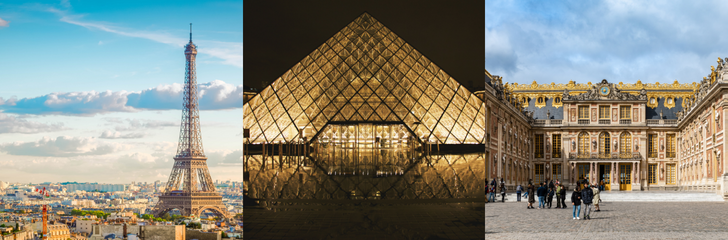
Eiffel Tower (Tour Eiffel), Paris:
- The Eiffel Tower is one of the most recognizable landmarks in the world and a symbol of France. Designed by Gustave Eiffel, it was completed in 1889 for the Exposition Universelle (World's Fair) and served as a testament to French engineering prowess. The tower stands at 324 meters (1,063 feet) tall and offers panoramic views of Paris from its observation decks.
Notre-Dame Cathedral, Paris:
- Notre-Dame Cathedral, located on the Île de la Cité in Paris, is a masterpiece of French Gothic architecture. Construction began in the 12th century and continued for over 200 years. Notre-Dame is renowned for its stunning stained glass windows, intricate sculptures, and iconic flying buttresses. The cathedral suffered extensive damage from a fire in 2019 but continues to be a symbol of Parisian heritage and resilience.
Palace of Versailles (Château de Versailles), Versailles:
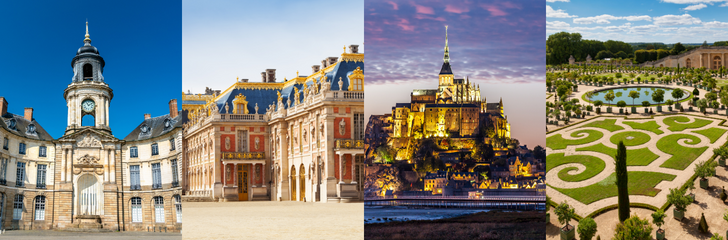
- The Palace of Versailles is a grandiose royal residence located near Paris. Built by Louis XIV in the 17th century, it served as the seat of political power in France until the French Revolution. The palace is renowned for its opulent architecture, vast gardens, and lavish interior, including the Hall of Mirrors and the King's and Queen's apartments.
Mont Saint-Michel, Normandy:
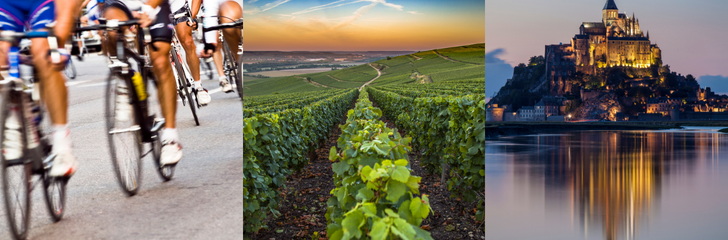
- Mont Saint-Michel is a breathtaking island commune located off the coast of Normandy. Dominated by a medieval abbey perched atop a rocky outcrop, Mont Saint-Michel is a UNESCO World Heritage Site and a marvel of medieval architecture. The abbey, dedicated to the Archangel Michael, attracts millions of visitors each year.
Louvre Museum (Musée du Louvre), Paris:
- The Louvre Museum is one of the largest and most visited art museums in the world. Housed in the former royal palace of the Louvre, it is home to an extensive collection of artworks spanning from antiquity to the 19th century. The Louvre is renowned for masterpieces such as the Mona Lisa, the Venus de Milo, and the Winged Victory of Samothrace.
Sainte-Chapelle, Paris:
- Sainte-Chapelle is a stunning Gothic chapel located on the Île de la Cité in Paris. Built in the 13th century by King Louis IX, it is renowned for its exquisite stained glass windows, which depict biblical scenes and narratives. The chapel's soaring architecture and luminous windows make it a masterpiece of medieval craftsmanship.
Pont du Gard, Occitanie:
- The Pont du Gard is an ancient Roman aqueduct bridge located in the Occitanie region of southern France. Built in the 1st century AD, it served as part of a water supply system for the city of Nîmes. The Pont du Gard is an exceptional example of Roman engineering and is recognized as a UNESCO World Heritage Site.
These major heritage sites represent just a glimpse of France's rich cultural and architectural legacy, spanning millennia of history and captivating visitors from around the world with their beauty, grandeur, and historical significance.

Language and Communication
Official Language
The official language of France is French (français). French is not only the official language of France but also holds official status in numerous other countries and international organizations, such as Belgium, Switzerland, Canada, and many African nations. It is one of the most widely spoken languages globally and serves as a primary language of diplomacy, commerce, literature, and culture.
In France, the French language plays a central role in education, government, media, and everyday life. French is taught in schools as the primary language of instruction, and proficiency in French is essential for communication and integration into French society.
The French language is known for its rich literary tradition, with French literature spanning from medieval epics to modern novels, poetry, and philosophical works. French culture, including cuisine, art, music, and cinema, is also deeply intertwined with the language.
While French is the dominant language in France, there are also regional languages and dialects spoken throughout the country, such as Breton, Occitan, Alsatian, and Corsican. However, French remains the primary language of communication and administration at the national levelTop of Form
Regional Languages
France is home to several regional languages and dialects, reflecting the country's diverse linguistic heritage. While French is the official language and the primary means of communication, various regional languages are spoken in specific areas. Many of these languages are recognized as part of France's cultural diversity, and efforts are made to preserve and promote them. Some of the notable regional languages in France include:
Breton (Brezhoneg):
- Spoken in Brittany (Bretagne), located in the northwest of France.
- Breton is a Celtic language with historical ties to Welsh and Cornish.
Occitan (Occitan, Langue d'Oc):
- Occitan is spoken in the southern regions of France, including parts of Provence, Languedoc, and Gascony.
- It is a Romance language with various dialects, such as Gascon and Provençal.
Alsatian (Elsässisch):
- Alsatian is spoken in the Alsace region in northeastern France, near the German border.
- It is a Germanic language with influences from both French and German.
Corsican (Corsu):
- Spoken in the island of Corsica in the Mediterranean.
- Corsican is a Romance language with influences from Italian.
Basque (Euskara):
- Basque is spoken in the Basque Country, which spans parts of southwestern France and northern Spain.
- It is a non-Indo-European language with a unique linguistic structure.
Catalan (Català ):
- Spoken in the Pyrénées-Orientales region in the south of France.
- Catalan is a Romance language with strong ties to the language spoken in Catalonia, a region in Spain.
Provencal (Provençal):
- Provencal is spoken in the historical region of Provence in the southeast of France.
- It is a Romance language with similarities to Occitan.
Langues d'Oïl:
- Langues d'Oïl is a group of Romance languages spoken in the northern parts of France.
- It includes various dialects, such as Picard, Norman, and Poitevin-Saintongeais.
English Proficiency
Level of English Proficiency Among the Population
As of the latest available data, the level of English proficiency among the population in France varies, but overall, it's estimated that about 39% of the French population can speak English to some degree. However, proficiency levels can vary significantly depending on factors such as age, education, and exposure to English-language media and culture.
It's important to note that English proficiency rates may fluctuate over time due to factors such as changes in education policies, globalization, and increasing exposure to English through media, travel, and international business interactions. Additionally, proficiency levels may be higher among younger generations and those with higher levels of education and professional exposure to English-speaking environments.
English as a Medium of Instruction in Schools
English as a medium of instruction (EMI) in schools is becoming increasingly common in many countries around the world, including some regions of France. However, in France specifically, the use of English as a primary medium of instruction in schools is relatively limited compared to countries where English is the native language or widely spoken as a second language.
Communication Style
Formality and Informality in Communication
Formality and informality in communication refer to the degree of politeness, respect, and adherence to social norms that individuals observe when interacting with others. These concepts play a crucial role in shaping interpersonal relationships, professional interactions, and social dynamics. Here's an overview of formality and informality in communication:
Formality:
- Professional Settings: Formal communication is often expected in professional environments such as workplaces, business meetings, and academic settings. In these contexts, individuals typically use polite language, adhere to professional etiquette, and maintain a respectful tone.
- Politeness and Respect: Formal communication emphasizes politeness, respect for hierarchy, and adherence to social conventions. It may involve using titles and honorifics, addressing individuals with appropriate terms of respect (e.g., "Mr.," "Ms.," "Dr.," "Professor"), and employing formal greetings and farewells.
- Written Communication: Formal written communication, such as business letters, academic papers, and official documents, follows established formats, uses standard language and grammar, and maintains a professional tone. It often avoids colloquialisms, slang, and overly familiar language.
- Cultural Differences: The expectations of formality vary across cultures and may be influenced by factors such as societal norms, cultural values, and traditions. It's important to be mindful of cultural differences in formal communication to avoid misunderstandings and show respect for diverse cultural practices.
Informality:
- Casual Settings: Informal communication is common in casual or social settings, such as conversations among friends, family gatherings, and informal social events. It is characterized by a relaxed tone, familiarity, and a lack of rigid social norms.
- Colloquial Language: Informal communication often involves the use of colloquial language, slang, and informal expressions that reflect the speaker's personality, style, and cultural background. It may include humor, informal greetings, and expressions of emotion.
- Flexibility and Spontaneity: Informal communication allows for greater flexibility and spontaneity compared to formal communication. It encourages open dialogue, active listening, and the exchange of ideas in a relaxed and informal manner.
- Building Rapport: Informal communication can help build rapport, strengthen interpersonal relationships, and foster a sense of camaraderie and trust among individuals. It allows people to connect on a personal level and express themselves authentically.
Non-verbal Communication Cues and Conventions
Non-verbal communication cues and conventions play a crucial role in conveying meaning, emotions, and intentions in interpersonal interactions. They complement verbal communication and often provide valuable insights into a person's thoughts, feelings, and attitudes.
Facial Expressions:
- Facial expressions, such as smiles, frowns, raised eyebrows, and squinted eyes, convey emotions and reactions.
- Eye contact or lack thereof can indicate interest, engagement, or discomfort.
Gestures:
- Hand gestures, such as waving, pointing, and thumbs-up, accompany speech and emphasize key points.
- Cultural differences exist in the interpretation of gestures, so it's important to be mindful of cultural norms and avoid gestures that may be considered offensive or inappropriate.
Posture and Body Language:
- Body posture, including standing tall, slouching, or leaning forward, reflects confidence, attentiveness, or relaxation.
- Open body language, such as facing the person you're speaking with and uncrossed arms, signals openness and receptiveness.
Proxemics:
- Proxemics refers to the use of physical space in communication.
- Personal space preferences vary across cultures and individuals, with some cultures valuing closer proximity during conversations than others.
Tone of Voice:
- The tone, pitch, volume, and pace of speech convey emotions and attitudes.
- A soothing tone can convey empathy and reassurance, while a harsh tone may signal anger or frustration.
Touch:
- Touch can convey warmth, support, and affection, but it's important to be mindful of cultural differences and individual preferences regarding touch.
- In professional settings, touch should be used judiciously and with sensitivity to boundaries.
Appearance and Dress:
- Personal grooming, attire, and accessories contribute to the overall impression one makes in social and professional interactions.
- Dress codes and expectations vary depending on the context, culture, and social norms.
Silence:
- Silence can convey various meanings, including contemplation, agreement, disagreement, or discomfort.
- Pauses in conversation allow for reflection, processing of information, and turn-taking.
Microexpressions:
- Microexpressions are brief, involuntary facial expressions that reveal underlying emotions.
- They occur within milliseconds and can provide insights into a person's true feelings, even when they're trying to conceal them.