
About
Overview | Climate and Geography | Demographics | Culture and Heritage | Language and Communication
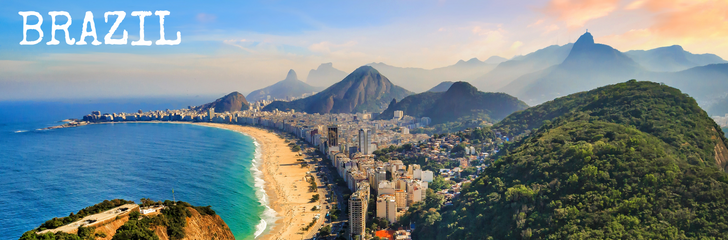
Brief History of Brazil
Until the arrival of the Europeans, Brazil was settled by stone-age tribes. Then the Portuguese arrived in 1500 and Pedro Alvares Cabral claimed Brazil as a colony of Portugal. The first settlement was founded in 1532 and Portugal began to take more of the land. The primary export was sugar. Slaves were imported from Africa to work the fields. Brazil continued to expand through wars and battles. The Portuguese defeated the French to take Rio de Janeiro and also took over several Dutch and British outposts. Soon Brazil was one of the largest territories in the world. Today it is the 5th largest country in the world.
In 1807, the Portuguese royal family escaped from Napoleon and fled to Brazil. Although the king, Dom Joao VI, returned to Portugal in 1821, his son remained in Brazil and became emperor of the country. He declared Brazil's independence in 1822.
In 1889, Deodoro Da Fonseca led a coup to take over the government from the emperor. He changed the government to a republic ruled by a constitution. Over the years since, the country has been ruled by elected presidents as well as by military coups.
Lula da Silva was elected president in 2002. He was Brazil's first working-class president and was president for 2 terms until 2010. In 2011 Dilma Vana Rousseff became the first woman president of Brazil.
Early History
Brazil is the largest country in South America and the fifth largest nation in the world. Brazil is the largest country in South America and the fifth largest nation in the world. It forms an enormous triangle on the eastern side of the continent with a 4,500-mile (7,400-kilometer) coastline along the Atlantic Ocean. It has borders with every South American country except Chile and Ecuador.
The Brazilian landscape is very varied. It is most well known for its dense forests, including the Amazon, the world's largest jungle, in the north. But there are also dry grasslands (called pampas), rugged hills, pine forests, sprawling wetlands, immense plateaus, and a long coastal plain.
Northern Brazil is dominated by the Amazon River and the jungles that surround it. The Amazon is not one river but a network of many hundreds of waterways. Its total length stretches 4,250 miles (6,840 kilometers). Thousands of species live in the river, including the infamous piranha and the boto, or pink river dolphin.
People and Culture
Most Brazilians are descended from three ethnic groups: Amerindians, European settlers (mainly from Portugal), and Africans. Starting in the 19th century, waves of immigrants from Europe, the Middle East, and even Japan added to this mix. This diversity of cultures has created a rich religious, musical, and culinary culture.
Brazilians are soccer crazy, and their country has produced some of the best players. The most famous of all is Edson Arantes do Nascimento, better known as Pelé. Brazil has won the World Cup soccer finals five times, more than any other nation.
Nature
Brazil has the greatest variety of animals of any country in the world. It is home to 600 mammal species, 1,500 fish species, 1,600 bird species, and an amazing 100,000 different types of insects. Brazil's jungles are home to most of its animal life, but many unique species also live in the pampas and semidesert regions.
In the central-western part of Brazil sits a flat, swampy area called the Pantanal. This patchwork of flooded lagoons and small islands is the world's largest wetland. Here live giant anacondas, huge guinea pig relatives called capybaras, and fierce South American alligators called caimans.
For thousands of years, people have been exploiting the jungles of Brazil. But since Europeans arrived about five centuries ago, forest destruction has been rampant. Most of Brazil's Atlantic rain forest is now gone, and huge tracts of the Amazon are disappearing every year. The government has established many national parks and refuges, but they only cover about 7 percent of the country.
Source: Source:National Geographic Kids.
Economy
Overview of the Economy and Economic Sectors
Brazil is the eleventh-largest economy in the world and has seen essentially moderate economic growth since its 2014 recession. The services sector is the largest economic sector in Brazil and accounted for 58.9% of GDP in of 2022. Agriculture and industry also contribute a substantial amount to Brazil's economic growth. Despite some years of high growth, Brazil's average annual growth since 1980 is under 3%.
Currency and Economic Stability
According to the World Bank, “the income level of the poorest 40% of the population increased by an average of 7.1% (in real terms) between 2003 and 2014, compared to a 4.4% increase in income for the population as a whole.
The composition of Brazil’s economy reflects the dominance of its service sector, the strength of industry, and the continuing importance of agriculture.
Education and Healthcare
Overview of the Education System
Brazil's education system is a complex framework that reflects the country's vast size, diverse population, and historical challenges.
Brazil's education system is undergoing reforms to address longstanding challenges and improve access to quality education for all its citizens. However, achieving meaningful progress requires sustained investment, policy innovation, and collaboration among government, educators, and civil society stakeholders.
Healthcare System and Facilities
Brazil's healthcare system is a mix of public and private services, designed to provide healthcare to its population of over 200 million people. Brazil's healthcare system is a complex network of public and private services aimed at providing healthcare to its diverse population. While progress has been made in expanding access to healthcare, challenges related to inequality, funding, infrastructure, and workforce shortages remain areas of focus for policymakers and healthcare professionals.
Climate and Geography
Geography
Regions and Their Characteristics
Brazil is a vast and diverse country, divided into five distinct regions, each with its own unique characteristics in terms of geography, climate, culture, economy, and demographics. Here's an overview of the regions and their key characteristics:
North Region (Região Norte):
Geography: The North Region is characterized by the Amazon Rainforest, rivers (including the Amazon River), and diverse ecosystems.
Climate: Tropical rainforest climate with high temperatures and heavy rainfall.
Culture: Home to indigenous communities and diverse cultural heritage.
Economy: Rich in natural resources such as timber, minerals, and biodiversity. Agriculture, mining, and ecotourism are significant economic activities.
Northeast Region (Região Nordeste):
Geography: Features a long coastline, semi-arid interior (Sertão), and fertile coastal plains.
Climate: Varied climates including semi-arid, tropical, and coastal.
Culture: Known for its vibrant music, dance (such as frevo and forró), and cuisine.
Economy: Agriculture, fishing, tourism, and renewable energy (wind and solar) are major economic drivers. Challenges include drought, poverty, and social inequality.
Central-West Region (Região Centro-Oeste):
Geography: Contains the Brazilian Highlands (Planalto Central) and the Pantanal wetlands.
Climate: Tropical savanna climate with a dry season and wet season.
Culture: Influenced by indigenous traditions and cowboy culture (in the Pantanal).
Economy: Agriculture, cattle ranching, mining, and agribusiness are key economic activities. The region is also an important transportation hub.
Southeast Region (Região Sudeste):
Geography: Home to Brazil's largest cities, including São Paulo and Rio de Janeiro. Contains the Serra do Mar mountain range and Atlantic Forest.
Climate: Varied climates ranging from tropical to subtropical.
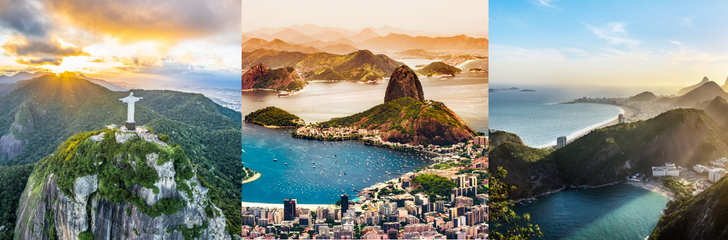
Culture: Diverse cultural influences, vibrant nightlife, and iconic landmarks (such as Christ the Redeemer and Sugarloaf Mountain).
Economy: Industrial and economic powerhouse with strong sectors in manufacturing, services, finance, and technology. São Paulo is the financial capital, while Rio de Janeiro is known for tourism and oil production.
South Region (Região Sul):
Geography: Features rolling hills, plateaus, and a coastline along the Atlantic Ocean.
Climate: Subtropical climate with four distinct seasons.
Culture: Influenced by European immigrants (particularly from Germany, Italy, and Poland) and indigenous peoples.
Economy: Strong agricultural sector (including soybeans, wheat, and grapes), manufacturing, and services. Known for its high standard of living and quality of life.
Each region of Brazil contributes to the country's cultural diversity, economic development, and natural heritage, reflecting the nation's rich tapestry of traditions, landscapes, and opportunities.
Major Cities in Brazil:
| City | State | Population | Notable for |
| Sao Paulo | Sao Paulo | 3.24 crores approx. | Skyscrapers, Modern Architecture |
| Rio de Janeiro | Rio de Janeiro | 63.2lakhs approx. | Tourist Attractions |
| Salvador | Bahia | 30 lakhs approx. | Afro-Brazilian culture |
| Brasilia | Federal District | 25 lakhs approx. | Designs of Buildings |
| Fortaleza | Ceara | 26.1 lakhs approx. | urban beaches, Praia de Iracema and Praia Meireles, |
| Belo Horizonte | Minas Gerais | 25 lakhs approx. | Cultural Centers, Museums |
| Manaus | Amazonas | 18 lakhs approx. | electronics, chemical products, and soap |
| Curitiba | Parana | 18 lakhs approx. | Modern Commercial Centre, Culturally Rich |
| Recife | Pernambuco | 15.6 lakhs approx. | Venice of Brazil (waterways and bridges) |
| Porto Alegre | Rio Grande do Sul | 14.1 lakhs approx. | Largest lagoon in Brazil |
Source: https://www.brol.com/top-10-largest-cities-of-brazil/
Climate Variations by Region
Brazil’s diverse topography leads to a variety of climatic zones:
- Humid equatorial zone: where the convergence of tropical air masses above Brazil produce unstable conditions that are usually accompanied by abundant rain.
- Tropical climate zone: which is dominated by hot dry winters and wet humid summers
- Semi-arid Tropical zone: a zone which displays overall dry conditions because of the intermittent convergence and rising of air masses needed to produce convectional rainfall. The area is drier than the Tropical climate but wetter than a desert.
- Humid coastal zone: a climatic zone dominated by the interplay of marine tropical air masses that blow onto the land during from the cooler surrounding sea, onto the hot land area and usually accompanied by convectional rainfall.
- Humid Subtropical climate: a climatic zoned that experiences the interacting influence of the cold Polar air mass and the Tropical air mass which results in cooler temperatures and heavy frontal rainfall.
Best time to Visit
The best time to visit Brazil is between November and March. These are the warmest months across the country, with temperatures between 27°C and 33°C — perfect for enjoying New Year and Carnival celebrations.
However, Brazil is a year-round destination made up of several climatic extremes, none of which are severe enough to deter travel to any part of the country at any given time.
The northeastern coast experiences some rain in June and July, but usually only in the form of afternoon showers.
Brazil is home to the world’s largest tropical wetland, the Pantanal. The area's driest months are between April and October, when temperatures sit between 30°C and 35°C. However, like in the Amazon, its wetter months offer distinct wildlife spotting opportunities. You could see jaguars, hyacinth macaws and capybara, to name a few.
Demographics
Population
Population Size and Density
The age distribution in Brazil is characterized by a relatively youthful population, with a significant proportion of children and young adults, as well as a growing number of elderly citizens.
Children and Adolescents (0-14 years old):
Children and adolescents make up a sizable portion of Brazil's population, reflecting high birth rates and a youthful demographic profile.
This age group represents a significant investment in education, healthcare, and social services to support their development and well-being.
Working-Age Population (15-64 years old):
The working-age population constitutes the largest segment of Brazil's demographic profile, reflecting the country's labor force and economic productivity.
This group contributes to economic growth, consumer spending, and workforce participation across various sectors of the economy.
Elderly Population (65 years and older):
Brazil's elderly population is growing due to improvements in healthcare, nutrition, and life expectancy.
This demographic shift presents opportunities and challenges related to healthcare services, social security, and elderly care.
Age Distribution
The age distribution in Brazil is estimated to be roughly as follows in terms of percentage:
| Age Group | Percentage of Population |
| 0-14 years old | 21-23% |
| 15-64 years old | 67-69% |
| 65 years and older | 7-10% |
Brazil's age distribution reflects a diverse and dynamic population undergoing demographic transitions influenced by factors such as fertility rates, mortality rates, migration patterns, and government policies. Understanding these demographic trends is essential for policymakers, businesses, and social organizations to address the evolving needs and priorities of Brazil's population across different age groups.
Predominant Ethnic Groups in brazil
Pardo (Mixed-race): This group consists of individuals with mixed European, African, and indigenous ancestry. It's the largest ethnic group in Brazil and includes a spectrum of skin tones and cultural backgrounds.
White (European descent): Brazilians of European descent, primarily of Portuguese, Italian, Spanish, and German ancestry, constitute a significant portion of the population. They are concentrated in the southern states of Brazil but are present throughout the country.
Black (African descent): Brazil has a substantial Afro-Brazilian population, which is largely descended from enslaved Africans brought to Brazil during the colonial period. Afro-Brazilians have contributed significantly to Brazilian culture, especially in music, dance, and religion.
Indigenous Peoples: Brazil is home to a diverse array of indigenous groups, each with its own languages, cultures, and traditions. These populations inhabit various regions of Brazil, particularly the Amazon rainforest and the central plateau.
Asian Brazilians: Although relatively smaller in number compared to other ethnic groups, Brazil has significant Asian communities, including Japanese, Chinese, Korean, and Lebanese populations. These communities have made important contributions to Brazilian society, particularly in agriculture, commerce, and gastronomy.
Languages
Portuguese (official and most widely spoken language)
common languages include
Spanish (border areas and schools)
German
Italian
Japanese
English
and a large number of minor Amerindian languages
Religion
Predominant Religions and Their Influence on Culture
Catholicism: Historically, Catholicism has been the dominant religion in Brazil, introduced by Portuguese colonizers during the colonial period. The influence of Catholicism can be seen in Brazilian holidays, festivals, and cultural practices. Many aspects of Brazilian culture, including art, music, and architecture, bear the imprint of Catholic traditions. However, in recent years, the influence of Catholicism has declined somewhat as other religious movements have gained ground.
Afro-Brazilian Religions (e.g., Candomblé, Umbanda): Afro-Brazilian religions have deep roots in the country's history, particularly among Afro-Brazilian communities descended from enslaved Africans.
Protestantism: Protestantism, including various denominations such as Pentecostalism and Evangelicalism, has experienced significant growth in Brazil in recent decades.
Spiritism: Spiritism, based on the teachings of Allan Kardec, is another influential religious movement in Brazil.
Indigenous Religions: Indigenous communities in Brazil practice a variety of traditional belief systems, which are deeply intertwined with their relationship to the land, nature, and ancestral spirits.
Religious Freedom and Tolerance
Religious freedom and tolerance in Brazil are enshrined in the country's constitution and are generally respected by the government and society. Brazil has a long history of religious diversity, stemming from its colonial past and the contributions of various ethnic and cultural groups.
Religious freedom and tolerance are fundamental principles in Brazilian society, reflecting its commitment to pluralism, democracy, and respect for human rights. While challenges remain, Brazil continues to strive towards fostering a climate of inclusivity, understanding, and coexistence among its diverse religious communities.

Culture and Heritage
Brazil is renowned for its vibrant festivals and lively celebrations, reflecting the country's diverse cultural heritage and rich traditions.
- New Year (January 1)
- Carnival (Monday and Tuesday before Ash Wednesday)
- Good Friday & Easter Sunday (March or April)
- Tiradentes Day (April 21)
- Labor Day (May 1)
- Corpus Christi (May or June – 60 days after Easter Sunday)
- Independence Day (September 7)
- Day of Nossa Senhora de Aparecida (October 12)
- Civil Servants Day (October 28 – Government and banks holiday only)
- Day of the Dead (November 2)
- Proclamation of the Republic (November 15)
- Christmas (December 25)
Traditional Clothing and Cuisine
Brazil’s Traditional clothing is a testament to its varied history:
Traditional clothing and cuisine in Brazil are influenced by the country's rich cultural heritage, diverse ethnic backgrounds, and regional differences.
Brazil is a true melting pot, and as such there's not one particular type of traditional clothing. In general, Brazilians wear clothing that's comfortable yet richly colored and sophisticated. However, there are some preferred clothing types depending on region.
For example, those living in the southern plains, a ranching area, wear gaucho-type clothing: baggy pants, or bombachas; cowboy hats and cowboy boots. The indigenous Amerindians in the Amazon region wear tunics and face paint and also love beads, body paint and unique hairstyles.
Traditional Cuisine
Brazilian food has been heavily influenced by the Portuguese colonization of the 16th century, by slaves brought from Africa, and by indigenous peoples, as well as other European, South American, and Asian countries. After slavery was abolished, Brazil recruited Europeans and Japanese immigrants to work in the coffee plantations – indeed today, Brazil is home to the world’s largest community of Japanese descendants outside of Japan, numbering about 1.6 million people.
Brazilian food is delicious, colorful, diverse, and exciting. Because Brazil is such a melting pot of colors and customs, its cuisine varies from one region to another, reflecting the country’s diverse backgrounds and vast territory.
Art and Architecture
art is celebrated globally, with artists like:
Oscar Niemeyer (1907–2012) - Niemeyer’s most famous project was the construction of Brazil’s brand-new capital city, BrasÃlia, in the 1950s.
Outside of BrasÃlia, Niemeyer’s works can be found all over Brazil: good examples are the Pampulha Modern Ensemble (a UNESCO World Heritage Site) in Belo Horizonte, Ibirapuera Park in São Paulo, and the Sambadrome in Rio de Janeiro.
Aleijadinho (1738–1814) - famous work is the São Francisco de Assis church, which he designed and decorated.
Ramos de Azevedo (1851–1928) - The beautiful Theatro Municipal, a combination of various styles such as baroque, renaissance and Art Nouveau, is one of his most celebrated works, along with the Casa das Rosas mansion on Paulista Avenue, one of the few remaining of its kind from the era of the coffee barons.
Villanova Artigas (1915–1985) - He made his name designing a number of modernist homes around São Paulo, and became particularly famous for building the Morumbi stadium, which is still today the city’s largest football stadium. Villanova Artigas later founded the Architecture and Urbanism Faculty (FAU) of the University of São Paulo, and designed the faculty building himself.
Music and Dance
Traditional Music and Dance Forms
Brazil boasts a rich tapestry of traditional music and dance forms, each reflecting the country's diverse cultural heritage and regional influences. Here are some of the prominent traditional music and dance forms in Brazil:
Music:
Samba: Originating from Afro-Brazilian communities in Rio de Janeiro, samba is perhaps the most iconic music genre associated with Brazil. It features lively rhythms, syncopated beats, and expressive lyrics, often accompanied by percussion instruments such as the tamborim, surdo, and pandeiro.
Forró: Hailing from the northeastern region of Brazil, forró is characterized by its upbeat tempo, accordion melodies, and catchy rhythms. It is often danced in pairs, with close contact between partners, and reflects the cultural heritage of rural communities in the northeast.
Bossa Nova: Bossa Nova emerged in the late 1950s as a fusion of samba rhythms with jazz influences. Known for its smooth melodies, gentle guitar accompaniment, and poetic lyrics, Bossa Nova became popular worldwide through artists like João Gilberto and Antônio Carlos Jobim.
Choro: Choro is an instrumental music genre that originated in 19th-century Rio de Janeiro. It features virtuosic melodies, intricate improvisation, and a blend of European classical music with African and indigenous rhythms. Common instruments in choro include the guitar, flute, cavaquinho, and pandeiro.
Maracatu: Maracatu is a traditional Afro-Brazilian music and dance form originating from the state of Pernambuco, particularly in the city of Recife. It combines elements of African percussion, dance, and ceremonial processions, often performed during Carnaval and other cultural festivals.
Dance:
Capoeira: Capoeira is a unique Afro-Brazilian martial art that combines elements of dance, acrobatics, and music. It originated among enslaved Africans in Brazil as a form of resistance and self-defense. Capoeira practitioners engage in fluid movements, kicks, and flips, accompanied by rhythmic music played on traditional instruments like the berimbau and atabaque.
Frevo: Originating from Recife in Pernambuco, frevo is a dynamic and energetic dance style characterized by its fast-paced footwork, colorful umbrellas, and acrobatic movements. It is often performed during Carnaval and other cultural celebrations in northeastern Brazil.
Bumba Meu Boi: Bumba Meu Boi is a traditional folk dance originating from the northeastern states of Brazil, particularly Maranhão. It tells the story of a bull that is ritually killed and then brought back to life through music, dance, and theatrical performances, symbolizing themes of sacrifice and renewal.
Coco: Coco is a lively dance and music genre native to the northeastern region of Brazil, particularly in the state of Pernambuco. It features rhythmic footwork, call-and-response vocals, and percussive instruments such as the zabumba and ganzá.
Ciranda: Ciranda is a traditional Brazilian folk dance and music style originating from the northern region of Brazil, particularly in the state of Pernambuco. It is characterized by circular formations, hand-holding, and repetitive, rhythmic movements, often accompanied by accordion and percussion instruments.
UNESCO World Heritage Sites
Natural Heritage Sites:
Iguazu Falls (Foz do Iguaçu): Located on the border between Brazil and Argentina, the Iguazu Falls are one of the most breathtaking natural wonders in the world.
Amazon Rainforest: The Amazon Rainforest spans across several countries, including Brazil, and is the largest tropical rainforest in the world.
Cultural Heritage Sites:
Historic Center of Salvador da Bahia: The historic center of Salvador, the capital of the state of Bahia, is a UNESCO World Heritage Site known for its well-preserved colonial architecture, colorful buildings, and cobblestone streets.
Historic Center of Olinda: Located in the state of Pernambuco, the historic center of Olinda is another UNESCO World Heritage Site renowned for its colonial-era architecture, baroque churches, and scenic vistas overlooking the Atlantic Ocean.
Ouro Preto: Ouro Preto, meaning "Black Gold," is a historic city in the state of Minas Gerais known for its well-preserved colonial architecture and rich cultural heritage.
BrasÃlia: Designed by the renowned architect Oscar Niemeyer and urban planner Lúcio Costa, BrasÃlia is the capital city of Brazil and a UNESCO World Heritage Site. Known for its modernist architecture and innovative urban design, BrasÃlia features iconic buildings such as the National Congress, the Cathedral of BrasÃlia, and the Palácio da Alvorada.

Language and Communication
Predominance of Portuguese
The official language of Brazil is Portuguese. Portuguese was introduced to Brazil during the colonial period when the country was colonized by Portugal in the 16th century. Today, Portuguese is spoken by the vast majority of Brazilians and serves as the primary language of government, education, media, business, and everyday communication throughout the country.
While Portuguese is the official language, Brazil is linguistically diverse, with various regional accents, dialects, and indigenous languages spoken across different parts of the country. However, Portuguese remains the unifying language of Brazil, facilitating communication and cultural exchange among its diverse population.
Regional Languages in brazil
Indigenous Languages: Brazil is home to a rich diversity of indigenous languages, with over 150 different languages spoken by indigenous peoples across the country. These languages belong to distinct linguistic families and are primarily spoken in remote and rural areas.
African-Brazilian Vernaculars: In regions with significant Afro-Brazilian populations, particularly in the northeast and southeast, there are African-influenced vernaculars and creole languages spoken. These languages often incorporate elements of African languages, Portuguese, and indigenous languages.
German and Italian Dialects: In southern Brazil, particularly in states like Rio Grande do Sul and Santa Catarina, there are communities descended from German and Italian immigrants who speak German and Italian dialects alongside Portuguese. These dialects, known as Hunsrückisch (German) and Talian (Italian), are spoken in localized communities and reflect the linguistic heritage of the immigrants who settled in the region.
Japanese and Other Immigrant Languages: In certain urban areas, especially in São Paulo and Paraná, there are communities of Japanese, Lebanese, and other immigrant groups who speak their native languages alongside Portuguese. Japanese, Arabic, and other languages are often spoken within immigrant communities and preserved through cultural institutions, schools, and religious organizations.
The presence of regional languages and dialects underscores the country's cultural diversity and complex linguistic landscape. Efforts to preserve and promote indigenous languages and minority languages are ongoing, recognizing the importance of linguistic diversity in Brazil's multicultural society.
English Proficiency
Level of English Proficiency Among the Population
English proficiency levels in Brazil vary widely across the population. While English is taught as a compulsory subject in many schools and is increasingly recognized as a valuable skill for business and travel, overall proficiency levels remain relatively low compared to many other countries.
Several factors contribute to the variation in English proficiency:
Education: English language education in Brazil varies in quality and availability. While some schools offer robust English language programs, others may have limited resources or focus on other subjects. Private language schools and courses are also available in urban areas, but access to these resources may be limited in more rural regions.
Economic Factors: English proficiency tends to be higher among individuals with higher levels of education and socioeconomic status. Those who can afford private language classes or study abroad opportunities often have greater exposure to English and may achieve higher proficiency levels.
Geographic and Cultural Factors: English proficiency levels can vary significantly based on geographic location and cultural factors. Urban areas, especially major cities like São Paulo and Rio de Janeiro, tend to have higher levels of English proficiency due to greater access to resources, international tourism, and business opportunities.
Professional Requirements: In certain industries such as tourism, hospitality, and international business, English proficiency may be a requirement for employment. Professionals in these fields often have higher levels of English proficiency compared to the general population.
Communication Style
Formality and Informality in Communication
Communication styles in Brazil, like in many cultures, vary depending on the context, relationship between interlocutors, and the setting. Brazilians generally exhibit a fluid approach to formality and informality in communication, which can be influenced by factors such as age, social status, and regional customs. Here's an overview of formality and informality in communication in Brazil:
Formal Communication:
Titles and Honorifics: In formal settings, such as business meetings or official correspondence, Brazilians may use titles and honorifics to address one another. For example, "Senhor" (Mr.) and "Senhora" (Mrs.) are commonly used, followed by the individual's last name.
Politeness and Respect: Formal communication in Brazil often emphasizes politeness and respect for hierarchical relationships. People may use polite language, such as "por favor" (please) and "obrigado/a" (thank you), to show deference and courtesy.
Structured Conversations: Formal conversations in Brazil may follow a more structured format, with clear introductions, agendas, and objectives. Participants may take turns speaking and adhere to established protocols for discussing topics or making decisions.
Informal Communication:
Use of First Names: In informal settings among friends, family members, or colleagues, Brazilians often use first names or nicknames to address one another, regardless of age or social status. This reflects the country's emphasis on warmth, friendliness, and informality in social interactions.
Physical Contact and Gestures: Brazilians are known for their warmth and physical expressiveness in communication. Handshakes, hugs, and kisses on the cheek are common forms of greeting and farewell, especially among close acquaintances and family members.
Humor and Expressiveness: Informal communication in Brazil often involves humor, expressiveness, and animated gestures. Brazilians may use humor to lighten the mood or build rapport, even in professional settings.
Directness and Openness: Brazilians tend to value directness and openness in communication, particularly when expressing emotions or opinions. People may speak candidly and express themselves with passion and enthusiasm, even in casual conversations.
Code-Switching: Brazilians are adept at code-switching between formal and informal registers of language, depending on the situation and the people involved. This flexibility allows individuals to adapt their communication style to different social contexts and relationships.