
About
Overview | Climate and Geography | Demographics | Culture and Heritage | Language and Communication
Overview
Brief History
Formation and early history
Argentina was originally settled by many different tribes of people. The first major empire arrived when Inca Empire invaded in 1480. Some of present day Argentina became part of the Incan Empire and some resisted.
In 1516, the Spanish arrived in the person of explorer and navigator Juan Diaz de Solis. Spain would later establish the first colony in Buenos Aires. As Buenos Aires grew in importance as a port city, the Spanish continued to integrate it into their empire. In 1776, they formed the Royalty of Rio de la Plata. It wasn't long, though, before Argentina wanted its independence. Led by Jose de San Martin, they declared their independence on July 9, 1816.
Although they defeated the Spanish, there was still civil war in Argentina for many years. They finally established a constitution in 1853 and a formal national government in 1861. In the early 1900s, Argentina flourished, becoming one of the world's wealthiest nations. Later, however, there would be unrest as the lower class workers felt they were being unfairly treated and did not have a say in the government. Juan Domingo Peron came into power creating a populist movement called Peronism. In 1946 Peron was elected president. His famous wife Eva Peron was very involved in his rise to power and also helped women to get the right to vote in the country.
Recent history (20th and 21st century)
Argentina's recent history in the 20th and 21st centuries has been marked by political, economic, and social changes. In the 20th century, the country experienced economic prosperity, the Per�n era, a military dictatorship, and a return to democracy in 1983. The 21st century saw an economic crisis in 2001, the Kirchner presidencies focused on social programs, the Macri administration's economic reforms, and the return of Peronism in 2019 with Alberto Fern�ndez as president. Ongoing challenges include economic issues, political dynamics, and the impact of the COVID-19 pandemic.
Political Structure
Current government and political climate
Argentina has a federal presidential representative democratic republic. The executive branch is led by the President, who is both head of state and government. The legislative branch consists of the National Congress with two houses: the Chamber of Deputies and the Senate. The judiciary, led by the Supreme Court, is independent. Argentina is a federal nation with 23 provinces and an autonomous city, each with its own government. The political landscape includes various parties, with Peronism being a dominant force. Elections are held regularly at different levels of government. For the latest information, it's advisable to refer to recent sources or official government statements.
Relationship with the European Union
Argentina and the European Union (EU) maintain diplomatic, economic, and political relations, collaborating on trade, development, and cultural exchanges. They engage in international cooperation, coordinate positions on global issues, and negotiate trade agreements. While challenges may arise, both express interest in strengthening ties. For the latest details, refer to recent sources or official statements.
Economy
Argentina's economy is diverse, with significant sectors including agriculture (leading in soybeans and beef), manufacturing, services, energy, and mining (notably lithium).
The country faces economic challenges like high inflation and fiscal deficits. The services sector, particularly finance and technology, is crucial, and Buenos Aires is a major financial hub.
Argentina engages in international trade, negotiating agreements with various partners. Economic policies aim to address challenges and promote sustainability. The situation is dynamic, and for the latest information, consult recent economic reports or news sources.
Education and Healthcare
Overview of the education system
Argentina's education system spans early childhood, primary, secondary, and higher education. Primary and secondary education is mandatory, with diverse subject offerings. Technical and vocational education is prioritized, and higher education includes tuition-free programs in public universities.
Healthcare system and facilities
Argentina's healthcare system has a public sector funded by taxes, known as the National Health System, and a private sector. Public facilities are nationwide, while the private sector offers personalized care. Access to public healthcare is through social security, and private health insurance is common. Argentina has skilled healthcare professionals and is a medical tourism destination. Government initiatives target improved access, preventive care, and maternal/child health.
Climate and Geography
Geography
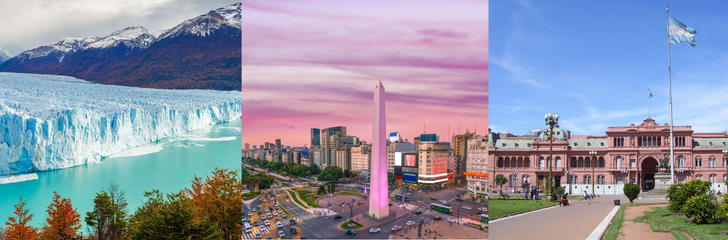
Argentina's diverse geography encompasses several distinct regions. The Andean Region in the west features the Andes mountains, while the Northwest exhibits varied landscapes and climates. The Gran Chaco, located in the north-central area, is a vast plain with a hot subtropical climate. Northeastern Mesopotamia is characterized by lowlands and rainforests. Central Pampas, a fertile plain, is known for agriculture and ranching. Cuyo in the central-west has semi-arid conditions, and Patagonia in the south offers diverse landscapes and climates. These regions contribute to Argentina's overall diversity in terms of economy, culture, and ecosystems.
Table 1: Argentina Main Islands and Their Features
| Island | Location | Features |
| Tierra del Fuego | Southern tip of South America | Archipelago with rugged terrain, shared with Chile. Main island is Isla Grande de Tierra del Fuego. |
| Isla de los Estados | East of Tierra del Fuego | Rugged and inhospitable terrain. |
| Isla Martín García | Rio de la Plata | Historical significance served as a military and political prison. |
| Isla Grande (Chaco) | Paraná River | Part of the Greater Delta of the Paraná, located in the province of Entre Rios. |
| Isla Victoria | Nahuel Huapi Lake in northern Patagonia | Located in the Andes, known for its scenic beauty. |
| Malvinas (Falkland) Islands | South Atlantic Ocean | Disputed sovereignty between Argentina and the United Kingdom. Rich in wildlife and natural beauty. |
Climate
Climate variations by region
Continental Argentina extends between 20° and 60° latitude in the Southern Hemisphere, and the country has regions of sub-tropical climates and mid-latitudes, as well as extreme thermal conditions, which vary from hot in the north to very cold in the extreme south and at the heights of the Sierras and the Andes Mountains.
Table: Argentina's Average Weather Data
| Region | Temperature (°C) | Precipitation (mm) | Sunshine Hours |
| Buenos Aires | 20 (average) | 1000 (annually) | 2200 (annually) |
| Mendoza | 25 (average) | 200 (annually) | 2800 (annually) |
| Salta | 23 (average) | 700 (annually) | 2400 (annually) |
| Iguazu Falls | 24 (average) | 1700 (annually) | 2000 (annually) |
| Bariloche | 10 (average) | 1000 (annually) | 1900 (annually) |
| Ushuaia (Tierra del Fuego) | 5 (average) | 500 (annually) | 1300 (annually) |
Best times to visit
Argentina springtime (October to mid-December) and autumn (April to mid-June) to be the best times to visit Argentina
Demographics of Argentina
Population
Population size and density
Argentina's population is estimated to be around 45 million people, and the country has a land area of approximately 2.78 million square kilometers. This yields an approximate population density of 16.2 people per square kilometer.
| | |
| Age distribution | |
| 0-14 years | 23.51% (male 5,645,070/female 5,316,156) |
| 15-64 years | 63.83% (male 14,929,084/female 14,827,733) |
| 65 and over | 12.66% (male 2,511,984/female 3,391,820) (2023 est.) |
Ethnic Composition
Predominant ethnic groups
European (mostly Spanish and Italian descent) and Mestizo (mixed European and Amerindian ancestry) 97.2%, Amerindian 2.4%, African descent 0.4% (2010 est.)
Minority communities
Thirty-six Indigenous and dozens of other ethnic groups derived from African, Asian, and European settlers.
Table: Ethnic Composition of Argentina
| Ethnic Group | Approximate Percentage |
| European (Italian, Spanish, etc.) | 75% |
| Mestizo (Mixed European and Indigenous) | 20% |
| Indigenous | 2% |
| Afro-Argentinian | 1% |
| Middle Eastern and Arab | 1% |
| Jewish | 1% |
| Asian (Chinese, Japanese, Korean) | 1% |
| Other (Roma, etc.) | 1% |
Religion
Predominant religions and their influence on culture
Christianity: Shaped Western culture in morals, art, literature, and law. Influenced holidays and literature.
Religious freedom and tolerance
The constitution provides for the right to profess, teach, and practice one's faith freely.
Table 4: Argentina Population Growth (Recent Years)
| Year | Population (millions) | Growth Rate (%) |
| 2017 | 44.5 | 1.2 |
| 2018 | 45.2 | 1.6 |
| 2019 | 45.9 | 1.5 |
| 2020 | 46.5 | 1.3 |
| 2021 | 47.2 | 1.8 |
Culture and Heritage
Traditional Customs
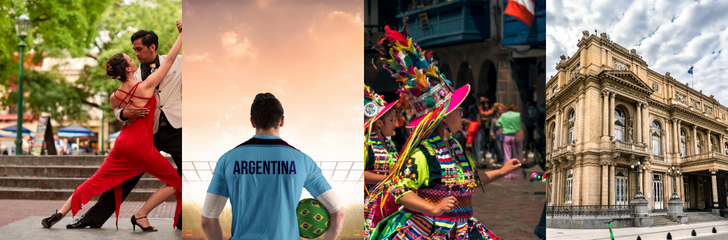
Argentina, located in South America, boasts a rich cultural heritage influenced by a mix of indigenous, European, and other immigrant traditions. Here's a glimpse into Argentina's culture and heritage, focusing on festivals and holidays, as well as traditional clothing and cuisine:
Festivals and Holidays:
- Carnival:
- Celebrated in February or March, depending on the lunar calendar.
- Colorful parades, music, dancing, and elaborate costumes are integral parts of the celebration.
- The city of Gualeguaychú is famous for its Carnival celebrations.
- National Flag Day (Dia de la Bandera):
- Celebrated on June 20th in honor of the death of Manuel Belgrano, the creator of the Argentine flag.
- Parades, ceremonies, and patriotic events are held across the country.
- Independence Day (Dia de la Independencia):
- Celebrated on July 9th to mark Argentina's declaration of independence from Spanish rule in 1816.
- Festivities include patriotic events, parades, and traditional foods.
- Tango Festival and World Championship:
- Takes place in Buenos Aires in August.
- Celebrates Argentina's most famous dance form, the tango, with performances, competitions, and dance events.
- Day of the Dead (Dia de los Muertos):
- Celebrated on November 2nd.
- Families visit cemeteries to honor and remember their deceased loved ones.
- Christmas and New Year:
- Celebrated with festive decorations, family gatherings, and traditional foods.
- Many Argentinians celebrate Christmas Eve with a big family dinner.
Traditional Clothing:
- Gaucho Clothing:
- The gaucho, or Argentine cowboy, traditionally wears loose-fitting pants (bombachas), a wide-brimmed hat (sombrero), and a poncho.
- Leather boots and a knife called a facón are common accessories.
- Traditional Dresses:
- Women often wear dresses with vibrant colors and floral patterns, especially during folkloric dance performances.
- The style varies across regions, reflecting the influence of indigenous cultures.
Traditional Cuisine:
- Asado:
- A traditional Argentine barbecue, typically featuring beef ribs, sausages, and other cuts of meat.
- Asado is a social event, bringing people together for a leisurely meal.
- Empanadas:
- Pastry turnovers filled with a variety of ingredients such as meat, cheese, or vegetables.
- Empanadas are popular snacks and are often served during festivals and gatherings.
- Mate:
- A traditional Argentine tea made from the leaves of the yerba mate plant.
- Drinking mate is a social activity, with friends and family passing around a shared mate gourd.
- Milanesa:
- Breaded and fried meat cutlets, usually made with beef or chicken.
- Often served with mashed potatoes or in a sandwich (milanesa a la napolitana).
- Dulce de Leche:
- A sweet caramel-like spread made from milk and sugar.
- Used in various desserts, such as alfajores (cookie sandwiches) and pastries.
Argentina's cultural richness is deeply intertwined with its history and diverse population, creating a vibrant tapestry that is celebrated throughout the year.
Art and Architecture
Argentina's cultural mosaic is painted by influential artists like Benito Quinquela Martin, Xul Solar, and dynamic movements such as Arte Concreto Invencion. Architectural luminaries like Cesar Pelli and Clorindo Testa have left a modernist imprint on the landscape, embodying the nation's blend of tradition and innovation. Argentina's artistic and architectural legacy is a captivating fusion of influences and creative expression.
Influential Figures:
- Artists:
- Benito Quinquela Martin: Depicted life in La Boca.
- Xul Solar: Surreal and symbolic works.
- Antonio Berni: Addressed social issues.
- Graffiti Artists: Martin Ron, Jaz, known for vibrant street art.
- Art Movements:
- Arte Concreto Invencion: Geometric abstraction (1940s).
- Neo-Concretism: Beyond concrete art (1950s).
Architects:
- Key Figures:
- Cesar Pelli: Modern designs, e.g., Petronas Towers.
- Clorindo Testa: Modernist, National Library of Argentina.
- Amancio Williams: Modernist, Bridge of the Woman.
- Architectural Styles:
- Colonial: Spanish influence.
- Belle �poque: Ornate facades, European elegance.
- Modernist and Brutalist: Mid-20th century.
- Contemporary: Innovative designs in Buenos Aires.
Argentina's art and architecture blend traditional, modern, and contemporary influences, creating a diverse cultural tapestry.
Music and Dance
Argentina's music and dance seamlessly blend tradition with innovation, offering a rich cultural tapestry.
Traditional Forms:
- Tango:
- Passionate dance and music originating in Buenos Aires.
- Zamba:
- Folk dance telling love stories with symbolic movements.
- Folk Music:
- Diverse regional styles with instruments like charango and bombo.
Contemporary Scene:
- Rock Nacional:
- Influential rock scene with bands like Soda Stereo.
- Electronic Music:
- Thriving electronic scene, highlighted by events like Creamfields.
- Cumbia Villera:
- Urban cumbia genre reflecting working-class experiences.
- Indie and Alternative:
- Growing scene with bands like El Mati a un Policia Motorizado.
- Folk Fusion:
- Modern artists blending traditional folk with contemporary styles.
Language and Communication
Argentina, a nation of diverse cultural influences, boasts a complex linguistic landscape shaped by historical factors and regional variations.
Official Language:
- Spanish: As the official language, Spanish is the primary means of communication, reflecting the country's colonial past and European heritage. The Spanish spoken in Argentina is distinct, marked by its unique accent and vocabulary.
Regional Languages:
In various regions across Argentina, regional languages and dialects persist, adding layers of cultural richness:
- Northern Argentina:
- Quechua and Aymara: Indigenous languages spoken, emphasizing the strong influence of indigenous cultures in this region.
- Northeastern Argentina:
- Guarani: A significant indigenous language in this area, spoken by communities in the provinces of Misiones and Formosa.
- Patagonia:
- Welsh: In some communities in Patagonia, particularly in Chubut province, Welsh is spoken. This traces back to Welsh immigrants who settled in the region in the late 19th century.
Argentina's linguistic diversity not only reflects its indigenous roots but also the impact of waves of immigration from various parts of the world. This linguistic tapestry contributes to the cultural richness and unique identity of Argentina.