
About Croatia
About
Work and Business
Living
Fun and Leisure
Residency and Citizenship
Investing
Services
Overview | Climate and Geography | Demographics | Culture and Heritage | Language and Communication
Overview
Brief History
Formation and early history
Croatia, located in the Balkan Peninsula and on the Adriatic Sea's eastern coast, has a rich and turbulent history that dates back to ancient times. Archaeological findings suggest that the region was inhabited as early as the Paleolithic era. The Illyrians, an ancient tribe, were among the earliest known inhabitants of this region. The arrival of the Celts and subsequently the Romans in the later centuries significantly impacted the region's cultural and political landscape.
Roman influence on the territory was immense. The province of Dalmatia, which today forms a significant part of Croatia, was integrated into the Roman Empire. Several ancient Roman structures still stand in Croatia, such as the amphitheater in Pula and Diocletian's Palace in Split Link to Diocletian's Palace. The fall of the Western Roman Empire in the 5th century led to migrations and invasions of various tribes like the Goths, Avars, and Slavs.
The Croats, believed to be a Slavic people, settled in this region in the early 7th century. They soon formed two duchies by the 9th century: Pannonian Croatia in the north and Dalmatian Croatia in the south. These duchies were later united under a single crown in the 10th century, thus forming the medieval Kingdom of Croatia.
Recent history (20th and 21st century)
The 20th century was transformative for Croatia. After World War I, Croatia became a part of the Kingdom of Serbs, Croats, and Slovenes, later renamed the Kingdom of Yugoslavia. Following World War II, it was one of the six republics in the newly formed Socialist Federal Republic of Yugoslavia, led by Josip Broz Tito.
However, rising nationalist sentiments in the 1980s and early 1990s resulted in demands for greater autonomy. This culminated in Croatia's declaration of independence in 1991. Sadly, this move was followed by the Croatian War of Independence, which lasted until 1995 and took a significant toll on the nation's infrastructure and populace.
After the war, Croatia embarked on a journey of recovery and rebuilding. It sought international partnerships and integration, culminating in its accession to the European Union in 2013. Link to EU accession. The 21st century saw Croatia embracing its identity, both culturally and geopolitically, and focusing on tourism, which today forms a crucial part of its economy.
Political Structure
Current government and political climate
Croatia is a parliamentary republic, which means the President is the head of state, while the Prime Minister is the head of government. The Croatian Parliament or Sabor is unicameral and plays a vital role in legislative functions. Members of the parliament are elected every four years.
In terms of political climate, Croatia has multiple active parties, but the dominant ones are the center-right Croatian Democratic Union (HDZ) and the center-left Social Democratic Party (SDP). Over the past years, these two parties have often alternated in governing the country. Croatia's political landscape is generally stable, with parties emphasizing the nation's European identity and integration.
Relationship with the European Union
Since its accession to the European Union in 2013, Croatia has actively participated in the EU's initiatives and policies. Joining the EU marked a significant milestone, signaling Croatia's complete transformation from a war-torn nation to a stable European democracy. The nation benefits from EU funds, which have been used for infrastructural and societal development projects. Moreover, Croatia also seeks to adopt the Euro as its currency in the coming years, further integrating its economy with the rest of Europe.
Economy
Overview of the economy and economic sectors
Croatia's economy is diverse, with significant contributions from various sectors such as tourism, shipbuilding, agriculture, and pharmaceuticals. The nation's Gross Domestic Product (GDP) as of the latest data stands at approximately $60 billion. One of the most prominent contributors to the nation's economy is tourism, thanks to Croatia's picturesque coastline, historical cities like Dubrovnik, Split, and numerous islands attracting millions of visitors annually. In fact, tourism alone contributes to around 20% of the nation's GDP Link to Croatian Tourism Board.
The agricultural sector, especially winemaking, olive oil production, and organic farming, has seen steady growth. Regions such as Istria and Slavonia are prominent for their agricultural produce. Moreover, Croatia's shipbuilding industry, with shipyards in cities like Rijeka and Split, has historically been among the top in the world.
Table 1: Major Economic Sectors and Their Contribution
| Economic Sector | Contribution to GDP | Key Regions/Features |
| Tourism | ~20% | Dubrovnik, Split, Adriatic Coast |
| Agriculture | ~5% | Istria, Slavonia |
| Shipbuilding | ~3% | Rijeka, Split |
Currency and economic stability
The official currency of Croatia is the Croatian Kuna (HRK). While Croatia has considered transitioning to the Euro, the Kuna remains stable and widely used. Over the past years, Croatia has shown fiscal discipline, reduced public debt, and maintained a stable economic growth rate, making it an attractive destination for foreign investments Link to Croatian National Bank.
Education and Healthcare
Overview of the education system
Education in Croatia is a right enshrined in its constitution, emphasizing the importance of literacy and knowledge. The system is divided into pre-primary, primary, secondary, and tertiary levels. Primary education is mandatory and lasts for eight years. After primary education, students can opt for various forms of secondary education, including gymnasiums (general education) or vocational schools. The country boasts of several renowned universities like the University of Zagreb, which is among the oldest in Europe Link to University of Zagreb.
Healthcare system and facilities
Croatia offers a universal healthcare system where all citizens have access to healthcare services, funded by health insurance. The healthcare infrastructure includes hospitals, clinics, and specialized health centers distributed across the country. Croatia's healthcare system is known for its high-quality services in areas like cardiology, dermatology, and dental care, with the nation becoming a growing hub for medical tourism Link to Croatian Health Tourism.
Climate and Geography
Geography
Regions and their characteristics
Croatia can be geographically divided into three main regions: the coastal region, the mountainous region, and the Pannonian plain.
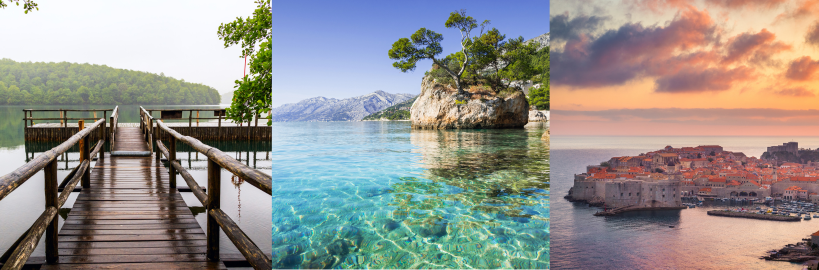
The coastal region, also known as the Adriatic coast, spans the entire western boundary of Croatia and boasts over a thousand islands and islets. This region is home to famous cities like Dubrovnik, Split, and Rijeka. The landscape is characterized by rocky cliffs, pebble beaches, and lush Mediterranean vegetation.
The mountainous region encompasses the Dinaric Alps, stretching from northwest to southeast. This region is notable for its dense forests, rich biodiversity, and picturesque landscapes. Risnjak and Paklenica are among the notable national parks in this area.
The Pannonian plain extends to the east and northeast of Croatia. Dominated by flatlands, this region is vital for agriculture, especially for crops like wheat, maize, and sunflower. Osijek is a major city in this region.
Geographical Regions and Characteristics
| Region | Landscape | Major Cities/Features |
| Adriatic Coast | Rocky coastlines, islands | Dubrovnik, Split |
| Mountainous Region | Dinaric Alps, forests | Risnjak National Park, Paklenica |
| Pannonian Plain | Flatlands | Osijek, agriculture |
Major cities and towns
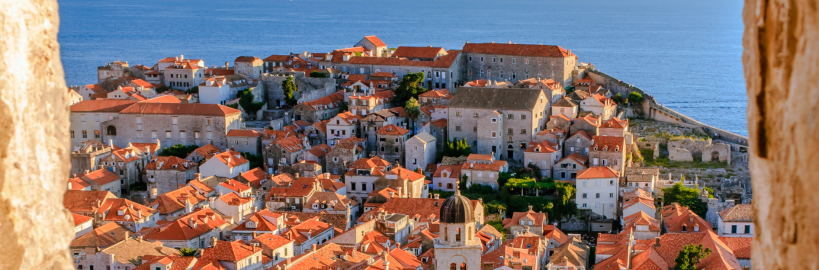
Zagreb, the capital, lies in the northwest of Croatia and is the largest city in terms of population and economic activity. It's a blend of historical architecture and modern urbanization. Split, the second-largest city, is known for its ancient structures, particularly the Diocletian�s Palace Link to Diocletian's Palace. Rijeka, another significant port city, is known for its maritime and cultural significance. Dubrovnik, referred to as the "Pearl of the Adriatic," is famous for its medieval walls and rich history.
Climate
Climate variations by region
Croatia experiences multiple climate zones due to its diverse geography. The Adriatic coast has a Mediterranean climate, with hot summers and mild winters. The mountainous region has an alpine climate, characterized by cold winters with snow and moderately warm summers. The Pannonian plain experiences a continental climate with hot summers and cold winters.
Table 3: Climate Variations by Region
| Region | Summer | Winter |
| Adriatic Coast | Hot, dry | Mild, wet |
| Mountainous Region | Moderate | Cold, snowy |
| Pannonian Plain | Hot | Cold |
Best times to visit
For beach lovers and sun-seekers, the best time to visit Croatia, particularly the Adriatic coast, would be between June and August. For those interested in hiking and exploring national parks, spring (April to June) and fall (September to October) are ideal, offering pleasant temperatures and fewer crowds. Winter is perfect for experiencing the Christmas markets in Zagreb or skiing in mountainous regions like Gorski Kotar.
Demographics
Population
Population size and density
Croatia, with an area of about 56,594 square kilometers, has a population of approximately 4 million people. The population density stands at around 70 inhabitants per square kilometer.
Table 4: Population Distribution by Region
| Region | Estimated Population | Area (sq.km) | Population Density (per sq.km) |
| Adriatic Coast | 1.5 million | 15,000 | 100 |
| Mountainous Region | 500,000 | 25,000 | 20 |
| Pannonian Plain | 2 million | 16,594 | 120 |
Age distribution
The Croatian population is aging, with a median age of around 43 years. The percentage of the population under 14 stands at about 14%, while those above 65 constitute approximately 20%.
Table 5: Age Distribution
| Age Group | Percentage of Total Population |
| 0-14 | 14% |
| 15-64 | 66% |
| 65+ | 20% |
Ethnic Composition
Predominant ethnic groups
The vast majority of Croatia's population identifies as ethnic Croats, accounting for over 90%. Other ethnic groups include Serbs, Bosniaks, Hungarians, and Italians, among others.
Table 6: Ethnic Groups
| Ethnic Group | Percentage of Total Population |
| Croats | 90.4% |
| Serbs | 4.4% |
| Bosniaks | 1.3% |
| Hungarians | 0.3% |
| Italians | 0.4% |
| Others | 3.2% |
Minority communities
The rights of ethnic and national communities or minorities are guaranteed by the Constitution of Croatia. The Serb minority, being the largest, has representatives in the Croatian Parliament. Other minorities, such as Italians and Hungarians, have significant presences in specific regions, like Istria for Italians Link to Istrian Cultural Significance.
Religion
Predominant religions and their influence on culture
Roman Catholicism is the predominant religion in Croatia, with around 86% of the population identifying as Catholic. Other religious groups include Eastern Orthodox, Islam, and Protestantism. The Christian influence is evident in the nation's festivals, architecture, and daily life, including celebrations like Easter and Christmas.
Religious freedom and tolerance
Religious freedom is a constitutional right in Croatia. The country respects the rights of all religious groups, ensuring they can freely practice their beliefs. Several religious festivals of minority groups are recognized and celebrated, showcasing Croatia's tolerance and diversity.
Culture and Heritage
Traditional Customs
Festivals and holidays
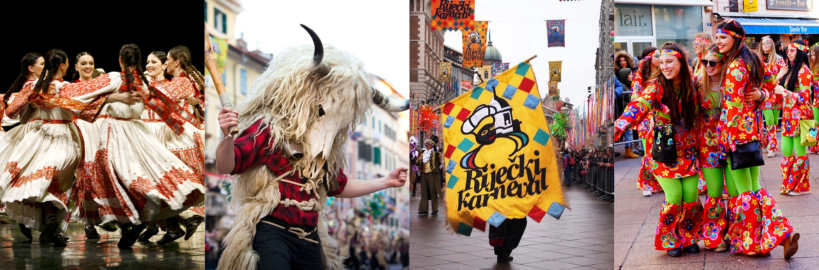
Croatia boasts a rich tapestry of festivals and traditions, many rooted in its Christian heritage. The majority of Croats, being Roman Catholic, celebrate religious holidays like Easter and Christmas with grandeur. During Easter, traditions like painting eggs, known as "pisanice", are prevalent.
Christmas in Croatia is marked by the celebration of the Advent period, particularly notable in Zagreb, which hosts a renowned Christmas market Link to Zagreb Christmas Market. Beyond religious holidays, Croatia celebrates its Independence Day on 8th October, marking its secession from Yugoslavia in 1991.
Traditional clothing and cuisine
Traditional Croatian clothing varies by region but often features embroidered designs. The most recognizable outfit is perhaps the "sokacko" costume from Slavonia.
Croatian cuisine is a blend of Mediterranean and Central European flavors. Along the coast, dishes like "crni rizot" (black risotto) are popular, while the inland regions favor hearty meals like "cobanac" (a spicy meat stew). "Strukli", a cheese-filled pastry, is a delicious delicacy from the Zagreb region.
Bullet Point B: Art and Architecture
Influential artists and architects
Over the centuries, Croatia has produced significant artists and architects. Ivan Mestrovic, a 20th-century sculptor, is perhaps the most renowned Croatian artist, with many of his works displayed in Split Link to Mestrovic Gallery. In architecture, Juraj Dalmatinac stands out for his contribution to the Sibenik Cathedral, a UNESCO World Heritage site.
Notable art movements and architectural styles
Croatia's architectural landscape is a blend of Roman, Gothic, Renaissance, and Modernist influences. Dubrovnik, for example, showcases superb Gothic, Renaissance, and Baroque churches, palaces, and fountains.
Music and Dance
Traditional music and dance forms
Traditional Croatian music varies by region, with "klapa" singing from Dalmatia and "tamburica" music from Slavonia being particularly notable. Folk dances like "kolo" and "lindo" showcase Croatia's vibrant dance heritage.
Contemporary music scene
Modern Croatian music spans genres from pop and rock to electronic. Artists like Severina and Oliver Dragojevic have gained regional acclaim. Festivals like Ultra Europe in Split Link to Ultra Europe attract international audiences and top-tier performers.
UNESCO World Heritage Sites
Description of major heritage sites
Croatia is home to several UNESCO World Heritage Sites, including:
- Historical Complex of Split with the Palace of Diocletian: A palace built by the Roman emperor Diocletian in the 4th century AD.
- Old City of Dubrovnik: A beautifully preserved medieval city, encased in walls.
- Plitvice Lakes National Park: A series of cascading lakes and waterfalls with unique travertine formations.
Importance to culture and heritage
These UNESCO sites are not mere tourist attractions; they represent Croatia's diverse historical, natural, and architectural significance. They are a testament to Croatia's role in global history and its efforts to preserve its rich heritage.
Table 7: UNESCO World Heritage Sites in Croatia
| Site | Type | Region |
| Palace of Diocletian | Historical | Split |
| Old City of Dubrovnik | Historical | Dubrovnik |
| Plitvice Lakes National Park | Natural | Central Croatia |
Language and Communication
Official Language
Predominance of
Croatian is the official language of Croatia and serves as a key marker of national identity. It belongs to the South Slavic group of languages and shares many similarities with Serbian, Bosnian, and Montenegrin, though each has its distinct variations.
Historically, the Croatian language underwent various transformations, absorbing influences from Latin, Hungarian, Venetian, Ottoman Turkish, and German, all of which left lexical traces.
Regional languages
While Croatian remains predominant, there are regional linguistic variations. Chakavian, Kajkavian, and Shtokavian are the three main dialects. Shtokavian, the base for standard Croatian, further divides into three sub-dialects. In some regions like Istria, Italian is also spoken due to historical ties and dual official status in places.
English Proficiency
Level of English proficiency among the population
English is widely spoken, especially among the younger generation. Thanks to the country's education system and tourism industry, many Croatians possess at least basic proficiency. According to recent surveys, over 60% of Croatians speak English at varying levels, making it the most spoken second language Link to English Proficiency Report.
English as a medium of instruction in schools
While Croatian remains the primary medium of instruction, many schools offer English from the first grade. Additionally, there's a growing trend of bilingual or international schools where subjects are taught in English, catering to both the expat community and locals seeking global academic exposure.
Communication Style
Formality and informality in communication
Croatian communication styles merge both formal and informal approaches. Traditionally, interactions, especially in business settings, maintain a degree of formality. However, with globalization and the influx of international companies, there's a noticeable shift towards a more relaxed style.
In social settings, Croatians are warm and welcoming. They appreciate directness but also value politeness. Addressing someone with their title and surname is common in formal settings, but first names are quickly adopted once familiarity is established.
Non-verbal communication cues and conventions
Non-verbal communication is integral to Croatian interactions. Eye contact is crucial and signifies interest and honesty. Physical touch, like a handshake or a pat on the back, is common among friends. However, it's essential to be aware of personal space during initial meetings.
Gestures also play a role. For instance, nodding one's head up and down means "yes," while shaking it side to side indicates "no." However, be cautious, as in some parts of Croatia, these gestures can have the opposite meaning!
Table 8: Common Croatian Phrases and Their English Translations
| Croatian Phrase | English Translation |
| Dobar dan | Good day |
| Hvala | Thank you |
| Molim | Please |
| Govorite li engleski? | Do you speak English? |


