
About
Overview | Climate and Geography | Demographics | Culture and Heritage | Language and Communication
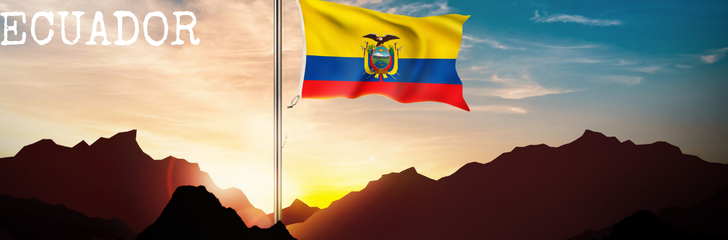
Overview
Brief History of Ecuador
Ecuador, located on the west coast of South America, has a rich history that dates back to pre-Columbian times. The region was home to various indigenous civilizations, including the Inca Empire. Spanish explorer Francisco Pizarro arrived in the early 16th century, leading to the Spanish colonization of Ecuador. It became part of the Spanish Viceroyalty of Peru until it gained independence in 1820. The country went through periods of political instability and conflicts with neighboring countries.
Throughout the 19th and 20th centuries, Ecuador experienced numerous changes in government, including periods of military rule. The latter half of the 20th century saw the emergence of a more stable political environment, with democratic elections becoming the norm. However, political and economic challenges continued to shape the nation's history.
Political Structure:
Ecuador is a democratic republic with a presidential form of government. The President serves as both the head of state and government. The National Assembly is the legislative branch, and the judiciary is independent. The country is divided into provinces, which are further subdivided into cantons.
Ecuador has faced political challenges, including issues related to corruption, indigenous rights, and economic policies. The constitution has undergone revisions, reflecting the evolving political landscape. Indigenous movements have played a significant role in shaping Ecuador's political discourse, advocating for the rights of indigenous communities.
Economy:
Ecuador's economy is diverse, with oil being a crucial sector. The country has faced economic challenges, including fluctuations in oil prices, external debt issues, and a history of adopting different currencies. Ecuador adopted the U.S. dollar as its official currency in the early 2000s to stabilize its economy.
Agriculture is also important, with products such as bananas, flowers, and seafood being major exports. The tourism industry benefits from Ecuador's diverse geography, including the Gal�pagos Islands, the Amazon Rainforest, and the Andes Mountains.
Education and Healthcare:
Ecuador has made strides in improving education and healthcare, but challenges persist. Education is free and compulsory up to the basic level, and the government has invested in expanding access to schools. However, disparities exist between urban and rural areas.
Healthcare in Ecuador has seen improvements, with efforts to expand access to medical services. Public healthcare is available, and the government has implemented programs to address health disparities. However, challenges such as limited resources and access to quality healthcare remain.
In recent years, there have been ongoing efforts to address social issues, strengthen democratic institutions, and promote sustainable economic development in Ecuador. The country continues to navigate its unique challenges within the broader context of Latin American politics and global economic dynamics.
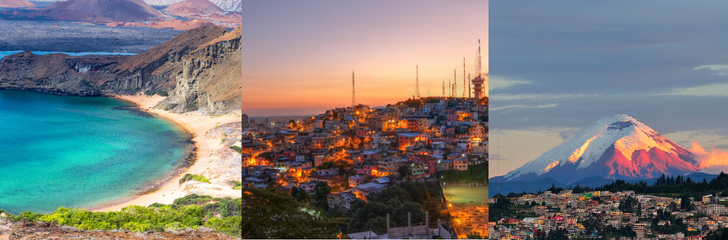
Climate and Geography
Geography
Regions and Their Characteristics
La Costa (The Coast):
- Located on the western side, along the Pacific coast, this region consists of lowlands, plains, and coastal mountains.
La Sierra (The Highlands):
- The central part of the country, including the Andes mountain range and highland plateaus.
La Amazon�a (The Amazon Rainforest):
- The eastern part of Ecuador, comprising the Amazon Rainforest and the Amazon Basin.
Regi�n Insular (The Insular Region):
- This region includes the Gal�pagos Islands, situated in the Pacific Ocean about 1,000 kilometers off the mainland coast.
Climate
Coast (La Costa):
- Generally tropical with wet (Dec-May) and dry (Jun-Nov) seasons.
Highlands (La Sierra):
- Varies with altitude. Cooler in higher areas, distinct wet and dry seasons.
Amazon Rainforest (La Amazon�a):
- Tropical and humid year-round.
Insular Region (Regi�n Insular - Gal�pagos Islands):
- Warm and dry (Jun-Dec), cooler and wetter (Dec-May).
Best Times to Visit
Coast (La Costa):
- Best Time: June to November (Dry season) - Cooler temperatures and lower humidity.
Highlands (La Sierra):
- Best Time: June to September (Dry season) - Clear skies, mild temperatures. Quito's weather is relatively stable during these months.
Amazon Rainforest (La Amazon�a):
- Best Time: June to November (Dry season) - Less rainfall, making it easier to explore the rainforest.
Insular Region (Regi�n Insular - Gal�pagos Islands):
- Best Time: December to May (Warm and dry season) - Excellent for wildlife viewing, especially for marine life.
Demographics
Population
The current population of Ecuador in 2023 is 18,190,484, a 1.05% increase from 2022. The population of Ecuador in 2022 was 18,001,000, a 1.14% increase from 2021. The population of Ecuador in 2021 was 17,797,737, a 1.19% increase from 2020.
Age Distribution
| Characteristic | 0-14 years | 15-64 years |
| 2022 | 25.69% | 66.48% |
| 2021 | 26.1% | 66.26% |
| 2020 | 26.49% | 65.97% |
| 2019 | 26.93% | 65.66% |
Ethnic Composition:
Ecuador is home to a multicultural society with a mix of ethnic groups. The major ethnic groups include:
Mestizo: People of mixed European and indigenous descent form the majority of the population. Mestizos are found throughout the country.
Indigenous Peoples: Various indigenous groups, such as the Quechua and Shuar, reside predominantly in the highland and Amazon regions. They contribute significantly to Ecuador's cultural diversity.
Afro-Ecuadorians: Descendants of African slaves brought during the colonial period, Afro-Ecuadorians primarily inhabit the coastal areas.
Montubio: A group of people with a mixed heritage, often including indigenous and Spanish ancestry, residing in the coastal region.
Other Minority Groups: Ecuador is also home to smaller minority groups, each with its own distinct cultural identity.
Religion:
Religious diversity is present in Ecuador, with the majority of the population adhering to Roman Catholicism. Other religious affiliations and beliefs also exist, reflecting the country's multiculturalism. In recent years, there has been an increase in the number of people identifying as non-religious or having alternative spiritual beliefs.
It's essential to consider that these demographic characteristics can change, and newer information may provide a more accurate representation of Ecuador's current ethnic and religious composition.
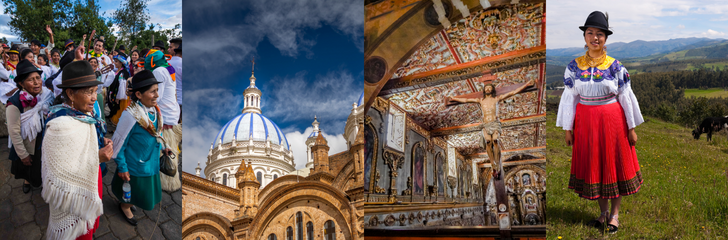
Culture and Heritage
Traditional Customs
Festivals and Holidays
New Year's Day (A�o Nuevo): January 1st - Celebrated with fireworks, parties, and traditional festivities.
Carnival (Carnaval): February or March (date varies) - Colorful celebrations with parades, water fights, and music, marking the beginning of Lent.
Holy Week (Semana Santa): March or April (date varies) - Religious processions and events leading up to Easter Sunday.
Labor Day (D�a del Trabajo): May 1st - A public holiday honoring workers.
Battle of Pichincha (Batalla del Pichincha): May 24th - Commemorates the Battle of Pichincha, a key event in Ecuador's fight for independence.
Inti Raymi: June 24th - Celebrated by indigenous communities, honoring the Sun God with traditional dances and rituals.
Foundation of Guayaquil (Fundaci�n de Guayaquil): July 25th - Celebrates the founding of the city of Guayaquil with parades and cultural events.
Independence Day (D�a de la Independencia): August 10th - Marks Ecuador's declaration of independence from Spanish rule in 1809.
Fiesta de la Mama Negra: September 23rd-24th - A colorful celebration in Latacunga featuring parades, music, and traditional performances.
All Saints' Day (D�a de Todos los Santos): November 1st - Families visit cemeteries to honor and remember their deceased loved ones.
Cuenca Independence Day (Independencia de Cuenca): November 3rd - Celebrates the independence of the city of Cuenca.
Christmas (Navidad): December 25th - Celebrated with family gatherings, feasts, and religious observances.
Traditional Clothing and Cuisine
Traditional Clothing in Ecuador:
Indigenous Communities:
- Andean Region: Traditional clothing often includes colorful, handwoven ponchos, shawls, and embroidered blouses or shirts. Women may wear long skirts and distinctive hats, while men commonly wear woolen ponchos and felt hats.
- Amazon Region: Indigenous communities in the Amazon often wear more minimalistic attire due to the warm climate. Women may wear skirts and blouses made from natural fibers, and men may wear loincloths or simple garments.
Afro-Ecuadorians:
- Coastal Region: Traditional clothing may include brightly colored skirts and blouses for women, often adorned with bold patterns. Men may wear loose-fitting pants and shirts, along with brimmed hats.
Montubio (Coastal Mestizo):
- Montubio men often wear wide-brimmed hats, jeans, and shirts. Women may wear brightly colored dresses with floral patterns.
Chagra (Andean Cowboy):
- Typically men's attire: Includes wide-brimmed hats, ponchos, embroidered shirts, leather chaps, and knee-high boots. This traditional cowboy attire is often associated with the Andean highlands.
Traditional Cuisine in Ecuador:
Ceviche:
- A popular coastal dish featuring raw fish or seafood cured in citrus juices, typically lime or bitter orange, and mixed with onions, tomatoes, and cilantro.
Seco de Pollo:
- A hearty chicken stew flavored with achiote, served with rice and accompanied by side dishes like fried plantains and avocado.
Llapingachos:
- Fried potato patties stuffed with cheese and served with peanut sauce. A common side dish in the Sierra region.
Ecuadorian Tamales:
- Tamales in Ecuador are made with corn masa and often stuffed with meat, vegetables, or sometimes fruit. They are wrapped in banana leaves and steamed.
Ecuadorian Empanadas:
- Fried or baked turnovers filled with a variety of ingredients, such as cheese, meat, or vegetables.
Guaguas de Pan y Colada Morada:
- Served during the Day of the Dead celebrations, "guaguas de pan" are sweet bread figures shaped like babies, and "colada morada" is a traditional spiced fruit drink.
Locro de Papa:
- A hearty potato soup with cheese, avocado, and sometimes meat, commonly enjoyed in the Andean highlands.
Encebollado:
- A fish soup made with yuca, tomatoes, and onions, often considered a cure for a hangover.
Art and Architecture
Art in Ecuador:
Indigenous Art:
- Textiles: Richly woven textiles with vibrant colors and intricate patterns, often depicting traditional symbols and stories.
- Paintings and Drawings: Indigenous artists create paintings and drawings that often reflect their connection to nature and cultural heritage.
Colonial Art:
- Religious Art: Colonial-era churches and cathedrals feature religious art with intricate carvings, paintings, and sculptures. The Quito School is renowned for its distinctive style.
Modern and Contemporary Art:
- Quito's Art Scene: The capital city, Quito, has a growing contemporary art scene with galleries showcasing works by local and international artists.
- Street Art: Cities like Quito and Guayaquil feature vibrant street art, expressing social and cultural messages.
Indigenous Crafts:
- Pottery and Ceramics: Indigenous communities create pottery and ceramics with traditional designs, often depicting daily life or mythological themes.
- Woodcarving: Skilled artisans carve intricate designs into wood, creating masks, sculptures, and functional items.
Architecture in Ecuador:
Colonial Architecture:
- Quito's Old Town: Designated as a UNESCO World Heritage site, Quito's Old Town boasts well-preserved colonial architecture, including churches like the Basilica del Voto Nacional and the Compa��a de Jes�s.
Inca and Pre-Columbian Sites:
- Ingapirca: The largest Inca archaeological site in Ecuador, featuring well-preserved structures, including the Temple of the Sun.
- Pumapungo: In Cuenca, showcases remnants of the Inca city of Tomebamba.
Contemporary Architecture:
- Guayaquil's Malec�n 2000: A riverside promenade with modern architecture, including the Malec�n Towers and the Guayaquil Metropolitan Cathedral.
- Quito's La Carolina Park: Features contemporary structures, including the Quito Business Center and the Chapel of Man.
Indigenous Housing:
- Kichwa Huts: In the Amazon region, traditional Kichwa houses, known as "malocas" or "chagras," are constructed using natural materials like wood and palm leaves.
Haciendas:
- Historic Estates: Some haciendas, such as Hacienda Zuleta, showcase colonial-era architecture and offer insights into Ecuador's history and culture.
Gal�pagos Architecture:
- Eco-friendly Designs: Architecture in the Gal�pagos Islands often focuses on sustainability and minimizing environmental impact.
Music and Dance
Music in Ecuador:
Andean Music:
- Instruments: Traditional Andean music often features instruments like the pan flute (zampona), quena (end-blown flute), charango (small guitar), and the sikuri (panpipe ensemble).
- Genres: Popular Andean music genres include "Sanjuanitos" and "Yarav�es," characterized by lively rhythms and heartfelt lyrics.
Afro-Ecuadorian Music:
- Marimba: Afro-Ecuadorian music heavily incorporates the marimba, a percussion instrument made of wooden keys, played with mallets.
- Dance Rhythms: Currulao and bomba are popular Afro-Ecuadorian dance rhythms.
Pasillo:
- National Genre: Considered Ecuador's national music genre, the pasillo features melancholic melodies and is often accompanied by guitar, piano, or string ensembles.
- Influence: It has influences from European waltzes.
Tropical Music:
- Cumbia and Salsa: Popular in the coastal regions, these lively and rhythmic genres are often associated with celebrations and social events.
Amazonian Music:
- Traditional Songs: Indigenous communities in the Amazon region have unique traditional songs that accompany ceremonies and rituals.
- Use of Indigenous Instruments: Drums, rattles, and bamboo instruments are commonly used in Amazonian music.
Dance in Ecuador:
Sanjuanito:
- Andean Folk Dance: A lively and colorful dance often performed during festivals. Dancers wear traditional Andean clothing.
Caporales:
- Afro-Ecuadorian Dance: Originally from Bolivia, caporales is a dance performed in Ecuador, especially during Carnaval, featuring energetic footwork and vibrant costumes.
Albazo:
- Coastal Dance: Traditional coastal dance often performed during festivities. The dance is accompanied by the sounds of guitars, flutes, and drums.
Yumbo:
- Pre-Columbian Dance: A dance inspired by ancient Yumbo rituals, performed with masks and colorful costumes.
Saraguro Dance:
- Indigenous Dance: Originating from the Saraguro community, this dance is accompanied by traditional music and reflects the cultural identity of the indigenous group.
Pasillo Dance:
- Pairs Dance: The pasillo dance is often performed by couples, reflecting the romantic and emotional nature of the pasillo music.
Marimba Dance:
- Afro-Ecuadorian Dance: Accompanies marimba music, often featuring energetic and rhythmic movements.
UNESCO World Heritage Sites
City of Quito:
- Quito's historic center has well-preserved colonial buildings and is recognized for its beautiful Spanish architecture.
Gal�pagos Islands:
- The Gal�pagos Islands are famous for their unique wildlife and were crucial to Charles Darwin's theory of evolution.
Sangay National Park:
- Located in the Andes, this park is known for its diverse landscapes, including forests and an active volcano.
Historic Center of Cuenca:
- Cuenca's historic center features a mix of architectural styles and is known for its colonial churches and narrow streets.
Gal�pagos Marine Reserve:
- Recognized for the marine life around the Gal�pagos Islands, supporting diverse underwater ecosystems.
Qhapaq �an, Andean Road System:
- Part of the Inca road network, this system in Ecuador connected different parts of the Inca Empire.

Language and Communication
Official Language
The official language of Ecuador is Spanish. Spanish is spoken by the majority of the population and is used in government, education, media, and daily communication throughout the country. While Spanish is the primary language, there are also several indigenous languages spoken by various ethnic groups in different regions of Ecuador, reflecting the country's cultural diversity. Some of the indigenous languages include Quechua, Shuar, and others. However, Spanish serves as the official and predominant language in Ecuador.
Regional Languages
Quechua:
- Region: Spoken predominantly in the Andean highlands.
- Significance: Quechua is one of the most widely spoken indigenous languages in South America and has several regional dialects.
Shuar:
- Region: Spoken in the Amazon rainforest region, primarily by the Shuar people.
- Significance: Shuar is known for its unique phonetic characteristics and is part of the Jivaroan language family.
Achuar-Shiwiar:
- Region: Spoken in the Amazon basin, particularly in the eastern part of the country.
- Significance: A language spoken by the Achuar and Shiwiar indigenous groups, known for their traditional lifestyles.
Waorani (Huaorani):
- Region: Spoken in the Amazon rainforest, particularly in the eastern part of Ecuador.
- Significance: Waorani is spoken by the Waorani people and is part of the Huaorani language family.
Z�paro:
- Region: Historically spoken in the Amazon region, but its usage has declined significantly.
- Significance: Z�paro is considered a critically endangered language with few remaining speakers.
Cof�n:
- Region: Spoken in the northeastern part of the country, near the border with Colombia.
- Significance: Cof�n is spoken by the Cof�n people and is part of the Chibchan language family.
English Proficiency
English proficiency in Ecuador varies. In bigger cities and tourist areas, more people may know some English, especially in jobs related to tourism. Younger generations and those in urban areas often have better English skills. In rural areas, English knowledge might be lower. English is taught in schools, but the level of proficiency depends on the quality of education. Overall, it's a good idea to check with individuals or specific regions for their English language capabilities.
Communication Style:
In Ecuador, communication style is often warm, friendly, and emphasizes personal connections. People tend to value relationships and may engage in small talk before discussing business matters. It is common to address others using titles and formal terms initially, gradually shifting to a more informal tone as the relationship develops.
Formality and Informality:
Formal Settings: In formal or professional settings, individuals may address each other using titles and last names. Initial interactions might be more formal, especially with those in positions of authority.
Informal Settings: In casual or social settings, people often switch to a more informal style of communication. First names may be used, and the tone can become relaxed.
Non-verbal Communication Cues and Conventions:
Physical Contact: Ecuadorians are generally comfortable with physical contact, such as handshakes, hugs, or cheek kisses among friends and family. It is a way of expressing warmth and familiarity.
Eye Contact: Maintaining eye contact during conversations is generally seen as a sign of attentiveness and respect. However, in indigenous cultures, prolonged eye contact might be perceived differently.
Personal Space: Personal space preferences may vary. In urban areas, people might be more accustomed to closer proximity during conversations. In rural areas, especially in indigenous communities, maintaining more personal space is often appreciated.
Gestures: Hand gestures are common in Ecuadorian communication and are often used to emphasize points or convey emotions. However, it's essential to be aware that gestures can have different meanings in various cultural contexts.