
About Chile
About
Work and Business
Living
Fun and Leisure
Residency and Citizenship
Services
Overview | Climate and Geography | Demographics | Culture and Heritage | Language and Communication
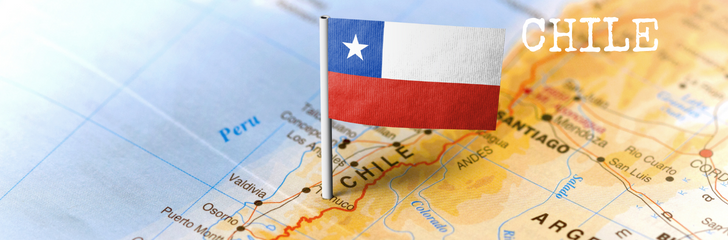
Overview
Brief history of Chile
Chile's history is marked by indigenous cultures long before the arrival of Spanish explorers in the 16th century. The Spanish established their rule, and Chile gained independence in 1818 after a prolonged struggle led by figures such as Bernardo O'Higgins. The country experienced political instability and economic challenges throughout the 19th and early 20th centuries. In 1973, Chile underwent a military coup that led to the establishment of a military dictatorship under Augusto Pinochet, which lasted until 1990. Since then, Chile has transitioned to a stable democratic system and has become one of South America's more prosperous nations.
Political Structure:
Chile is a presidential republic with a multi-party system. The President serves as both the head of state and government, elected by popular vote for a four-year term. The National Congress is the legislative branch, consisting of the Chamber of Deputies and the Senate. The judiciary is independent, with the Supreme Court at its apex. Chile has generally been politically stable, and its democratic institutions have strengthened since the end of the Pinochet era.
Economy:
Chile has a market-oriented economy known for its openness and competitiveness. It is heavily dependent on exports, particularly copper, which is a major contributor to the country's GDP. Chile has diversified its economy, with significant contributions from sectors such as agriculture, forestry, fisheries, and services. The country has pursued free trade agreements, fostering economic ties globally. Challenges include income inequality and issues related to natural resource management.
Education and Healthcare
Education:
Chile has made strides in improving its education system. Primary and secondary education is compulsory and free, and there has been an emphasis on expanding access to higher education. However, issues such as educational quality disparities and student protests demanding education reforms have been notable in recent years. Efforts to address these challenges are ongoing.
Healthcare:
Chile has a mixed healthcare system that includes both public and private components. Public healthcare is provided by the National Health Fund (FONASA), funded through taxation and serving the majority of the population. Private healthcare is available for those who can afford it or have private insurance. The country has made progress in health indicators, but challenges like unequal access to healthcare and regional disparities persist. The government continues to work on improving the overall health system.

Climate and Geography
Geography
Regions and Their Characteristics
Northern Region (I-IV): This area includes the Atacama Desert, one of the driest places on Earth, known for its unique geological formations.
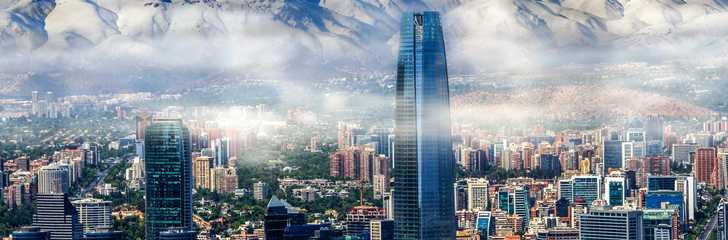
Central Region (V-VI): Home to the capital, Santiago, this region is characterized by a Mediterranean climate and is the country's economic and cultural hub.
Southern Region (VII-X): Known for its lakes, volcanoes, and lush landscapes, this region is a popular tourist destination.
Southern Zone (XI-XII): The gateway to Patagonia, this region features fjords, glaciers, and remote wilderness.
Magallanes and Chilean Antarctica Region (XII): Encompassing the southernmost part of the country, this region includes the rugged landscapes of Tierra del Fuego and parts of Antarctica.
Climate:
Chile experiences a variety of climates due to its diverse geography. The major climate types include:
Desert Climate: Found in the northern regions, particularly the Atacama Desert, characterized by extreme aridity.
Mediterranean Climate: Predominant in central Chile, including Santiago, with hot, dry summers and mild, wet winters.
Temperate Oceanic Climate: Present in the southern regions, with relatively mild temperatures and consistent rainfall throughout the year.
Subpolar Climate: Located in the far south (Patagonia), characterized by cold temperatures, strong winds, and significant precipitation.
Demographics
Population
The current population of Chile in 2023 is 19,629,590, a 0.13% increase from 2022. The population of Chile in 2022 was 19,603,733, a 0.57% increase from 2021. The population of Chile in 2021 was 19,493,184, a 1% increase from 2020.
Age Distribution
| Characteristic | 0-14 years | 65 years and older |
| 2022 | 18.32% | 13.03% |
| 2021 | 18.46% | 12.68% |
| 2020 | 18.62% | 12.4% |
| 2019 | 18.83% | 12.13% |
Ethnic Composition:
Chile is a culturally diverse nation with a population that is primarily of mixed European and indigenous descent. The ethnic composition includes:
Mestizo: The majority of Chileans identify as Mestizo, a mix of European and indigenous ancestry. This group constitutes a significant portion of the population and has played a central role in shaping Chilean culture.
European Descent: A sizable portion of the population has European ancestry, primarily from Spanish and other European immigrants who arrived during various periods of Chile's history.
Indigenous Peoples: Several indigenous groups have inhabited Chile for centuries. The most prominent include the Mapuche, Aymara, and Rapa Nui (Easter Island). While they make up a minority of the overall population, indigenous communities contribute significantly to Chile's cultural diversity.
Other Minorities: There are smaller communities of people with Asian, African, and Middle Eastern ancestry, contributing to the country's multicultural makeup.
Religion:
The predominant religion in Chile is Christianity, with the overwhelming majority being Roman Catholic. The Catholic Church has historically played a significant role in Chilean society and culture. However, in recent decades, there has been a decline in the influence of the Catholic Church, and a growing number of Chileans identify as non-religious or adhere to other Christian denominations.
In addition to Catholicism, there is a notable Protestant minority, including various evangelical and Pentecostal denominations. Other religious minorities, such as Judaism and Islam, are present in smaller numbers, reflecting the country's diverse population.
Religious Freedom and Tolerance
Chile has a reputation for religious tolerance and freedom, and the constitution guarantees individuals the right to practice the religion of their choice. The cultural and religious landscape continues to evolve, with a growing number of Chileans identifying as secular or exploring alternative spiritual practices.
Culture and Heritage
Traditional Customs
Festivals and Holidays
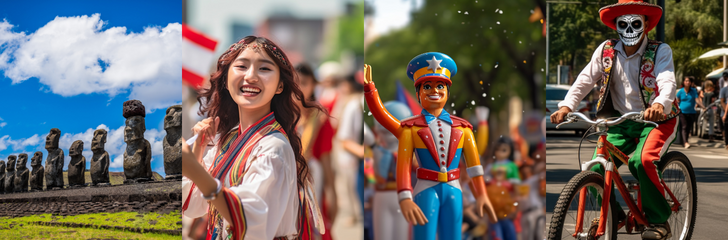
Independence Day (Fiestas Patrias): Celebrated in September, it's a week-long party with dances, music, rodeos, and delicious Chilean food to mark Chile's independence.
La Tirana Festival: Held in July in La Tirana, it mixes Catholic and Andean traditions with colorful costumes, dances, and religious ceremonies.
Carnaval de San Francisco de Mostazal: A lively carnival in January or February in Mostazal, featuring parades, music, dance, and vibrant costumes.
Chincolco Festival: Celebrated in January in Chincolco, it showcases traditional dances, processions, and music, highlighting local culture.
Corpus Christi: A religious holiday observed nationwide with processions, church services, and streets adorned with flower and sawdust carpets.
New Year's Eve (Nochevieja): Welcomed with fireworks and family gatherings, it includes the tradition of eating 12 grapes at midnight for good luck in the coming year.
Traditional Clothing and Cuisine
Traditional Clothing in Chile:
Cueca Attire: Women wear colorful dresses for the national dance, Cueca, and men don traditional huaso outfits with ponchos and hats.
Huasos and China Poblana: In rural areas, men (huasos) wear vests and straw hats, while women (China Poblana) don floral dresses and elaborate hairstyles.
Traditional Cuisine in Chile:
Empanadas: Savory pastries filled with beef, cheese, or seafood, enjoyed during festivals.
Pastel de Choclo: Corn pie with ground beef, chicken, onions, and a corn topping, a favorite in the summertime.
Asado: Grilled meats, usually beef, lamb, or pork, enjoyed in social gatherings.
Ceviche: Fresh seafood cured in citrus juices, reflecting Chile's coastal culture.
Curanto: A Chilo� Archipelago dish with seafood, meat, and potatoes cooked in the ground, showcasing local culinary traditions.
Art and Architecture
Art:
Street Art in Valpara�so: Valpara�so is famous for its vibrant street art scene, with colorful murals adorning the city's hills. It's a dynamic expression of urban culture and creativity.
Nueva Canci�n Chilena: A music and poetry movement that emerged in the 1960s, Nueva Canci�n Chilena reflects social and political themes, contributing significantly to Chilean folk music.
Architecture:
Colonial Architecture in La Serena: La Serena boasts well-preserved colonial architecture, including the Church of San Francisco, providing a glimpse into Chile's Spanish colonial history.
Sewell Mining Town: An abandoned mining town in the Andes, Sewell is a UNESCO World Heritage Site that showcases early 20th-century industrial architecture and the impact of mining on local communities.
Music and Dance
Music:
Cueca Music: The national dance, Cueca, is accompanied by lively music featuring traditional instruments like the guitar, accordion, and the Chilean national instrument, the charango.
Nueva Canci�n Chilena: A music movement from the 1960s, Nueva Canci�n Chilena, blends folk music with socially conscious lyrics, often addressing political themes and social justice.
Dance:
Cueca Dance: The national dance of Chile, Cueca, involves intricate footwork and handkerchief movements. It is performed during festivals and celebrations, showcasing the cultural identity of the nation.
Cueca Brava: A more urban and contemporary version of Cueca, characterized by faster movements and a more defiant style, often danced in social settings.
UNESCO World Heritage Sites
Rapa Nui National Park (Easter Island): Home to the iconic Moai statues, Easter Island preserves the archaeological and cultural heritage of the Rapa Nui people.
Humberstone and Santa Laura Saltpeter Works: Abandoned saltpeter mining towns in the Atacama Desert, these sites represent Chile's industrial history and cultural landscape.
Sewell Mining Town: A former mining town in the Andes, Sewell is recognized for its urban planning and architecture, providing insight into early 20th-century mining communities.
Language and Communication
Official Language
Predominance of Spanish
Spanish is the predominant and official language in Chile, spoken by the majority of the population in various aspects of daily life and official communication.
Regional Languages
- Mapudungun: Spoken by the Mapuche people, Mapudungun is one of the most widely spoken indigenous languages in Chile. It is primarily found in the southern regions of the country.
- Aymara: Spoken by the Aymara people, particularly in the northern regions near the border with Bolivia, Aymara is another significant indigenous language in Chile.
English Proficiency
Level of English Proficiency Among the Population
English proficiency in Chile varies. In cities and among younger people, more may speak English. However, overall, Spanish is the dominant language. It's a good idea for travelers to be comfortable with basic Spanish, especially outside urban areas.
| Proficiency Level | Percentage of Population |
| Basic | 40% |
| Intermediate | 30% |
| Advanced | 20% |
| Fluent | 10% |
Communication Style:
Formality and Informality in Communication:
- Formality: Chilean communication tends to be more formal, especially in professional and business settings. Using titles and showing respect for hierarchical structures is common.
- Informality: In social situations or among close friends and family, communication can be more informal. However, maintaining a level of respect is still essential, even in casual interactions.
Non-verbal Communication Cues and Conventions:
- Personal Space: Chileans generally value personal space, and maintaining a comfortable distance during conversations is customary.
- Eye Contact: Moderate to high levels of eye contact are considered positive, signaling interest and attentiveness. However, prolonged or intense eye contact might be perceived as confrontational.
- Gestures: Handshakes are common in formal settings, and a slight bow may accompany the handshake as a sign of respect. Physical contact during conversations among friends and family is also common.
- Time: Punctuality is valued in professional settings, but social events may have a more relaxed approach to time.
- Facial Expressions: Chileans often use facial expressions to convey emotions and emphasis during conversations. Smiles are generally interpreted positively.


